Vietnam White Marble Sai Baba with Satka and Jholi, 15 in
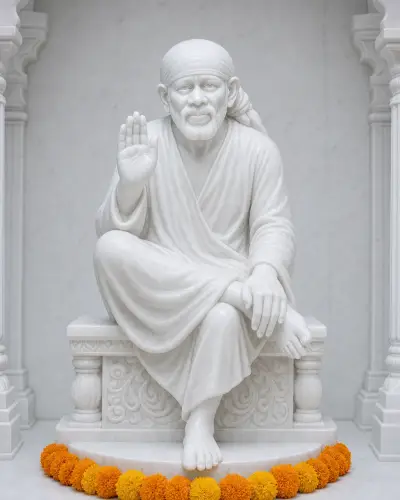
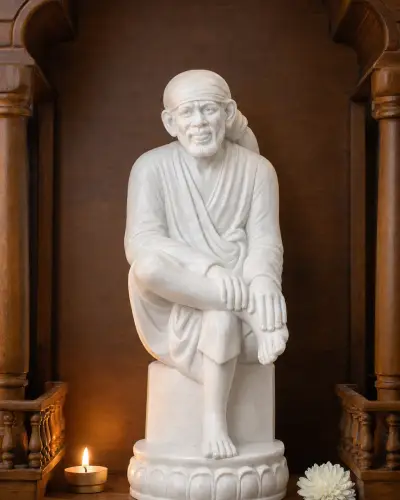
Sculptor-carved Vietnam white marble Sai Baba seated with satka and jholi, a 15-inch altar piece with satin-polished folds and a quiet gaze.
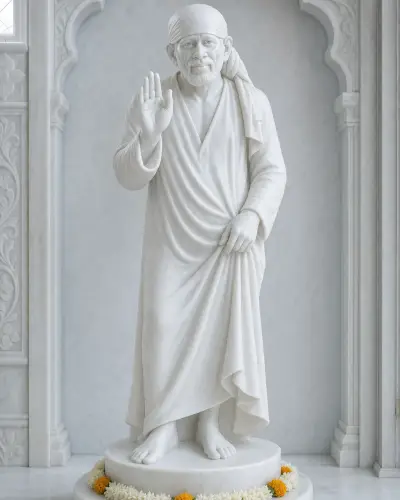
Made to order. The pictures here are concept images. This is not a ready item. We get it made for you as per this design, as close as possible, in the size and stone you choose.
Want this design made for you?
Tell us the size, the stone and where it is going. We will send you a quote and a timeline.
Chat on WhatsAppWe'll respond within 5 minutes
About This Piece
The satka, the jholi and the Vietnam marble
The satka and the jholi are what make this a portrait rather than a generic saint. Baba's short staff rests against his right shoulder; the cloth alms bag he carried on his daily rounds through Shirdi hangs over his left forearm. Both are cut from the same block as the figure, in Vietnam white marble from the Thanh Hoa quarries: a bright, cool, neutral white with a fine crystalline grain and only hairline warm-grey veining. At 15 inches the stone stays luminous rather than heavy: light travels a short way into the calcite and comes back out at the thin edges of the robe, which is why a small white marble murti reads soft on an altar even under cool north light.
How the 15-inch murti is carved
Every piece is carved to order by the master sculptors we work with in Jaipur, and we stay on the brief from the first drawing to the day it reaches your door. Roughing takes the block down to the seated mass and the low stone Baba sits on; the crossed legs, the fall of the kafni sleeve and the knot of the head cloth over the left shoulder come later, by hand, with fine chisels and rasps. Nothing on the face, the hands or the drapery is machine-finished. The satin polish is worked up in stages so the folds hold a low glow instead of a mirror shine, which would flatten the carving at this scale.
Sai Baba as a fakir, not a sadhu
Shirdi Sai Baba is a fakir, and the iconography insists on it: the full-sleeved ankle-length kafni robe, the head cloth wrapped and knotted rather than crowned, the close beard, the bare feet. The satka (the short staff he leaned on and gestured with) and the jholi in which he collected alms from a handful of Shirdi households each day are both kept among his belongings at the Samadhi Mandir. Carving the two together is what separates this from the far more common Dwarkamai stone-seat portrait, and from the bare-torsoed meditating sadhu he is sometimes mistaken for.
Sizing it for a shelf, or scaling it up
Fifteen inches is a desk-and-shelf scale. It suits a study altar, a small mandir niche, an office cabin shrine or a Thursday-puja corner where the piece is seen close up rather than from across a room. Allow about 8 inches of width and 7 of depth for the base, and keep a clear foot in front so the crossed leg and the flower tray are not crowded. Cool, indirect light from one side shows the drapery best; direct downlight tends to wash the folds flat.
The same portrait can be made larger for a hall shrine, or in Makrana white marble, black stone or Dholpur pink sandstone if you want a different tone against your wall. Gold-leaf detailing on the robe border and an engraved family name on the base are both common requests. Message us on WhatsApp and we will work the drawing out with you.
Specifications
Pose
Seated on a low stone with the satka staff at the right shoulder and the jholi alms bag over the left forearm, right leg crossed over the left
Color
Natural White
Finish
Soft polish (satin)
Material
Vietnam White Marble
Ideal For
Small home altar, Office desk shrine, Sai devotee gift
Weight In Kg
11
Depth In Inches
7
Width In Inches
8
Height In Inches
15
Region Or Tradition
Indian / Maharashtrian (Shirdi Sai tradition)