
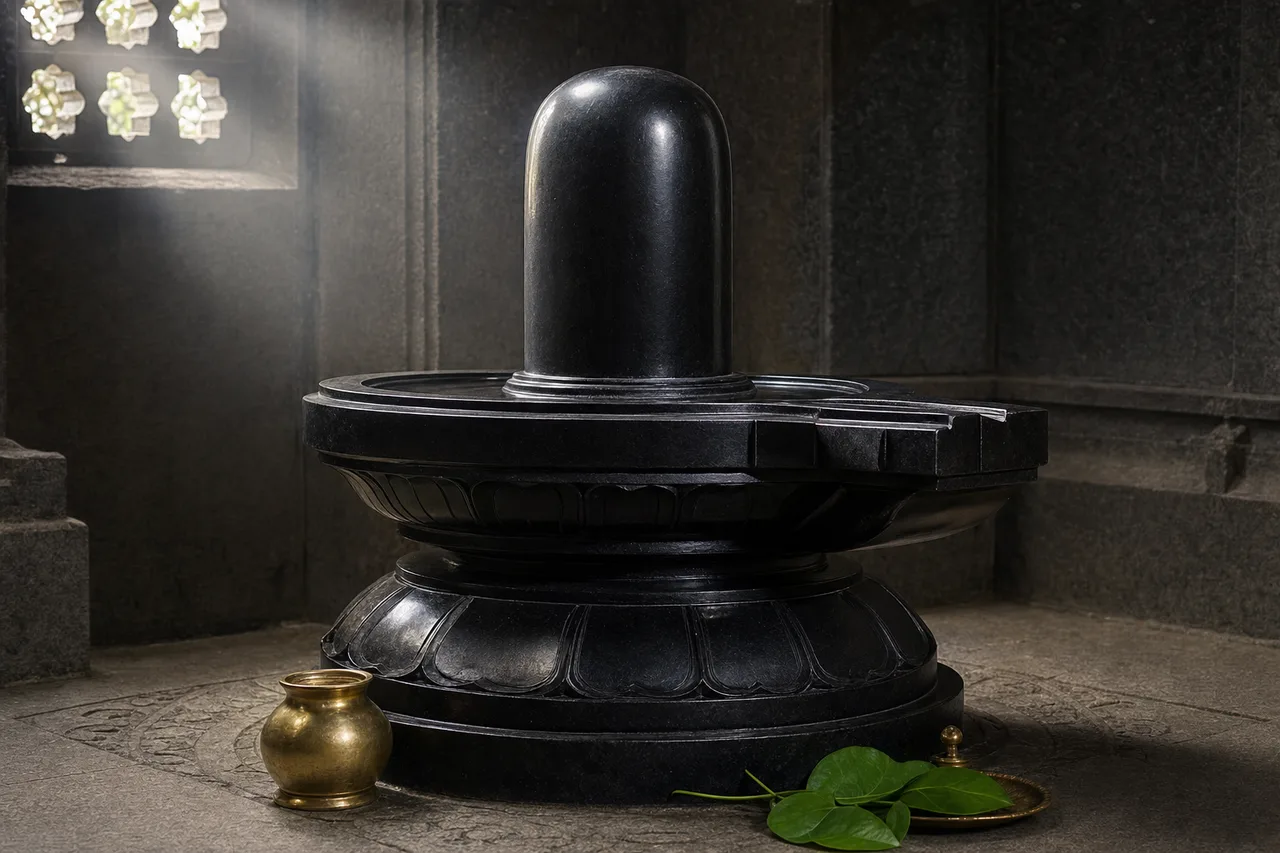
Custom Made Marble Shiva Lingam
Hand-carved Shiva Lingam in marble and stone. Choose black marble, Makrana white, Vietnam white, or Dholpur pink sandstone, from a 6-inch home-altar piece to a 4-foot temple installation. Every Lingam is set on a yoni base finished for daily abhishekam. Carved by Jaipur artisans. Start with a free WhatsApp consultation.
Browse Shiva Lingam forms & sizes
Each Shiva Lingam is made-to-order in your choice of stone. Browse the gallery for form, size, and finish: a 6-inch home-altar Lingam through to a 4-foot temple installation, plain or Panchmukhi, Naga-hooded or Janeudhari. Then share what you like on WhatsApp.
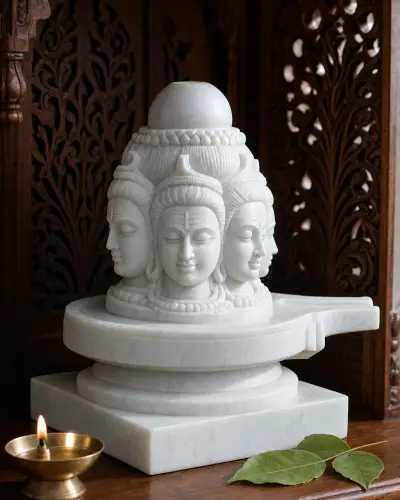
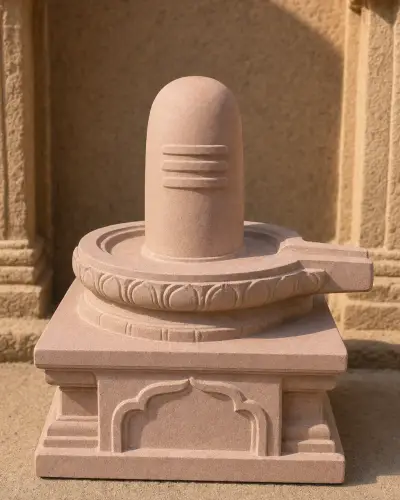
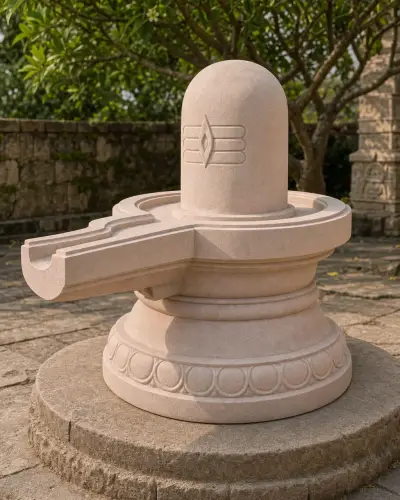
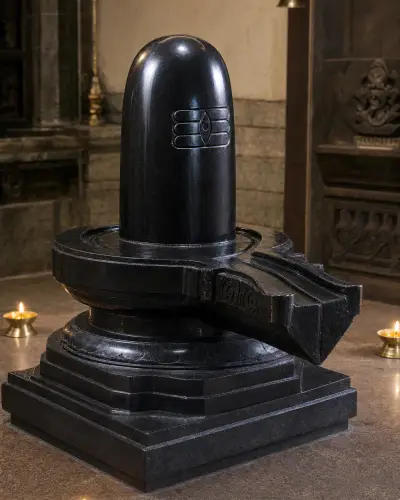
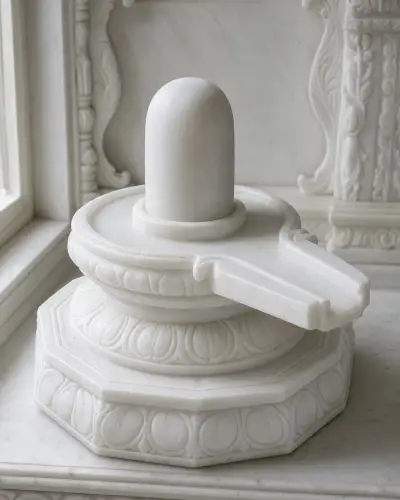
Shiva lingams for the home and the temple
The lingam is the form Shiva is most often worshipped in, and the one most often installed rather than simply displayed. That changes what matters when you commission one. A murti can be admired from across a room; a lingam is touched, bathed and dressed, sometimes every morning for decades. Households commission one for a pooja room or a home altar, trusts and temples for a sanctum, and families increasingly for a garden shrine or a farmhouse corner. The pieces on this page are carved to order by the master sculptors we work with, in the stone, size and form you choose, so the decisions below are yours to make, not ours to default.
The forms carved here
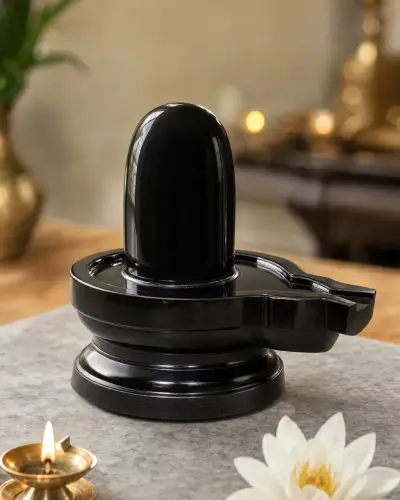
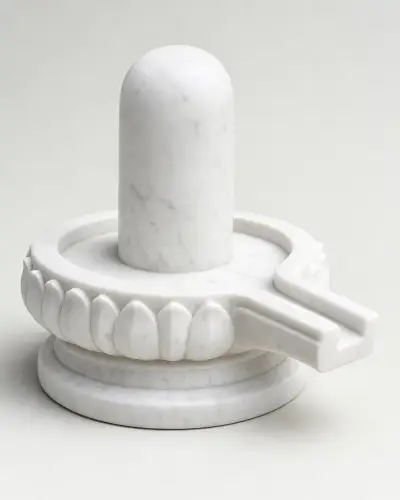
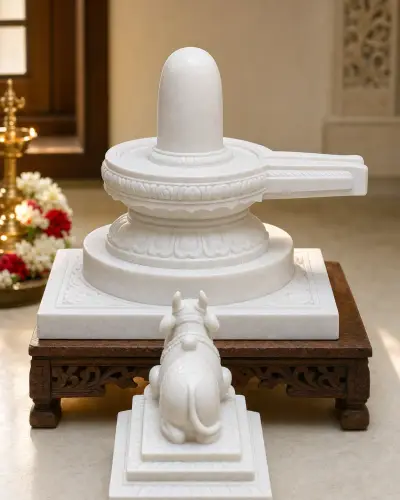
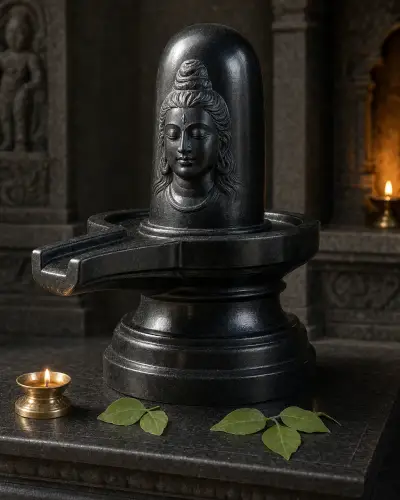
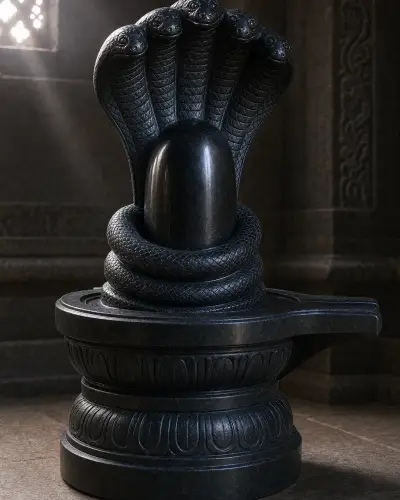
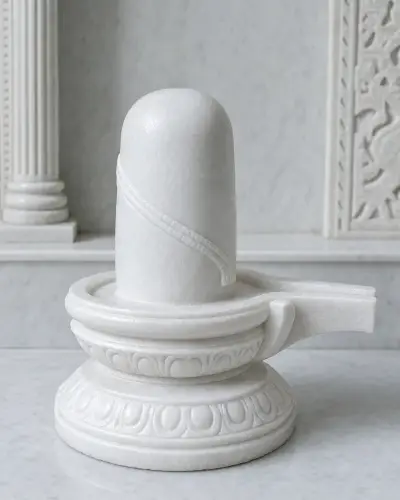
Twelve pieces are shown, and they are not variations on one shape. The Ekmukhi Mukhalingam carries a single face on the shaft; the Panchmukhi carries five, one for each of Shiva's aspects. The Naga lingam is sheltered by a serpent canopy. The Janeudhari wears the sacred thread carved in relief around the shaft, and the Tripundra the three horizontal lines of Shaiva marking. Alongside those are plainer forms where the stone does the work: a 6-inch compact lingam for a small altar, a Nandi home-shrine set, a 36-inch garden piece, and a 48-inch temple lingam on a stepped yoni.
The yoni base, and which way the jaladhari points
This is the detail that separates a lingam made for worship from a lingam made as an object, and it is worth understanding before you order.
A lingam is not carved alone. It sits in a yoni (the base), and the yoni has a spout, the jaladhari, which carries away the milk, water and honey of abhishekam. That spout has an orientation, and the orientation is not decorative. Convention places it to the north, which means that once the lingam is installed facing the worshipper, the jaladhari runs to the worshipper's left. It is never aimed outward at the person sitting in front of it.
Every piece here is carved with its yoni as one composition, and the drainage channel is cut and polished so liquid actually runs rather than pooling in the joint. When you tell us where the shrine sits and which way it faces, that is the reason: the spout is set from it. A lingam delivered without a workable yoni cannot be used as intended, however well the shaft is finished.
Choosing the stone
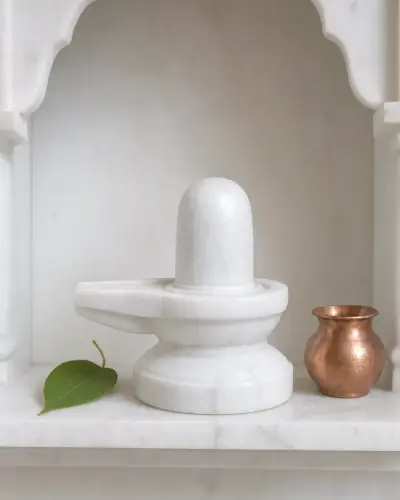
Black stone is the traditional choice and the most requested here, partly because the wet sheen of abhishekam reads beautifully against a dark surface. Makrana white marble is the other classical option, dense and close-grained, and it takes the daily washing of a home lingam without dulling. Vietnam white marble is cooler and brighter than Makrana, which suits a small altar piece where you want the form to lift out of a dim corner. Dholpur pink sandstone is the outdoor answer: matte, warm, and comfortable weathering in a garden shrine where marble would want more shelter. Cast marble dust keeps a smaller piece affordable without giving up the finish. All five are worked by the same sculptors, so the choice is about how you want the piece to look and where it will live, not about quality tiers.
Sizing it for your altar
This is a category where the useful sizes run smaller than most people expect. A home lingam in daily worship is commonly 6 to 15 inches, small enough to bathe comfortably with one hand, and to sit on a shelf without dominating the room. The pieces here start at 6 inches for exactly that reason. Between 18 and 30 inches you are into a dedicated pooja room or a substantial home shrine. Above that, at 36 to 48 inches, you are furnishing a sanctum, a trust temple or a garden installation, and weight and the approach to the site start to matter as much as the carving. Tell us the shelf or the plinth you have and the range narrows quickly.
Caring for a lingam in daily worship
Dust dry, and dry the stone after abhishekam rather than leaving milk or honey to sit, since sugars are what dull a polished surface over years, not water. Avoid acidic cleaners entirely; no vinegar, no lemon, no bathroom descaler, on any of the stones. Sandstone in a garden will take a gentle brush and plain water. That is the whole routine.
Make it yours
Everything on this page is a starting point rather than a catalogue entry. If a form is right but the size is not, or you want the Panchmukhi in white rather than black, or the yoni set for a shrine that faces an unusual direction, say so, and it is adapted before anything is cut. And if you have something else in mind entirely, a photograph of a lingam from your family temple or a sketch of what you want, that is just as welcome a place to start. Send it on WhatsApp, we will talk it through, quote it, and follow it from the sculptor's bench to your door.
Why choose Tilak Mandirwala for your Shiva Lingam
Shiva Lingams in marble and stone, personalised to your pooja room, mandir, or courtyard shrine
Abhishekam-ready finish
The Lingam and yoni base are finished with a smooth drainage channel so water and milk run off cleanly.
Every traditional form
Plain, Panchmukhi, Ekmukhi, Naga-hooded, Janeudhari, or a complete set with Nandi, carved to your reference.
Choice of stone
Black marble, Makrana white, Vietnam white, or Dholpur pink sandstone: you pick the stone and finish.
Sized for your space
From a 6-inch home-altar Lingam to a 4-foot temple installation, carved to your measurements.
Heritage Jaipur work
Hand-carved by Pink City artisans rooted in generations of marble craft.
Insured delivery
Multi-layered packaging and insured shipping across India and worldwide.
How we create your personalised Shiva Lingam
From idea to consecrated installation, every step is transparent and custom
Share your idea
Send a reference image or describe the Lingam form, size, and stone you have in mind on WhatsApp.
Finalise details
We confirm the form, the yoni base style and spout direction, the drainage channel, and the finish.
Clear quote & timeline
You get a fixed price and a realistic delivery window before any work begins.
Advance to begin
A part-payment advance reserves your artisan and starts the carving.
Sculpting updates
We share progress photos at each milestone so you stay involved throughout.
Approval & packing
You approve the finished Lingam, then it is packed in multi-layered protection.
Balance on delivery
You pay the balance once the piece is ready to dispatch to your door.
Frequently asked questions
Get answers to common questions about our custom sculptures
What size Shiva Lingam should I choose for my home?
Is the Lingam finished for daily abhishekam?
Should I choose black or white stone?
Which forms of Shiva Lingam can you carve?
How should the Lingam be placed and oriented?
How long does a custom Shiva Lingam take?
Planning a Shiva Lingam for your pooja room or mandir?
Share a reference image on WhatsApp and we'll quote the stone, size, yoni base, and timeline. No obligation, just a conversation.
WhatsApp for a QuoteImporting statues for your store or gallery? Marble statue supplier for importers
Prefer to see the marble before you order? Visit our showroom in Jaipur, or send us your size and budget.
Browse Other Collections
Discover more collections that might interest you
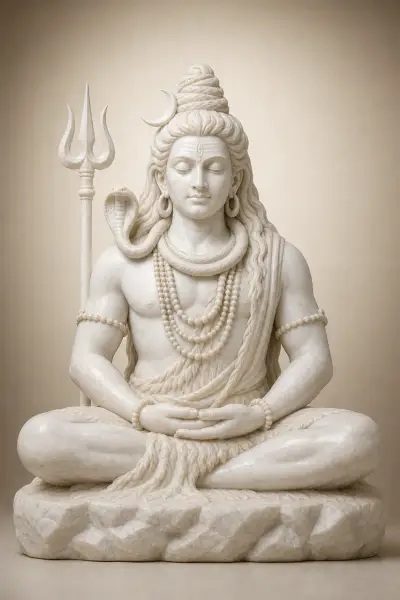
Custom Made Shiva Statues in Marble Stone
Hand-carved Shiva statues in marble. Choose your stone, size, and form: meditating Shiva, Nataraja, Shiva Lingam, or Ardhanarishvara. Carved by Jaipur artisans. Start with a free WhatsApp consultation.
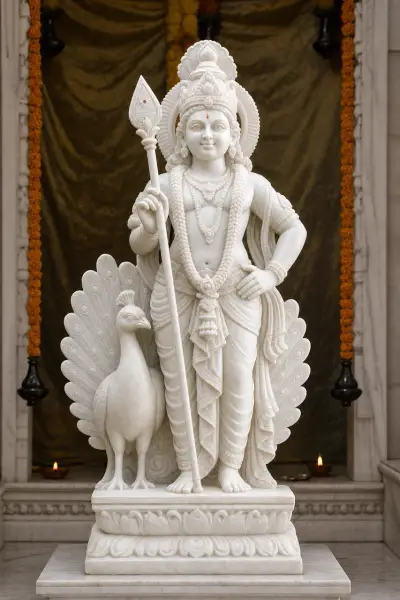
Custom Made Murugan (Kartikeya) Statues in Marble Stone
Hand-carved Murugan (Kartikeya) murtis in marble. Choose your stone, size, and form. Standing with the vel, on the peacock, Palani Dandayudhapani, Shanmukha, or with Valli and Deivanai, in authentic South Indian iconography. Start with a free WhatsApp consultation.
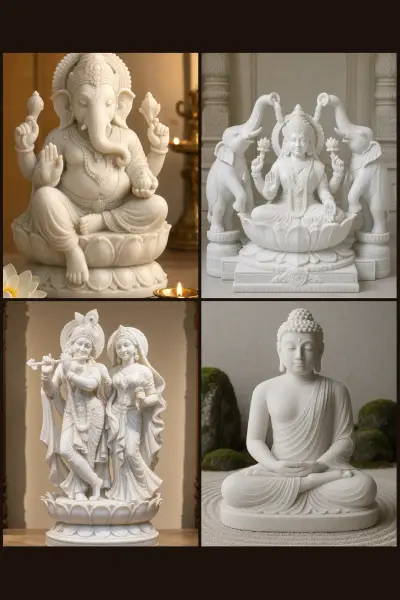
Custom Marble Statues
We build custom marble statues in many sizes and forms, from deities and saints to bespoke designs. Each is carved by the artisans we work with in India and tailored to your space.
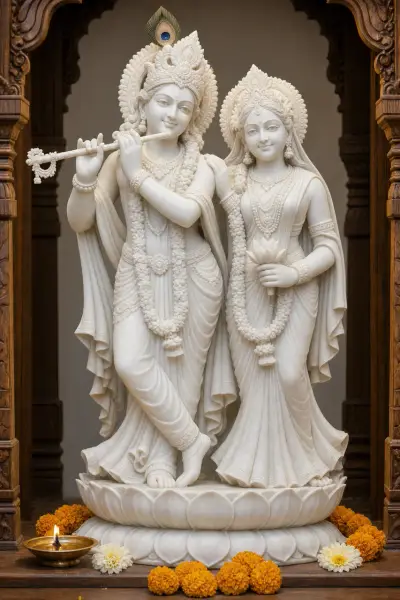
Custom Made Radha Krishna Jugal Jodi Statues in Marble Stone
Hand-carved Radha Krishna jugal jodi pairs in marble. Choose your stone, size and pose. Standing, seated, with peacock or cow. Start with a free WhatsApp consultation.
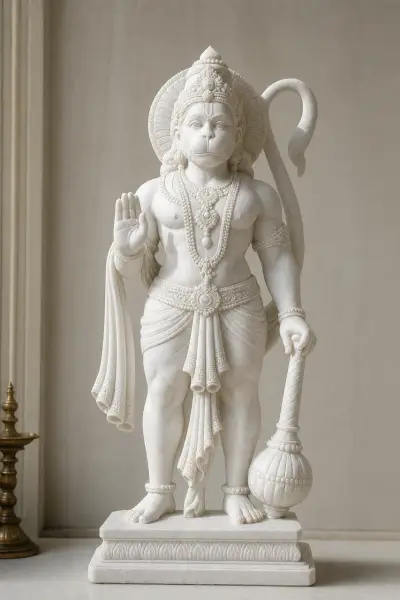
Custom Made Hanuman Statues in Marble Stone
Hand-carved Hanuman murtis in marble: standing blessing, Sankat Mochan kneeling, Panchmukhi, fierce Veer with gada, or flying with the Sanjeevani mountain. Choose your stone, size, and pose. Start with a free WhatsApp consultation.
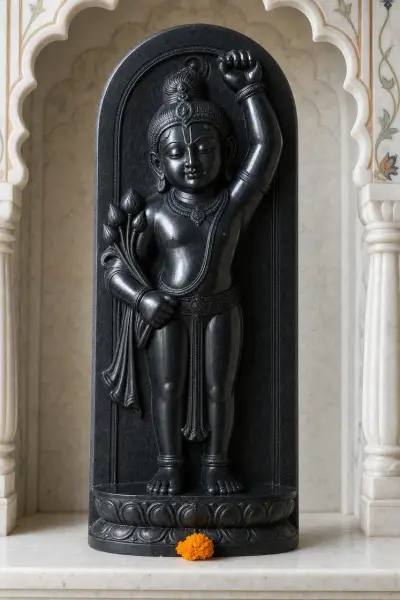
Custom Made Shrinathji Marble Murti — Nathdwara Swaroop
The Nathdwara swaroop, his left arm raised to the arch and his right hand at his waist, carved to order in black stone or white marble, from a 9-inch apartment mandir piece to a 36-inch wall panel.