
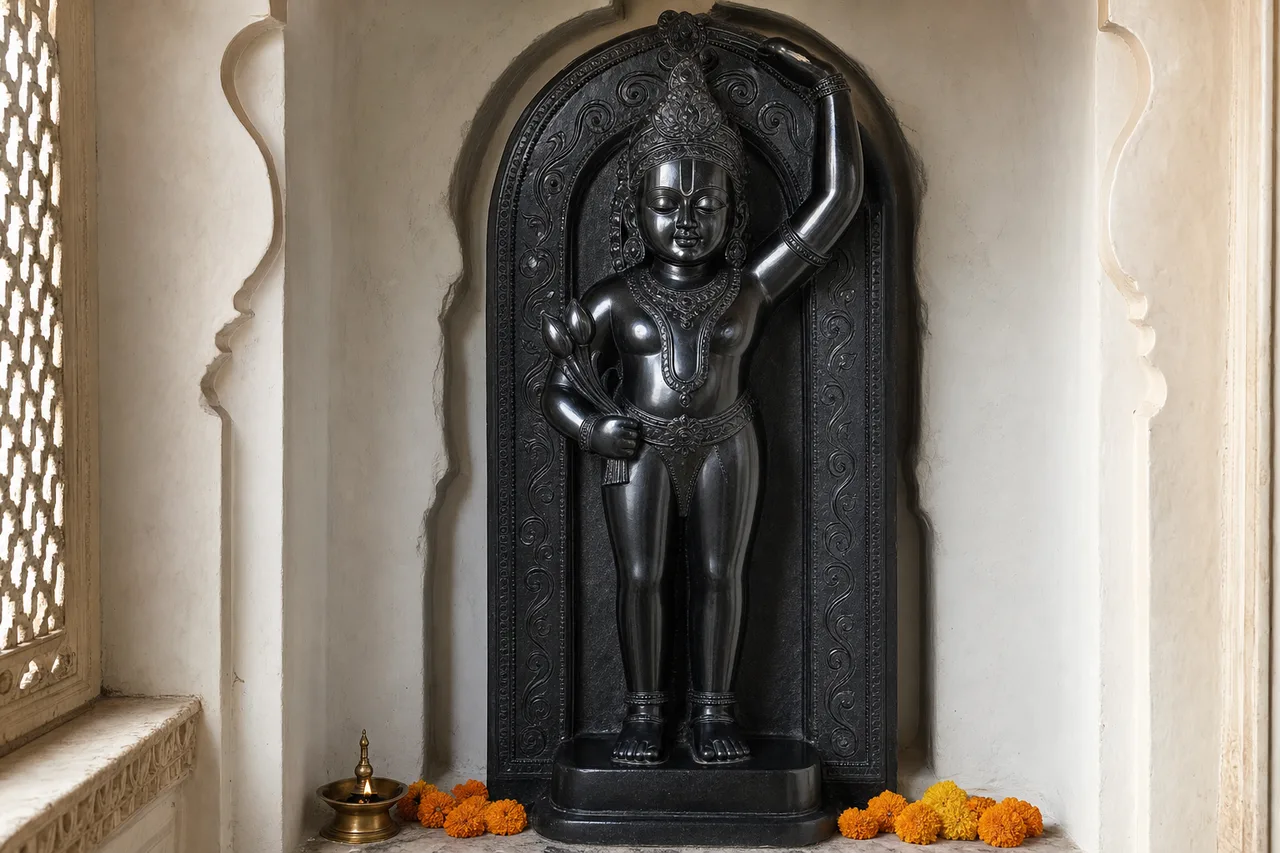
Custom Made Shrinathji Marble Murti — Nathdwara Swaroop
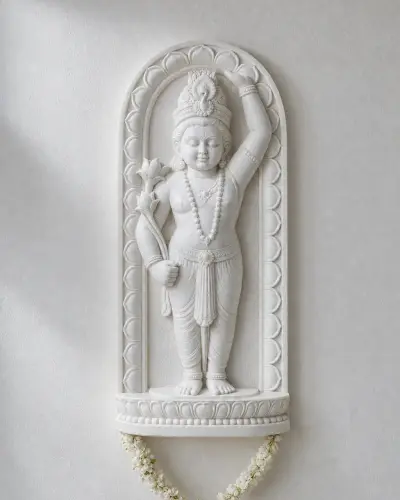
The Nathdwara swaroop, his left arm raised to the arch and his right hand at his waist, carved to order in black stone or white marble, from a 9-inch apartment mandir piece to a 36-inch wall panel.
Browse Shrinathji design inspirations
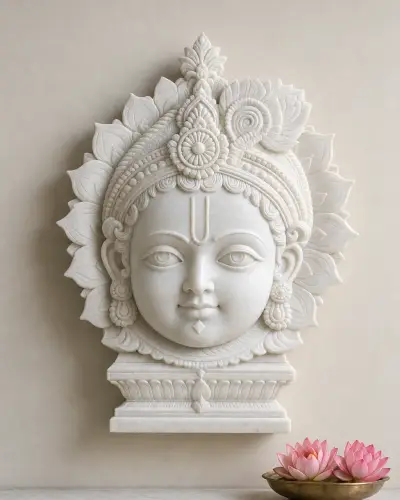
Standing stele murtis, wall panels, the mukharvind lotus-face darshan, a carved pichwai, and the Shrinathji-Yamunaji-Mahaprabhuji set, each one made to order.
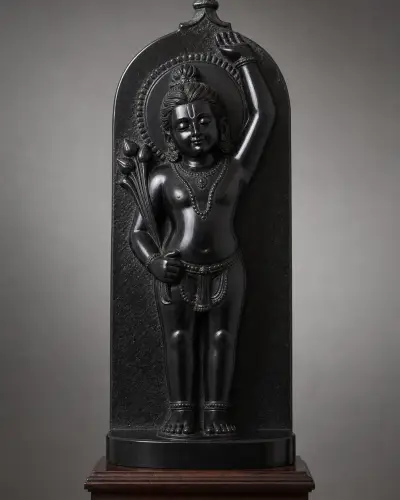
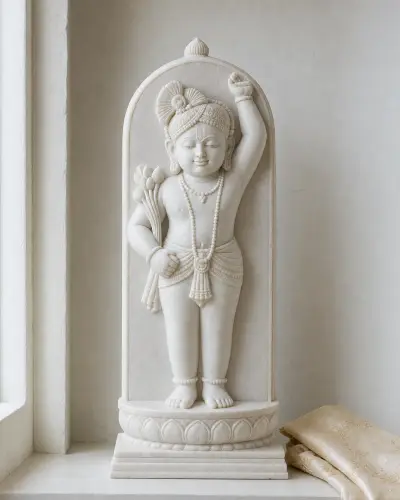
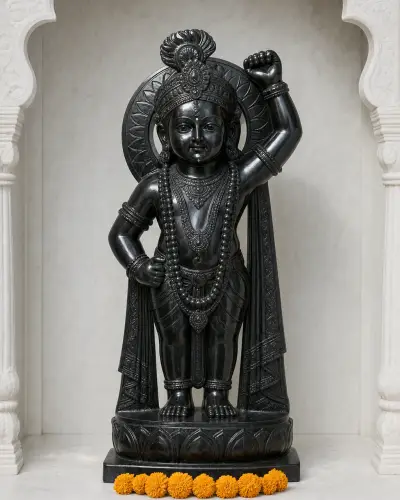
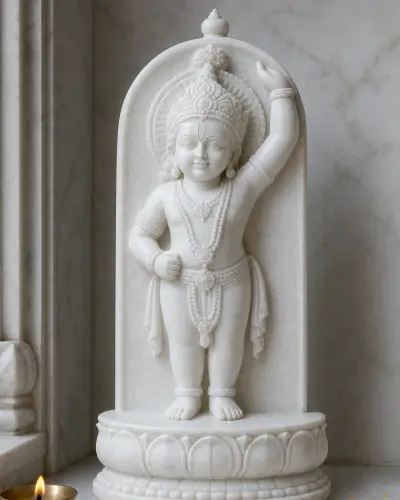
Shrinathji marble murtis, carved to order
Shrinathji is not a statue you buy off a shelf. For a Pushtimarg household he is the swaroop the whole home is arranged around, and the shape of him is fixed. That is the first thing worth saying plainly, because it decides almost everything about what you are choosing.
The form is a stele, not a statue in the round
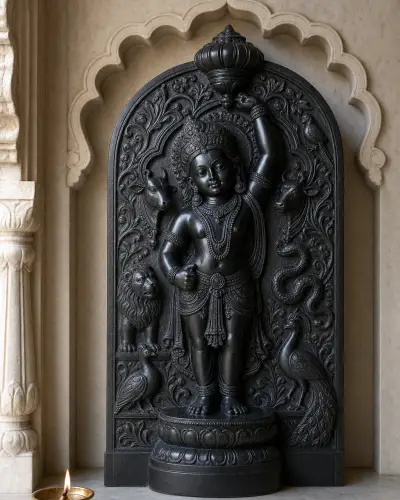
The swaroop at Nathdwara is carved in bas-relief out of a single block of black stone, standing inside an arched peethika. His own left arm is raised above his head, the cupped hand touching the arch. That is the Govardhan hill, lifted, and no hill is ever shown. His right hand rests closed at the waist, thumb out. Both feet are straight, flat and frontal. He is a child of about seven.
This matters practically, not just devotionally. A murti carved this way is shallow. A 12-inch Shrinathji is only about 2.5 to 3 inches deep; an 18-inch one about 4 to 5 inches. If your mandir shelf is narrow (and in most apartments it is), a Shrinathji will sit where a free-standing statue simply will not. Send a photo of the shelf and we will confirm the depth before anything is cut.
Choosing the stone
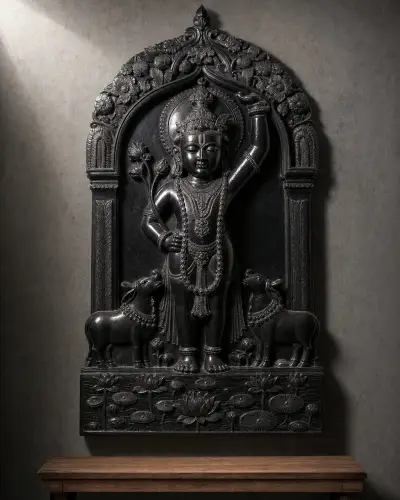
Black stone is how the swaroop is traditionally carved, and it is what most families ask for. It takes a deep mirror polish, and the raised arm and the line of the jaw read sharply against it. Nearly every piece in this collection is offered in it.
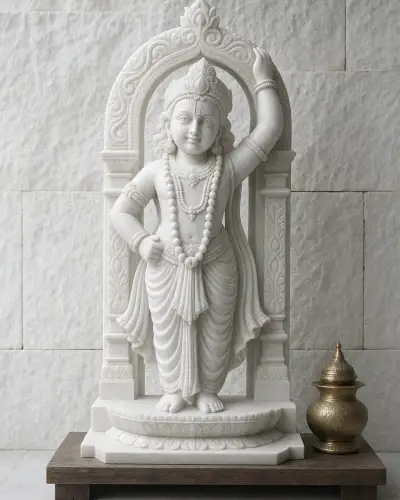
Makrana white marble is warm-toned and suits a mandir already built in light stone. Vietnam white marble is cooler and milkier, which is why it is the usual choice for the larger wall panels: at 30 inches and up, the cooler stone keeps the relief from looking heavy.
There is no correct answer here. It is a question of the room you are putting him in.
The forms in this collection
Most families start with a standing stele murti: 12 inches for a first home mandir, 18 inches where there is room, 24 inches where the murti is meant to be the centre of the room. There is also a 9-inch piece for a compact apartment shelf or an office cabin, on an integral lotus chowki.
Beyond the plain stele, three variations are worth knowing about:
- The full Nathdwara stele: the two cows, the lion, the snake, the two peacocks and the parrot carved around him, as on the original monolith. This is the piece to ask for if you want the swaroop as it actually stands at the haveli.
- Carved shringar: the mukut, sarpech and kalgi, the necklaces and gunja mala worked into the stone rather than dressed on. It reads richer without needing daily vagha.
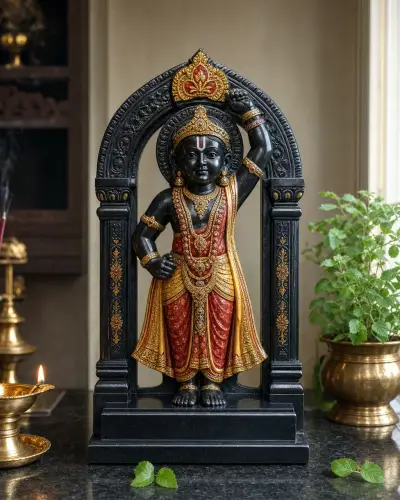
- Hand-painted shringar: coloured vagha with gold-leaf detailing over the black stone, for households that want the festival darshan look permanently.
Then there are the pieces that are harder to find anywhere else:
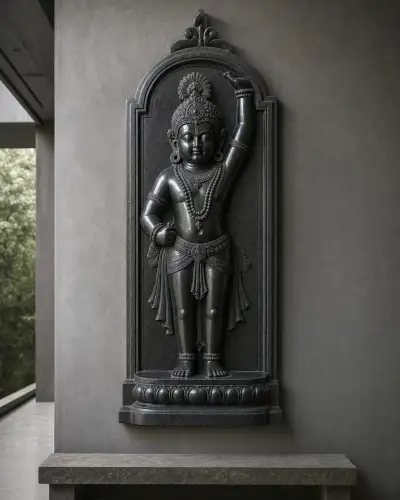
- Wall panels, at 30 and 36 inches, for homes where the mandir shelf was never going to be deep enough, or where he belongs in the entrance hall rather than the pooja room.
- The mukharvind: the lotus-face darshan. It is the most reproduced Shrinathji image in the world and almost always a print or a pendant. Carved in marble and mounted on a wall, it becomes something else entirely.
- A pichwai carved in stone: the swaroop with his cows, the lotus pond, the kadamb worked into the arch. A cloth pichwai is changed by season and festival; this one does not fade and never needs changing.
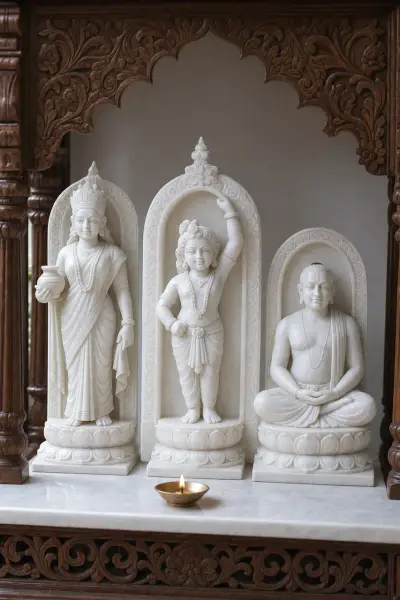
- The Shrinathji, Yamunaji and Mahaprabhuji set, carved as one matched group in warm white marble, with Mahaprabhuji shown as the human acharya he was: seated, simply draped, no crown.
On seva, plainly
We want to be straightforward about something no one else in this trade says out loud. The murti is carved for you. It is not consecrated by us.
In the Pushtimarg tradition the right to perform seva to a swaroop follows Brahmasambandh initiation, and the swaroop for household seva is customarily received from your Goswami of the Vallabhkul. Please treat what comes from us as a beautifully carved murti, and let your guru guide you on consecration and seva-adhikar. Many families buy from us for darshan, for a home mandir, or as a gift to a daughter's new home, and take that step separately and properly.
Spelling, in case you were wondering
Shrinathji, Shreenathji, Shrinath Ji and Srinathji are the same deity, in different transliterations of one name. Gujarati families more often write Shreenathji. All of them mean the swaroop at Nathdwara.
Timing your order
A stele that has already been carved carries no carving wait, so it is worth asking about before you plan around a date. Carved to your brief, expect roughly 8 to 12 weeks, depending on the stone, the size, and how much of the stele is worked. A plain arched stele is quicker; the full fauna carving, a painted finish, or a large panel takes longer.
If you are planning for Annakut and Govardhan Puja (the festival this murti actually depicts, and the day Nathdwara stages the grandest Annakut in India), order by early October. That is our busiest window, and it is the one deadline worth working backwards from.
How it is made
We design the piece with you, brief the sculptor, and follow it through to your door. The carving itself is done for you by the master sculptors and artist families we work with here in Jaipur, in a craft tradition this city has held for centuries. You see progress photographs at each stage, and you pay the balance only once the murti has arrived safely, anywhere in India or to Vaishnav families in the USA, UK, Canada and the Gulf.
Why choose Tilak Mandirwala for your Shrinathji murti
The Nathdwara swaroop, carved to order in Jaipur for your home mandir, haveli, or family shrine
The swaroop, carved correctly
A bas-relief on an arched stele, not a figure in the round. The left arm raised to touch the arch, the right hand closed at the waist, both feet flat and frontal, exactly as at Nathdwara.
Every form of the darshan
The standing stele murti, a wall-mounted panel, the mukharvind lotus-face, a pichwai carved in stone, or the Shrinathji, Yamunaji and Mahaprabhuji set.
Choice of stone
Black stone as the swaroop is traditionally carved, or Makrana white marble and Vietnam white marble for a lighter mandir. Cast marble dust suits smaller pieces.
Sized for your shelf, not just your room
From a 9-inch apartment mandir murti to a 36-inch panel. We confirm the depth as well as the height, because a stele murti needs less shelf than buyers expect.
Heritage Jaipur work
Designed with you and carved for you by the master sculptors and artist families we work with, in a craft tradition Jaipur has held for centuries.
Insured delivery
Multi-layer wooden crating and insured shipping, across India and worldwide to Vaishnav families abroad.
How we create your personalised Shrinathji murti
From idea to sacred murti, every step is transparent and custom
Share your idea
Pick a form from our gallery or send your own reference, along with the size and stone you have in mind.
Finalise details
We confirm the form, the stele carving, the shringar detailing, the base, and the finish to match your vision.
Clear quote & timeline
We provide a transparent quotation and delivery schedule.
Advance to begin
A partial advance secures the stone and supports initial artisan work.
Sculpting updates
We share photos of carving progress so you stay in control.
Approval & packing
Final photos shared before multi-layer wooden crating for safe transit.
Balance on delivery
Pay the remaining balance only once your murti arrives safely.
Frequently asked questions
Get answers to common questions about our custom sculptures
Is this the same swaroop as the one at Nathdwara?
Black stone or white marble: which should I choose?
What size murti fits a home mandir, and how much shelf depth does it need?
Can a murti bought here be used for seva?
What is a mukharvind, and what is a pichwai panel?
Is Shreenathji the same as Shrinathji?
How long does a custom Shrinathji murti take?
Do you ship overseas?
Ready to commission your Shrinathji murti?
Send us the form, size, and stone you have in mind, and we will come back with a clear quote and timeline.
WhatsApp for a QuoteImporting statues for your store or gallery? Marble statue supplier for importers
Prefer to see the marble before you order? Visit our showroom in Jaipur, or send us your size and budget.
Browse Other Collections
Discover more collections that might interest you
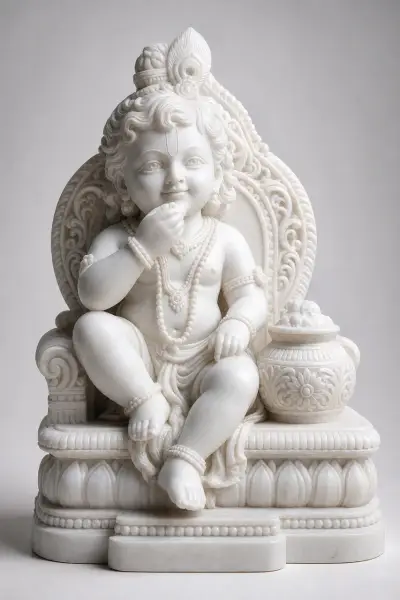
Marble Krishna Murtis for Janmashtami
Hand-carved marble murtis for Janmashtami: the infant Laddu Gopal, the Radha Krishna jugal jodi, Shrinathji and the flute-playing Murli Manohar. Start with a free WhatsApp consultation.
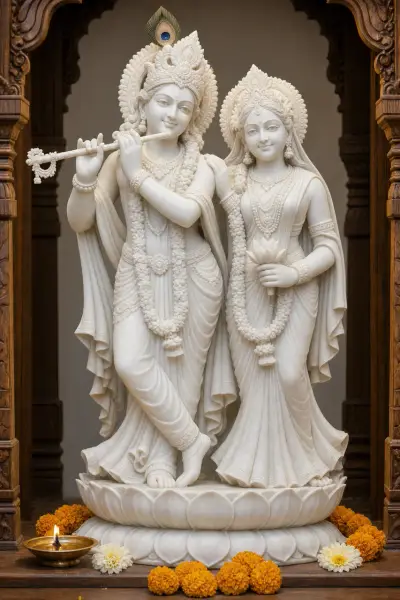
Custom Made Radha Krishna Jugal Jodi Statues in Marble Stone
Hand-carved Radha Krishna jugal jodi pairs in marble. Choose your stone, size and pose. Standing, seated, with peacock or cow. Start with a free WhatsApp consultation.
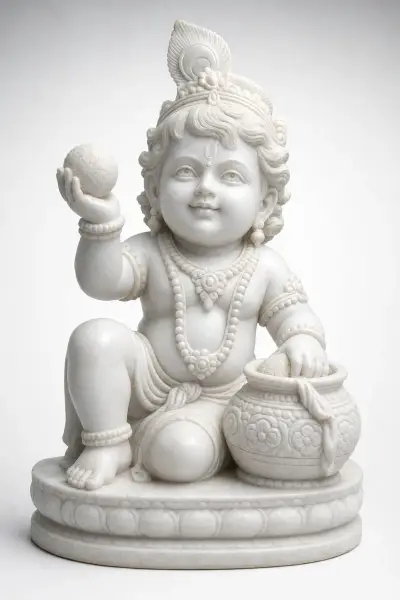
Custom Made Laddu Gopal Marble Murtis — Bal Gopal & Makhan Chor
The infant Krishna, carved to order in Makrana and Vietnam white marble, Dholpur pink sandstone, black stone and cast marble dust, from a 6-inch shelf murti to an 18-inch jhula.
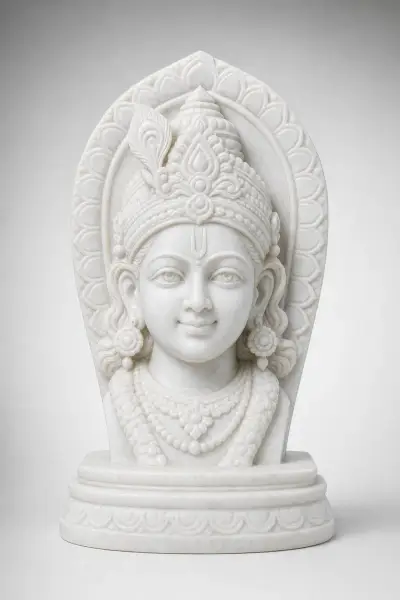
Custom Made Khatu Shyam Ji Statues in Marble Stone
Shyam Baba in the forms Khatu keeps him - the shish darshan, the crowned darbar murti, and Veer Barbarika with his three arrows - made to order in Makrana white, Vietnam white, black stone or cast marble dust.
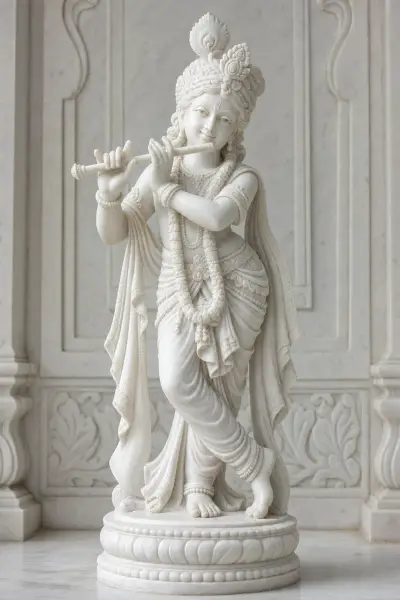
Custom Made Krishna Statues in Marble Stone
Hand-carved Krishna statues in marble: Murli Manohar with flute, Bal Gopal, Radha-Krishna pairs, and narrative forms like Kaliya Mardan. Choose your stone, size, and pose. Traditional Jaipur craftsmanship. Start with a free WhatsApp consultation.
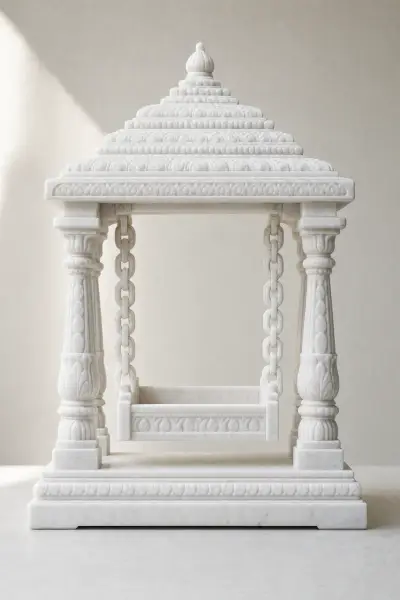
Custom Made Marble Jhula for Laddu Gopal & Krishna
Swings carved to order for the murti you already have, in Makrana and Vietnam white marble, Dholpur pink sandstone, black stone and cast marble dust, from a 9-inch cradle to a 24-inch pavilion.