

Custom Made Marble Bust Statues from Your Photograph
Send us their photographs. We build the likeness in clay first, and we do not touch stone until you tell us it is them.
Portrait busts carved to order
Portrait busts of family elders and of public figures, in white and black marble, plain or hand-painted. Every one begins the same way: with a photograph.
Bust statues of the people you don't want forgotten
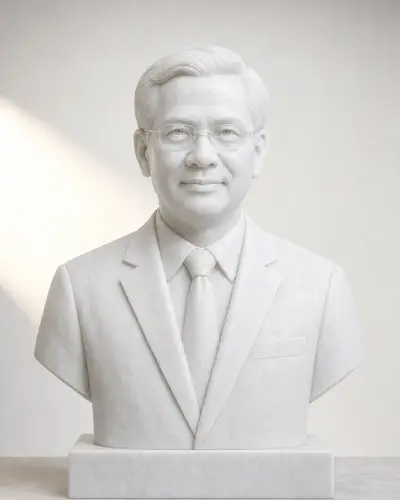
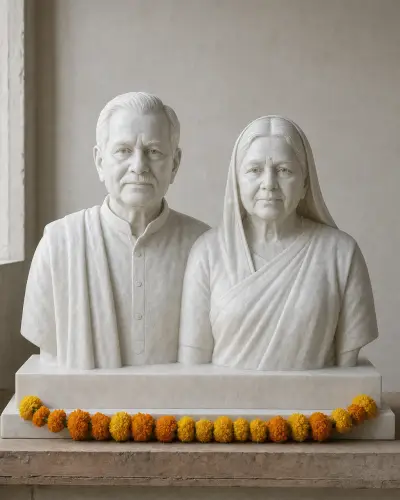
A bust statue is a portrait carved from the chest up: head, shoulders, the set of a jaw, the way someone's turban was tied. It is the form families choose when they want a father, a mother or a grandparent kept somewhere solid rather than in a fading photograph on a wall.
Most of the marble bust statues commissioned here begin with a WhatsApp message and a handful of pictures. Some are for a parent who died last month; some are for a grandfather nobody has a good photograph of any more. Others are commissioned by trusts, schools, regiments and committees who need a founder, a leader or an officer rendered properly in stone. Both start the same way, and both are carved by the same hands.
The busts carved in this collection
Fourteen pieces, and they exist to show you what is possible rather than to be bought off a shelf: your commission will be of your own person.
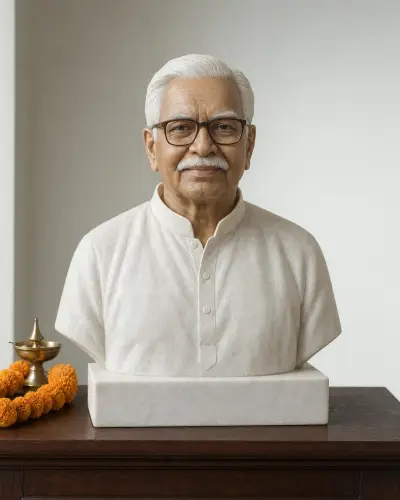
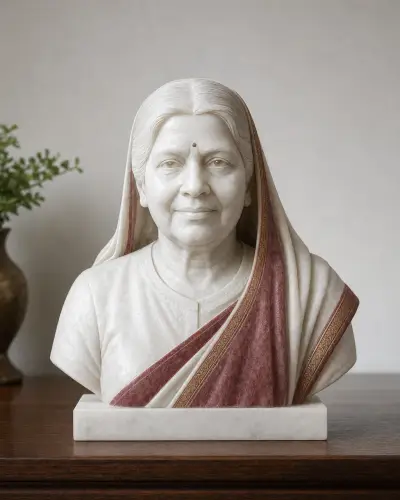
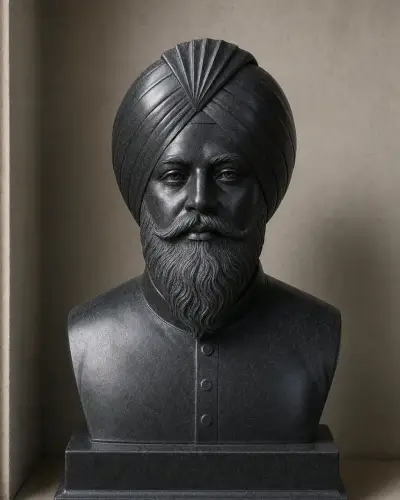
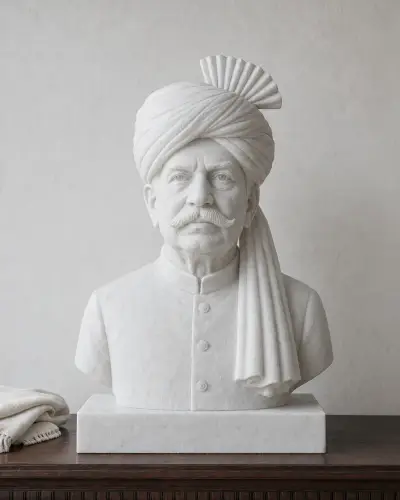
For families, there is an elder in a Rajasthani safa, a hand-painted bust of a father with his spectacles and white hair, a mother with her pallu drawn over her head, a Sardar gentleman in black marble with a full set beard, and a double bust of both parents on one shared plinth, the piece families ask for when they cannot separate the two.
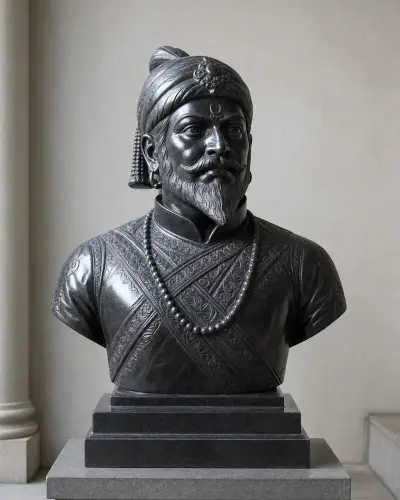
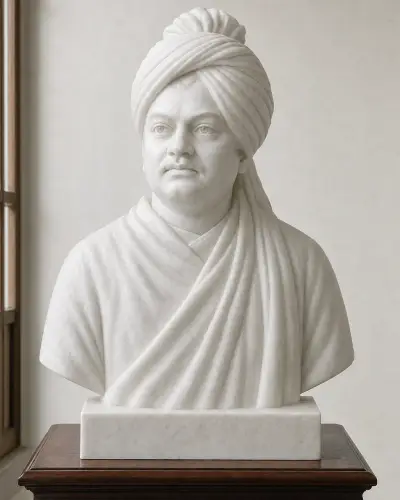
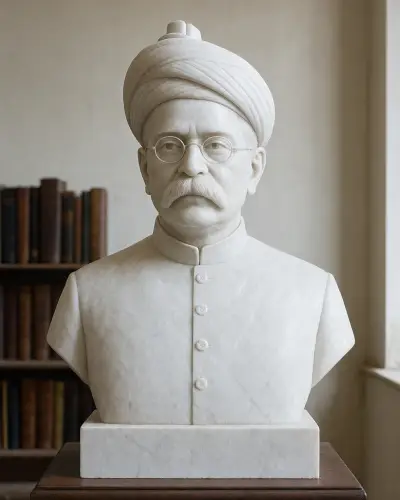
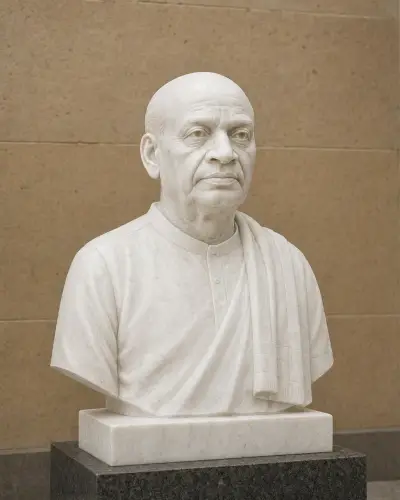
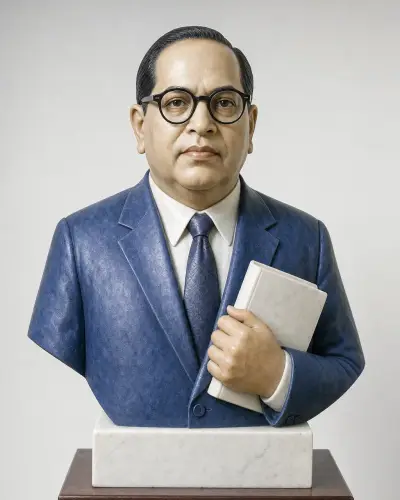
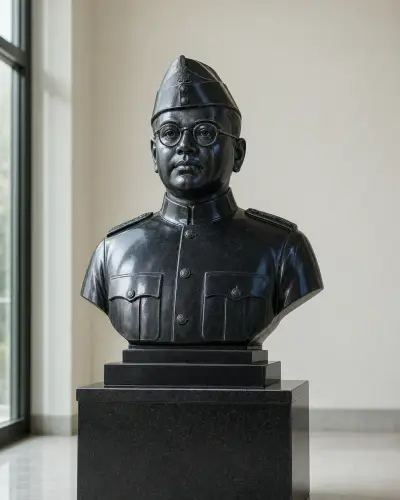
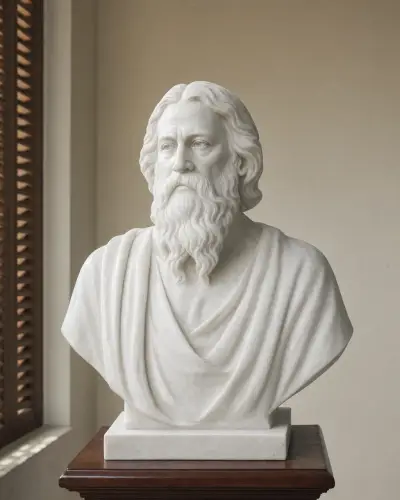
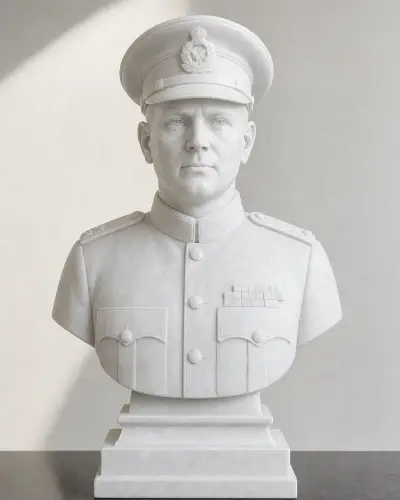
For institutions there is an army officer in service dress and a founder in a suit for a lobby or boardroom. And for committees and trusts, the figures most often commissioned in India: Dr. B. R. Ambedkar, hand-painted, Chhatrapati Shivaji Maharaj in black marble, Swami Vivekananda, Sardar Vallabhbhai Patel, Lokmanya Tilak, Netaji Subhas Chandra Bose and Rabindranath Tagore.
The clay model is where the likeness is decided
This is the part that matters most, and it is the reason a portrait takes longer than any other piece in this catalogue.
Stone is unforgiving. A cheek cut too deep cannot be put back, so nothing is cut until the face is already right, and the face is settled in clay first. You send photographs; a front view, a three-quarter view and a profile are ideal, plus one candid picture that catches how the person actually held themselves. The sculptor builds the head in clay at full size, and you are sent pictures of it.
Then you tell us what is wrong. Almost everybody does, and almost always it is small: the mouth is too stern, the forehead too high, he never parted his hair on that side. The clay is changed and photographed again. That loop runs as many times as it needs to; it is the cheapest stage to change and the only one that is reversible. Marble is only cut once you say it is him.
After carving there is a fine-tuning stage on the stone itself, where the sculptor works against your photographs again for the smaller things: the eyelids, the line of a moustache, the depth of the eyes.
Plain stone, or painted
Roughly a third of the busts here are hand-painted, and it is a real decision rather than a finish option.
Left plain, a bust reads as a monument: timeless, formal, the way a memorial hall or a garden plinth expects. That is the satin soft polish most pieces carry, or the mirror polish that makes black marble read almost like bronze, or a honed matte with no shine at all.
Painted, it reads as the person. Skin tone, the exact grey of the hair, a blue suit, the red of a saree with its gold border, dark spectacle frames, a tie, a tilak. Families who want to recognise someone across a room usually choose paint; institutions usually do not. Both are available on any piece here, and it is worth seeing photographs of each before deciding.
Choosing the stone
Three stones suit portraiture, and the choice is mostly about how a face reads under light.
Makrana white marble is the default and eight of these pieces use it. It is the stone of the Taj Mahal, quarried at Makrana a few hours north-west of Jaipur, and it is dense enough to hold an eyelid or a hairline without crumbling. Its faint warmth flatters skin, which is why it is also the right base under paint.
Black marble gives gravity. It suits a uniform, a beard, a figure meant to look formidable, which is why the Shivaji Maharaj and Netaji busts here are carved in it. Under a mirror polish it photographs like dark bronze at a fraction of the cost.
Vietnam white marble is cooler and cleaner than Makrana, closer to a modern white, and it sits well in a contemporary lobby or office where the surrounding finishes are pale and grey.
Size, weight, and what your shelf will take
The busts here run from 18 to 30 inches, and the weight climbs much faster than the height does, because a bust is solid stone.
An 18-inch bust weighs about 29 kg, a heavy but manageable piece for a console or a shelf. At 21 to 24 inches you are between 38 and 95 kg depending on how broad the shoulders and plinth are. The 30-inch Shivaji Maharaj bust is 115 kg, which is a floor-standing pedestal piece and not something a wall bracket will hold.
Near life-size for an adult head and shoulders lands around 24 inches, and that is what most families and most institutions end up choosing. Tell us the surface it will stand on and we will tell you honestly whether it will take the weight.
Where a portrait bust belongs in the house
This question comes up in almost every family commission, and it deserves a straight answer.
In Hindu practice, ancestors are honoured but they are not worshipped alongside the gods. Convention keeps a departed family member out of the pooja room and out of the mandir niche: the place of worship is for deities. Ancestors are traditionally given the south or south-west of the home, the direction associated with the pitru, and they are given their own place rather than a shared one.
In practice that means an entrance hall or foyer console, a study, a library, a landing, or a dedicated corner set aside for that person. Farmhouses and family properties often place a bust outdoors on a plinth, at a samadhi or under a chhatri. If the piece is for a school, an office, a regiment or a trust, none of this applies: a lobby, a corridor or a garden pedestal is the normal and correct place.
Caring for it
Very little. Dust with a dry or barely damp soft cloth. Keep every acidic cleaner away from it: lemon, vinegar and bathroom cleaners etch marble permanently, and this is the only real way to damage one of these pieces indoors.
Painted busts want a dry cloth only, and no solvent of any kind. A bust kept outdoors will gradually soften in surface and gather a patina; that can be slowed with a stone sealer applied every couple of years, and many families come to prefer the weathered look.
Bring us their photograph
Everything above is a starting point. Nobody orders one of these pieces as it stands; every portrait bust is of somebody's own person, so the real beginning is you sending pictures.
Send whatever you have, even if it is only two photographs and one of them is blurred; a great deal can be worked from very little, and we will tell you honestly at the outset if what you have is not enough. From there we will talk through stone, size, plain or painted, and what it will cost, and then the clay begins. If your idea is nothing like anything shown here (a different pose, both parents together, a full figure rather than a bust), that is just as welcome. Say hello on WhatsApp and send the photographs.
Why choose Tilak Mandirwala
Discover why families and temples worldwide trust us for their sacred sculptures
Fully customizable designs
Every statue is made-to-order. Choose the size, marble type, posture, expression, and more to suit your space and spiritual needs.
Crafted in Jaipur by skilled artisans
Rooted in the Pink City's marble heritage, our artisans have a rich history of sculpting custom spiritual statues. Our studio in Khazane Walon Ka Rasta, Jaipur, sits at the heart of this tradition.
Trusted by 300+ families & temples
From NRIs to temple trusts, our clients rely on us for authentic, high-quality spiritual statues and marble temples.
Secure & global delivery
We ship across India and worldwide with multi-layered packaging and transport you can trust.
Better value from local production
Direct artisan collaboration allows us to offer unmatched quality at fair, factory-direct pricing, whether you're ordering a single spiritual statues or multiple pieces for a full temple setup.
Spiritual intent in every sculpture
We understand that every idol holds emotional and devotional meaning, and our process honors that, from first sketch to final polish.
How we create your custom spiritual statues
From your vision to sacred sculpture: our transparent 7-step process
Share your requirement on WhatsApp
Send us a picture you like, from our gallery or something you found elsewhere. Just share your ideas and preferences over WhatsApp.
We understand your vision
We'll connect via WhatsApp or a quick call to discuss size, marble, pose, and finish, and confirm what's possible with our artisans.
Quotation & timeline
Once details are clear, we'll share a quotation and estimated timeline to craft your custom spiritual statues.
Advance payment to get started
A small advance helps us begin. It covers the cost of stone and artisan time, as the process can't be reversed. (Varies by design and size.)
Production & progress updates
Our artisans begin sculpting your statue. We share images at key stages so you stay involved throughout.
Final approval & dispatch
You approve the final photos before we pack and ship the finished statue securely.
Delivery first, then final payment
We collect the remaining amount only **after your statue arrives safely**, because your peace of mind comes first.
Frequently asked questions
Get answers to common questions about our custom sculptures
How do you make a bust statue from a photograph?
What photographs do you need, and what if we only have one old picture?
How long does a custom marble bust statue take?
Where should we keep a bust of a departed family member at home?
Can the bust be painted to look lifelike?
What does a marble bust statue cost?
Can you make busts of national figures for a school, trust or committee?
What size bust should we choose?
Ready to bring home your custom spiritual statues?
Share your vision on WhatsApp. Free consultation, no obligation.
Message us on WhatsAppImporting statues for your store or gallery? Marble statue supplier for importers
Prefer to see the marble before you order? Visit our showroom in Jaipur, or send us your size and budget.
Browse Other Collections
Discover more collections that might interest you
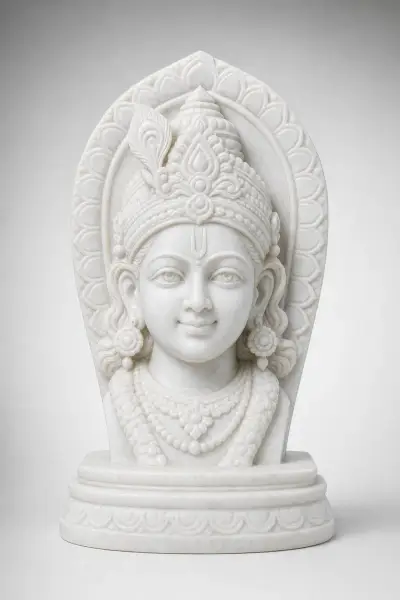
Custom Made Khatu Shyam Ji Statues in Marble Stone
Shyam Baba in the forms Khatu keeps him - the shish darshan, the crowned darbar murti, and Veer Barbarika with his three arrows - made to order in Makrana white, Vietnam white, black stone or cast marble dust.
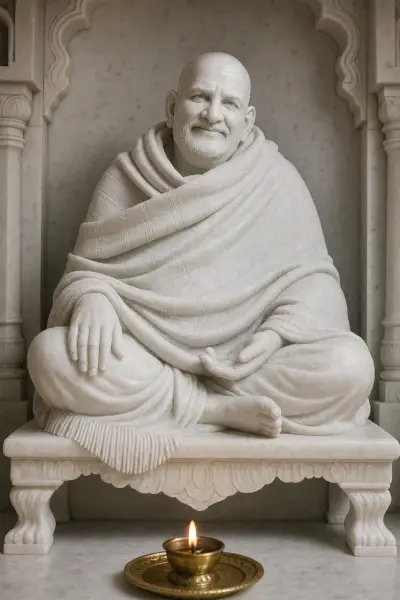
Custom Made Neem Karoli Baba Marble Murti
Carved to order by the master sculptors we work with in Jaipur: the bare head, the short grey beard and the chequered blanket, hand-painted or left in plain white marble, in the size your ghar mandir needs.
Custom Garden Buddha Statues for Outdoor Peace
A garden Buddha invites serenity to outdoor spaces. Define height, posture and patina, and Jaipur artisans craft it for you.
Custom Made Meditating Buddha Statues in Marble Stone
Design your own marble meditating Buddha. Choose posture, mudra, and size, all hand-carved in Jaipur.
Custom Made Ganesh Statues in Marble Stone
Hand-carved Ganesh statues in marble: sitting, blessing, or dancing, in your choice of stone and size. Traditional Jaipur craftsmanship. Start with a free WhatsApp consultation.
Custom Made Standing Buddha Statues in Marble Stone
Standing Buddha statues in marble stone, hand-carved in Jaipur and customised to your size, style and finish.