
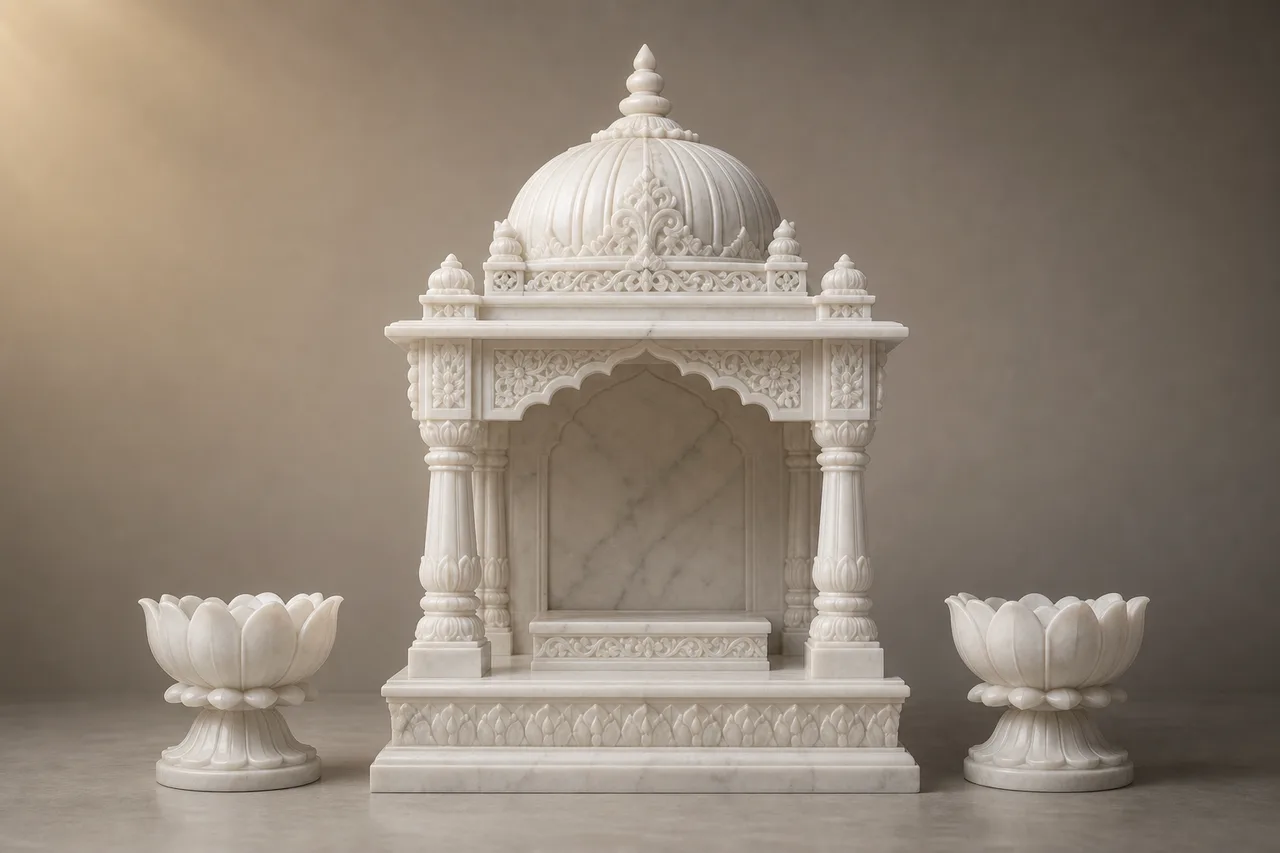
Marble Pooja Room Décor & Accessories
Handcrafted marble pooja-room essentials: diyas, oil lamps, incense and candle holders, urli, and mandirs to complete a serene home shrine. Choose your stone, size, and finish, or start with a free WhatsApp consultation.
Browse marble pooja room décor
Pieces are made to order in your choice of marble and finish, unless a piece's own page says otherwise, and are designed to sit beautifully together in one shrine. Browse diyas, lamps, holders, and mandirs. Then share your pooja corner on WhatsApp for a matched set.

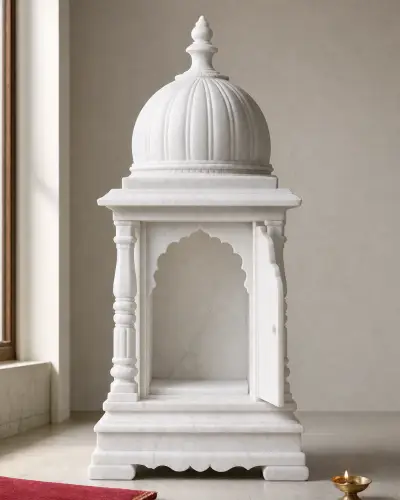
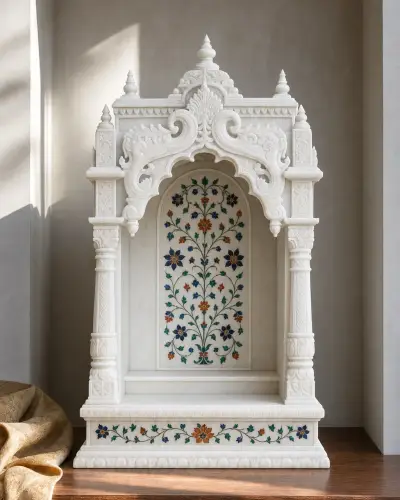
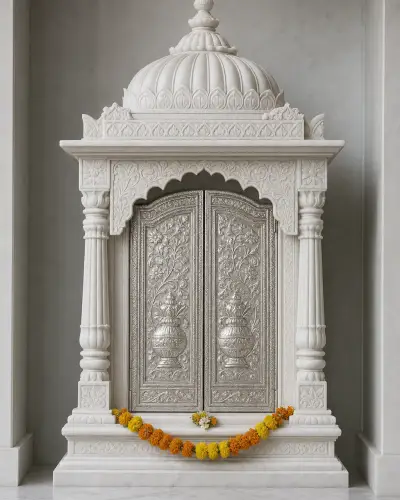
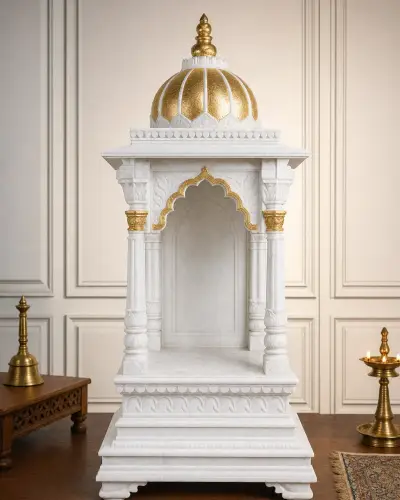
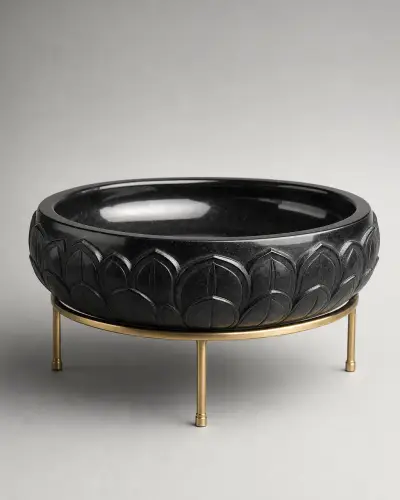
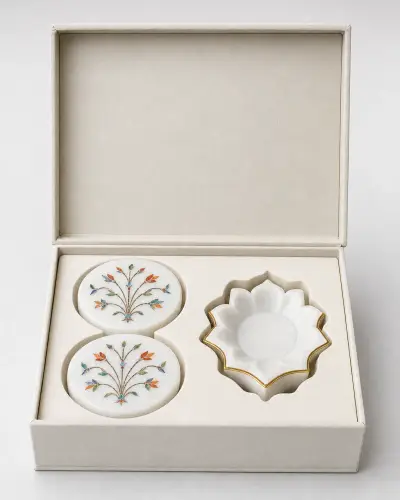
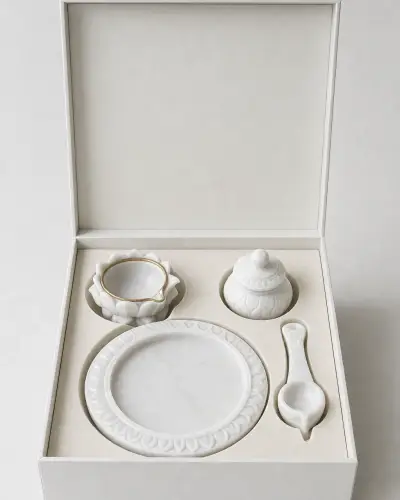
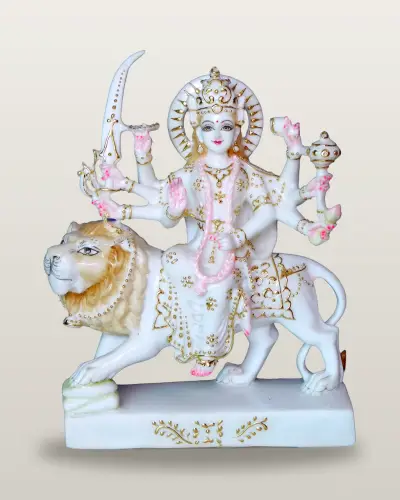
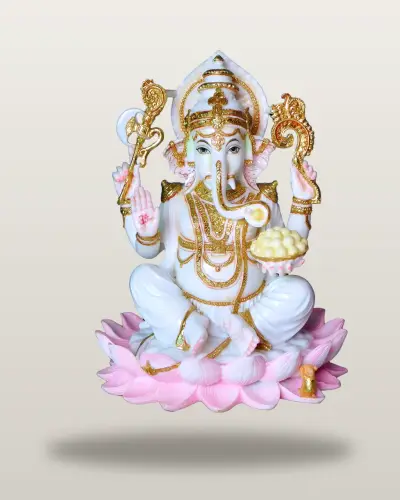
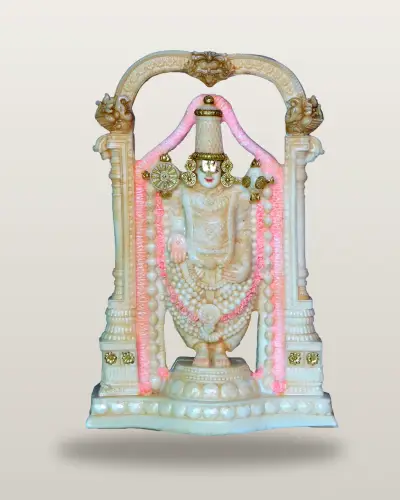
Showing 15 of 31 products
Marble pieces for the pooja room
Most of this site is about murtis. This page is about everything else in the shrine: the mandir the murti sits in, the diya that is lit in front of it, the incense holder, the lamps, the tray. These are the objects a pooja room actually uses daily, and they are usually bought piecemeal in brass or steel and then never quite match. Carved in marble to a size you specify, they sit together. Each piece can be made to order by the master sculptors we work with, in Makrana white marble, Vietnam white marble, black stone, Dholpur pink sandstone or cast marble dust.
For diyas, thalis and puja pieces given as presents at Diwali, see the marble Diwali gifts collection.
What is in this collection
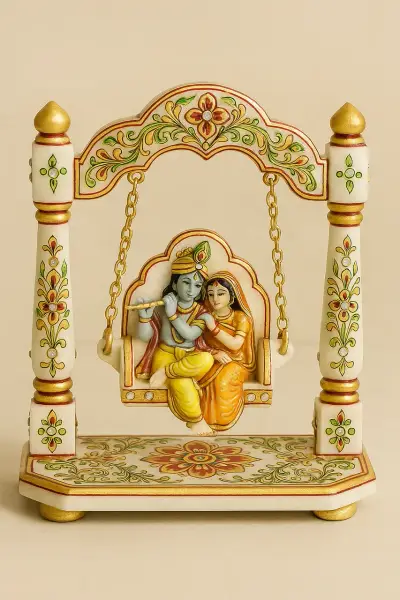
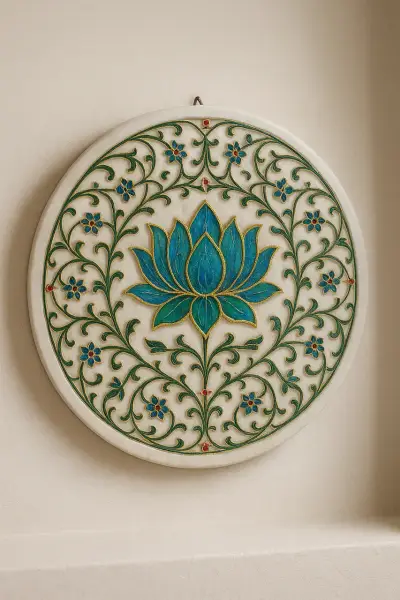
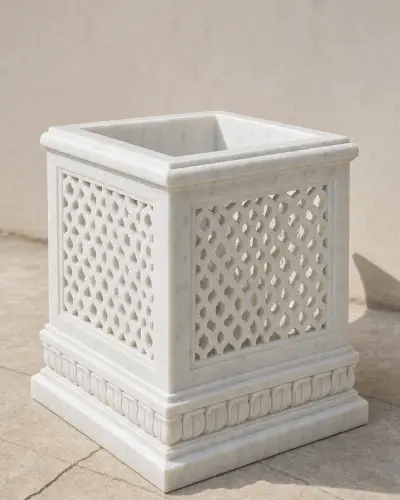
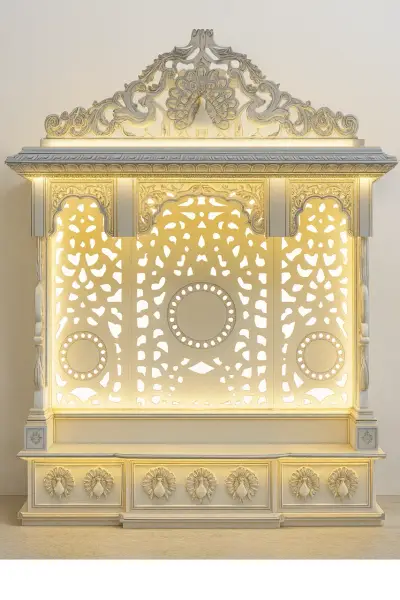
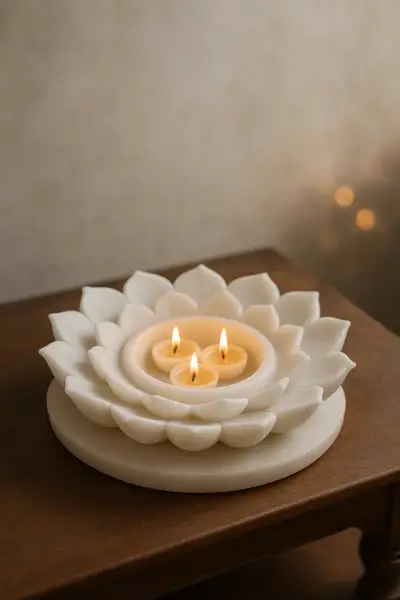
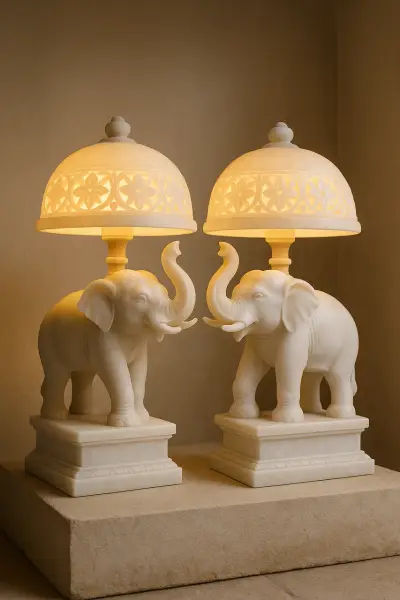
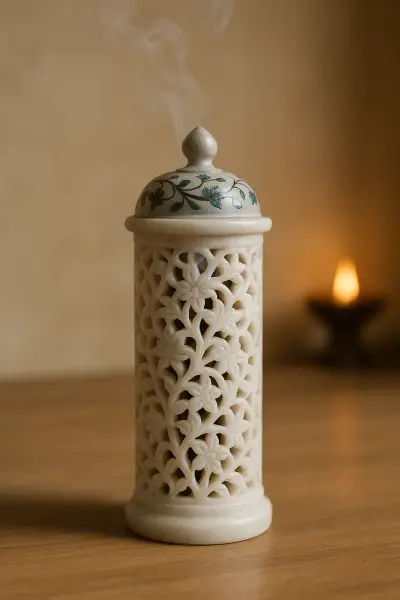
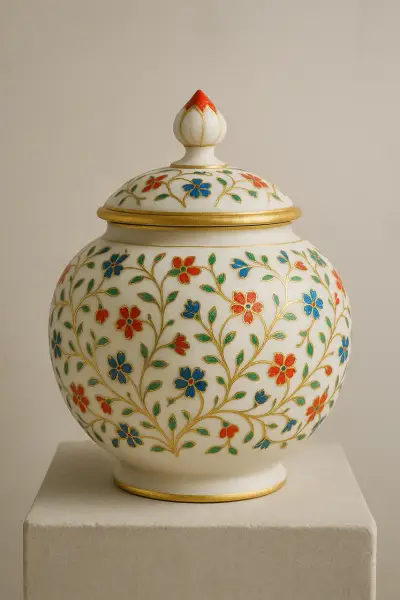
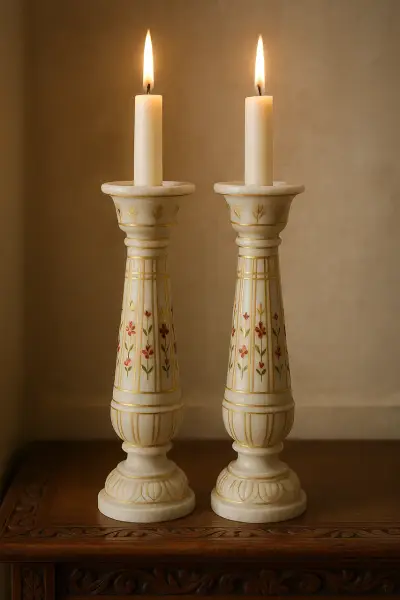
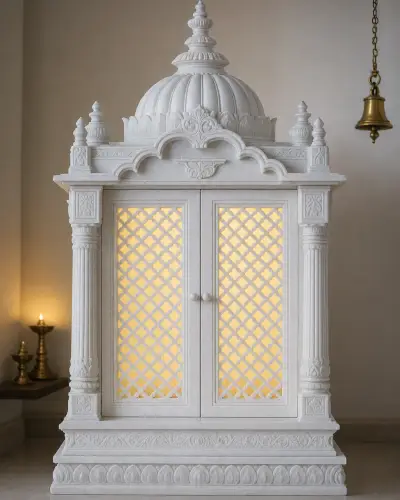
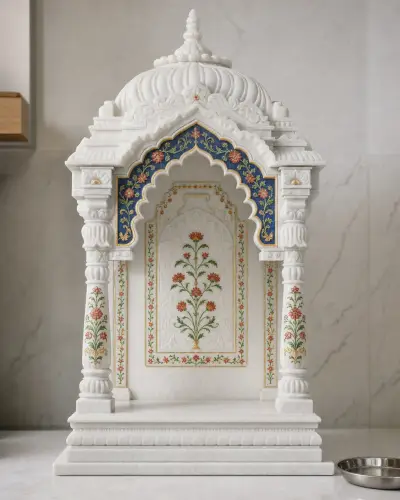
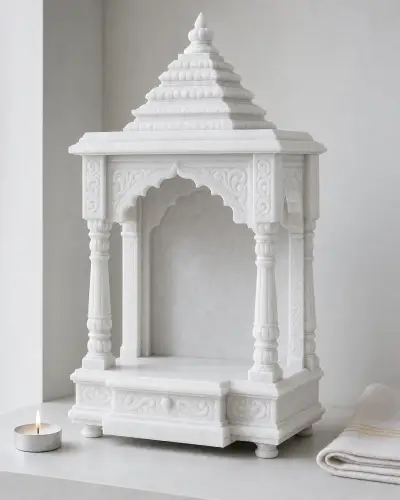
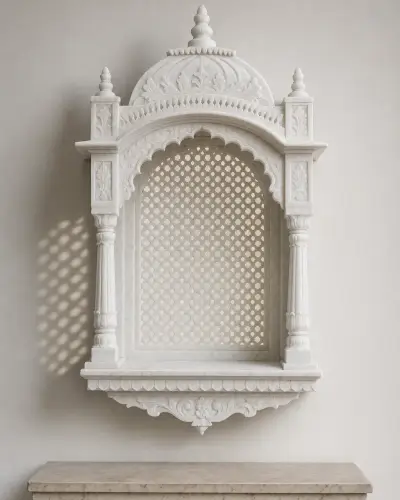
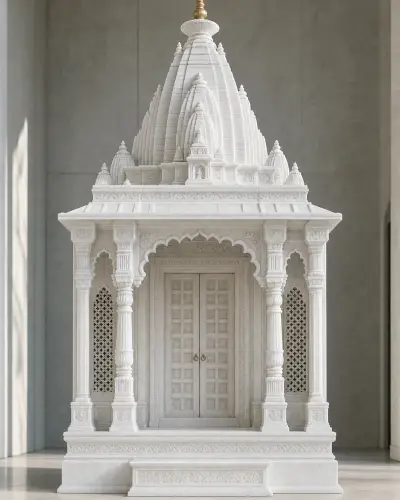
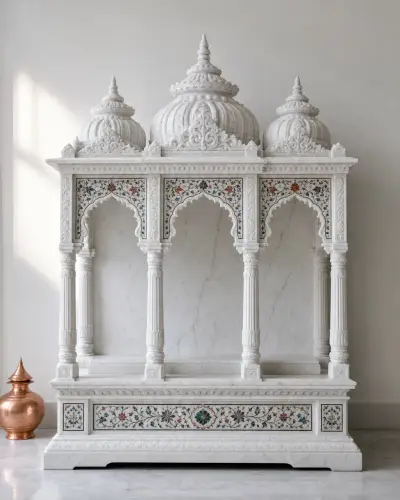
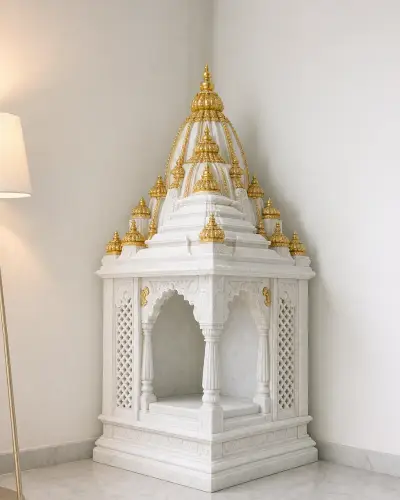
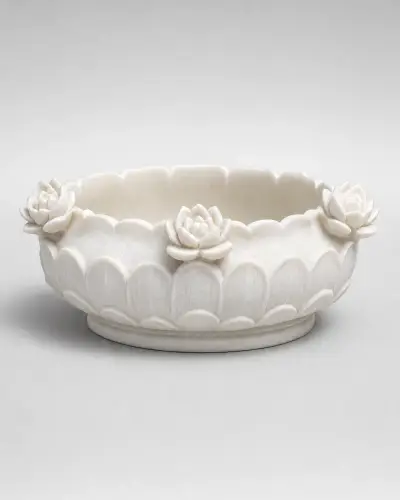
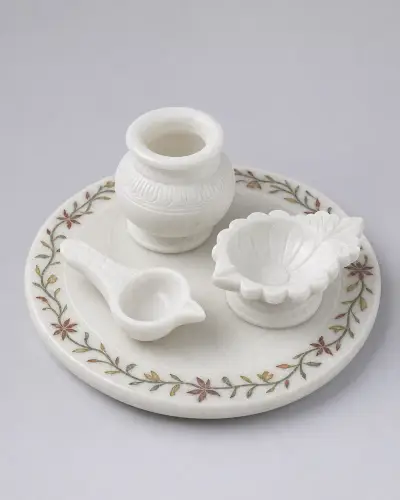
The mandirs are the largest pieces: a triple-dome temple with a floral inlay back panel, a temple with peacock carving and a backlit jali panel, and a shikhar-top temple with a carved back panel. For daily use there is a 12-inch lotus diya holder, a pair of 18-inch dome-jali lamps, a 10-inch dome-jali incense holder and fluted and lotus candle holders at 12 inches. Around the room there is a 12-inch meenakari floral urn, an 18-inch lotus and floral-vine wall plaque, and a hand-painted Radha Krishna jhula for a shelf.
Start with the mandir, then the rest
The order in which you buy these matters more than people expect, and getting it wrong is the most common regret in a pooja room.
Buy the mandir first, or at least decide its size first. Every other object is scaled against it: a 12-inch diya holder that looks generous alone is lost beside a 3-foot temple, and a pair of 18-inch lamps will crowd a small shelf mandir entirely. The mandir also fixes the height at which the murti sits, which in turn determines whether a tall lamp blocks darshan or frames it.
Then the murti, then the daily-use pieces. Diyas, incense and lamps are the items handled every morning, so they want to be within easy reach of where the person praying actually sits or stands, not arranged for symmetry.
The wall and floor objects, such as a plaque or an urn, come last, and only if the room has space left. A pooja room that is crowded stops being restful, which defeats the point of building one.
Jali, inlay and meenakari: the three decorative treatments
The pieces here use three different techniques and they behave differently in a shrine.
Jali is pierced stone, the lattice on the dome lamps and the incense holder. Lit from within or behind, it throws patterned light, which is why it appears on lamps rather than on solid objects. It is the most fragile of the three and belongs where it will not be knocked.
Inlay sets contrasting stone into a carved recess, as on the triple-dome temple's back panel. It is flat to the touch and extremely durable (this is the Rajasthani technique that survives centuries on building facades), so it suits a piece that gets handled.
Meenakari here means coloured enamel work in carved channels, as on the floral urn. It is the most decorative and the most demanding to keep: dry cloth only, and keep it away from lamp soot.
Choosing among them is mostly about where the piece sits. Jali near a light source, inlay where hands go, meenakari where it will be looked at rather than touched.
Sizing a pooja room set
A shelf shrine in a flat is usually working with 24 to 36 inches of width, which takes a small mandir, one diya holder and an incense holder comfortably and nothing more. A dedicated pooja room with a 3- to 4-foot mandir will carry a pair of 18-inch lamps flanking it, a diya holder in front, and a wall plaque behind without feeling full. The 12-inch pieces here are the standard tabletop scale and the safest choice when you are unsure; the 18-inch lamps assume floor or a substantial platform. Tell us the width and depth you have and we will tell you what actually fits.
Caring for marble in a pooja room
This room is harder on stone than any other in the house, because of the lamps. Oil and ghee soot settles on nearby surfaces and will yellow white marble over years if left. Wipe the pieces around a lamp regularly with a dry cloth, and keep the diya far enough from a carved back panel that soot does not collect in the relief. Dry dusting is otherwise the whole routine. No acidic cleaners on any of the stones. No vinegar, no lemon, no bathroom descaler. Jali and meenakari take a soft dry brush rather than a cloth, which snags. Wipe spilt oil or kumkum promptly rather than letting it stand.
Commissioning pieces for your pooja room
Everything here is a starting point rather than a fixed range. A mandir at the width your alcove actually is, a diya holder in a stone shown here only on lamps, a matched set in one marble rather than pieces bought separately: all ordinary requests, and all agreed before carving begins. If you are building a pooja room from scratch, send the dimensions of the space and a photograph, and we will work out what fits it together. Message us on WhatsApp, and we will quote it and follow it through to your door.
Why choose Tilak Mandirwala for marble pooja room décor
Marble pooja essentials for your home shrine, personalised in stone, size, and finish
Made to be used
Diyas that hold oil, holders that seat incense true: functional, not just decorative.
Matched sets
Diyas, lamps, and holders carved to share one stone, finish, and design.
Choice of stone
Makrana white, green, black, or coloured marble. Mix to suit your shrine.
Sized for your corner
From a compact apartment niche to a full pooja-room console, sized to fit.
Heritage Jaipur work
Hand-carved and inlaid by Jaipur artisans in a centuries-old tradition.
Insured delivery
Multi-layer crating and insured transit for every fragile piece.
How we create your personalised pooja room décor
From idea to a serene home shrine, every step is transparent and custom
Share your idea
Pick from our gallery or send your own reference, size, and marble preference.
Finalise details
We confirm size, stone, finish, engraving, and any matched-set requirements.
Clear quote & timeline
We provide a transparent quotation and delivery schedule.
Advance to begin
A partial advance secures stone and supports initial artisan work.
Sculpting updates
We share photos of carving progress so you stay in control.
Approval & packing
Final photos shared before multi-layer wooden crating for safe transit.
Balance on delivery
Pay the remaining balance only once your order arrives safely.
Frequently asked questions
Get answers to common questions about our custom sculptures
What marble pooja items do you make?
Can you make a matched set so my pooja room looks cohesive?
How long do marble pooja accessories take to make?
Which marble can I choose? Do you make these in stones other than white?
Can I personalise pieces with engraving or inlay?
Do you take bulk, temple, or gifting orders?
How do I care for marble pooja items used every day?
Setting up or refreshing your pooja room?
Share a photo of your pooja corner on WhatsApp, and we'll suggest a matched set of marble diyas, lamps, and holders in your stone and budget.
Get a quote on WhatsAppImporting statues for your store or gallery? Marble statue supplier for importers
Prefer to see the marble before you order? Visit our showroom in Jaipur, or send us your size and budget.
Browse Other Collections
Discover more collections that might interest you
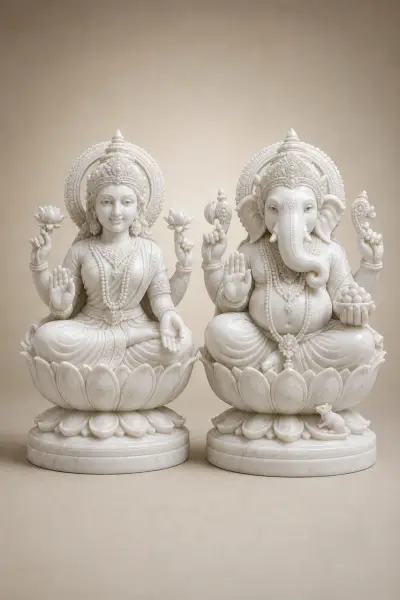
Themed Marble Collections
Curated, cross-category marble collections, assembled around an occasion or a space rather than a single deity. Explore griha-pravesh gifts, pooja-room décor, and more assorted sets, or start with a free WhatsApp consultation.
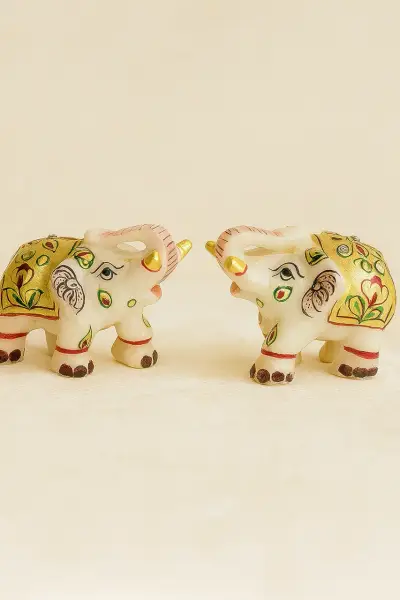
Custom Made Marble Handicraft & Decor Items
From elegant elephants to urli bowls and trays, share your idea and we will have it carved in a stone and style of your choice. Bulk orders supported.
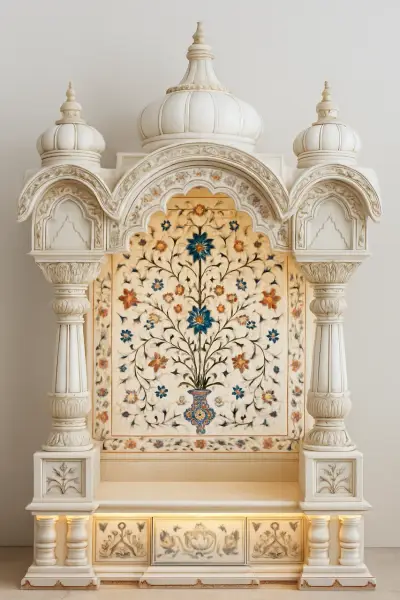
Custom Marble Temples
We create custom marble temples tailored to your home or commercial space. Choose the marble, carvings and dimensions for a unique, sacred centrepiece.
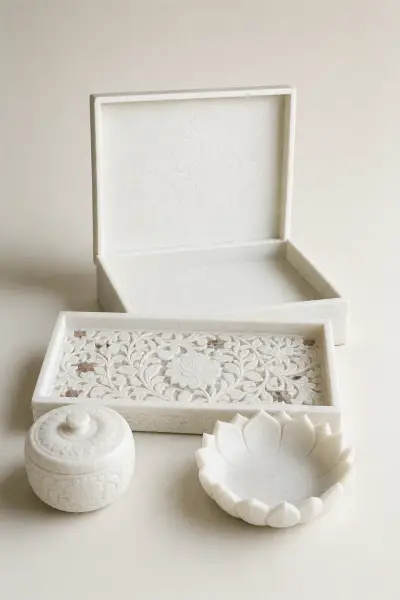
Custom Made Marble Wedding Gifts for Guests
Pieces worth handing over, carved in Rajasthani marble by the sculptors we work with, sized so a guest can carry one home, and made to order in the quantity you need.
Marble Idols & Gifts for Griha Pravesh & Housewarming
Handcrafted marble idols and décor for a new home: Lakshmi-Ganesh for prosperity, Ram-Sita for harmony, and Vastu-friendly gifts for griha pravesh. Choose your stone and size, or start with a free WhatsApp consultation.
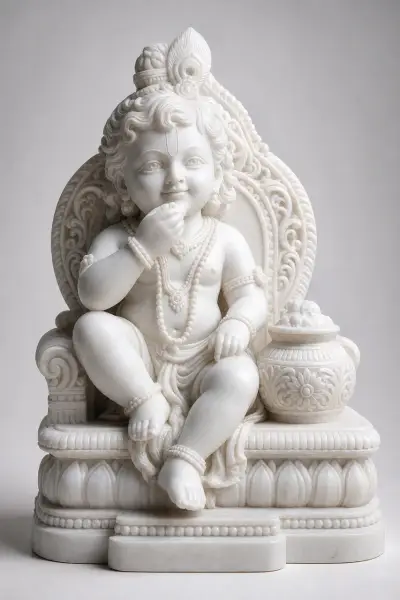
Marble Krishna Murtis for Janmashtami
Hand-carved marble murtis for Janmashtami: the infant Laddu Gopal, the Radha Krishna jugal jodi, Shrinathji and the flute-playing Murli Manohar. Start with a free WhatsApp consultation.