

Marble Krishna Murtis for Janmashtami
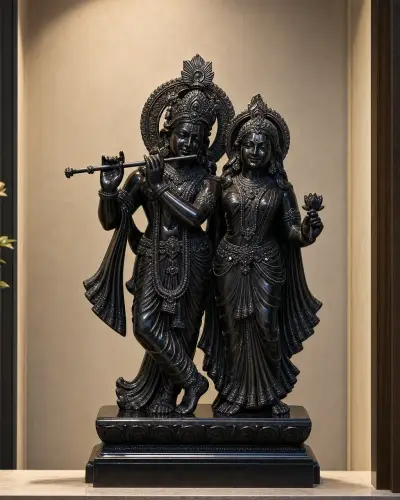
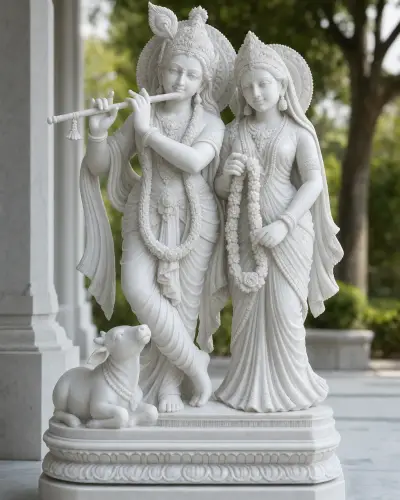
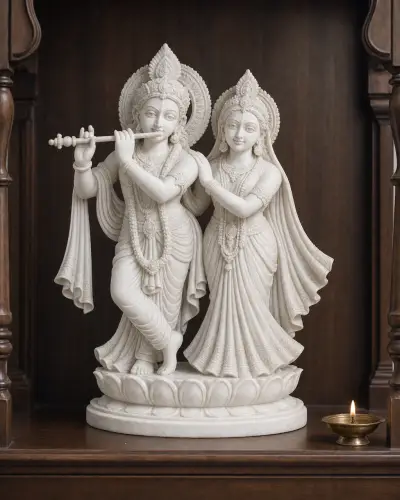
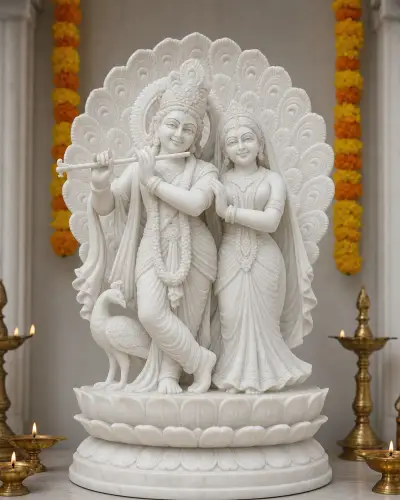
Hand-carved marble murtis for Janmashtami: the infant Laddu Gopal, the Radha Krishna jugal jodi, Shrinathji and the flute-playing Murli Manohar. Start with a free WhatsApp consultation.
Browse Janmashtami murtis and jhulas
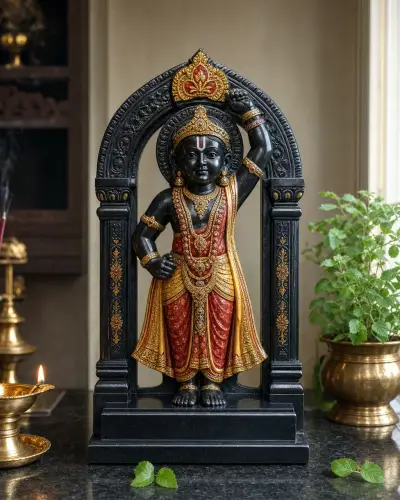
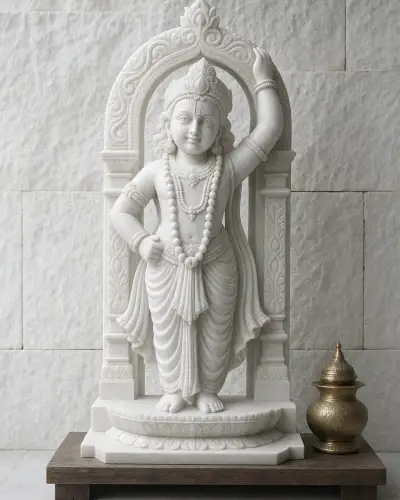
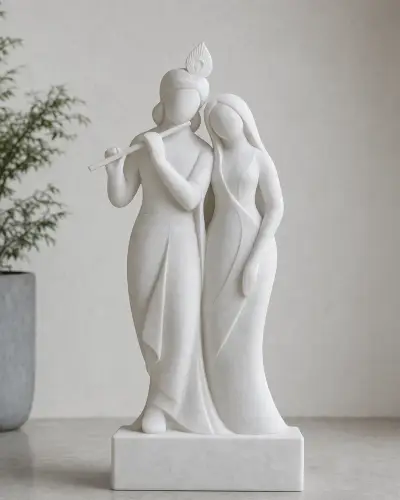
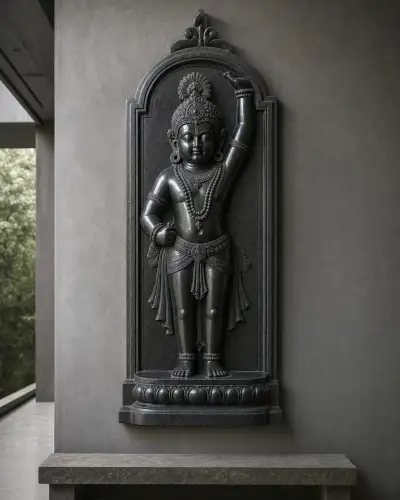
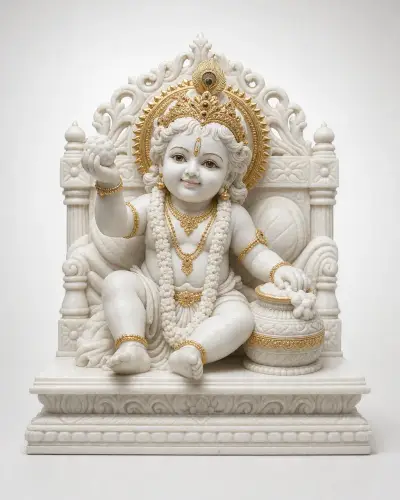
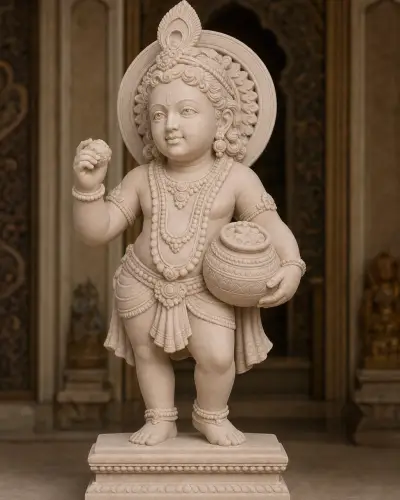
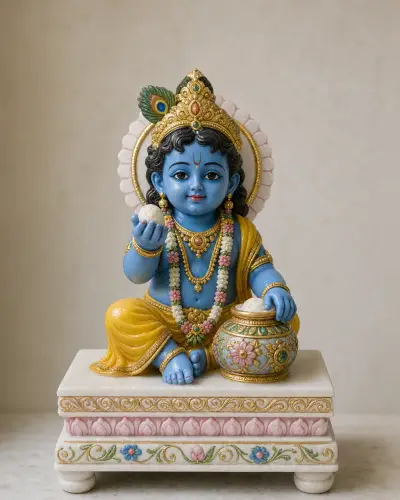
Browse the infant forms, the pairs and the Shrinathji reliefs. Tell us what catches your eye on WhatsApp: some pieces are ready to ship, others we commission for you.
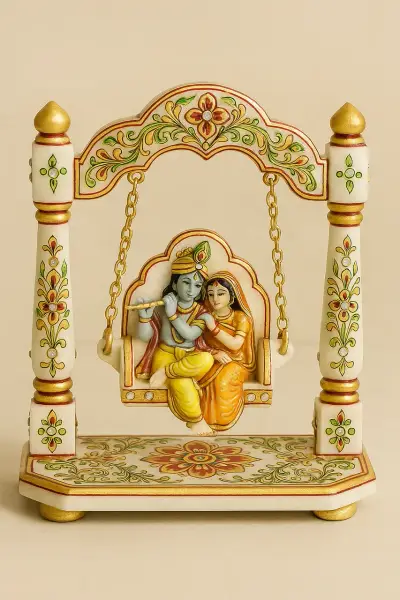
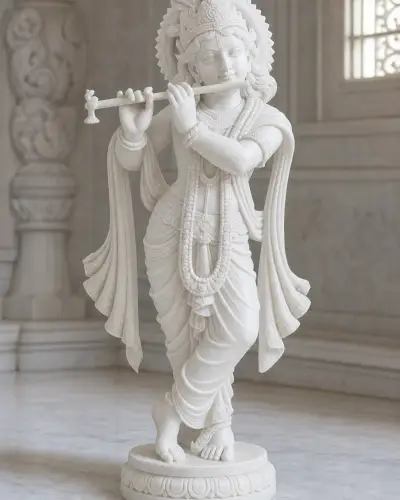
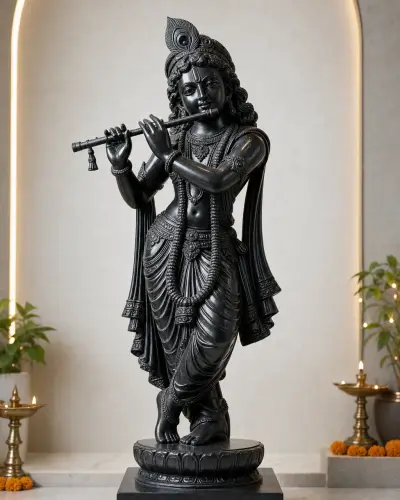
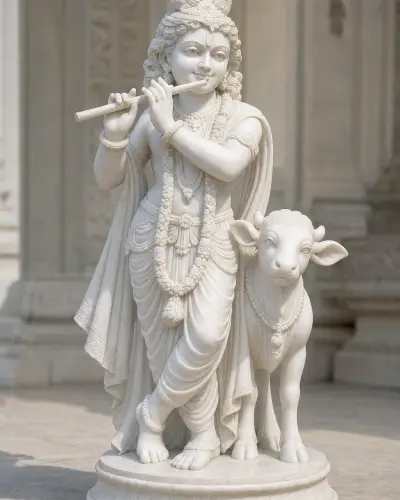
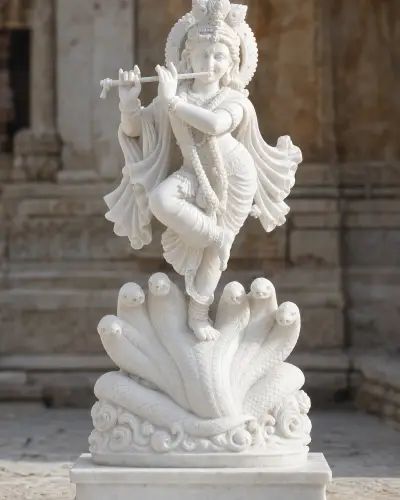
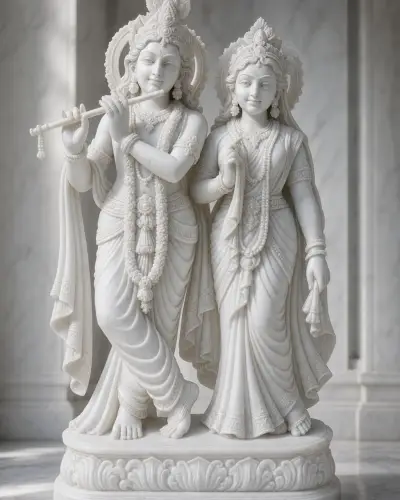
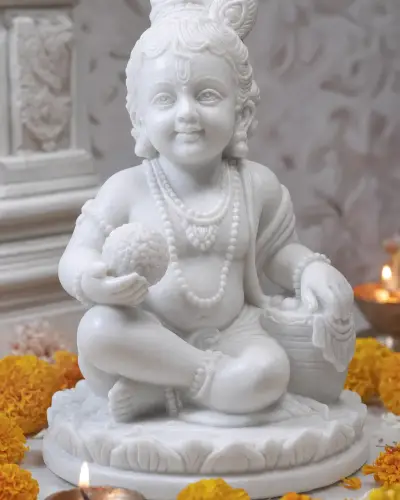
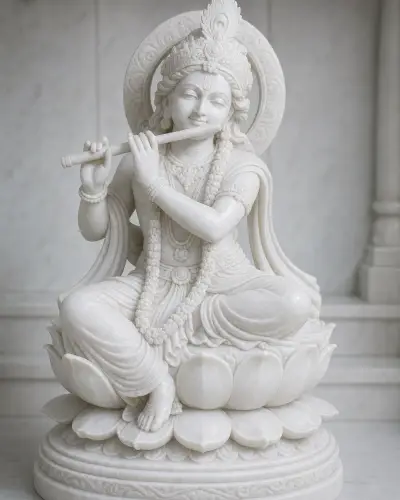
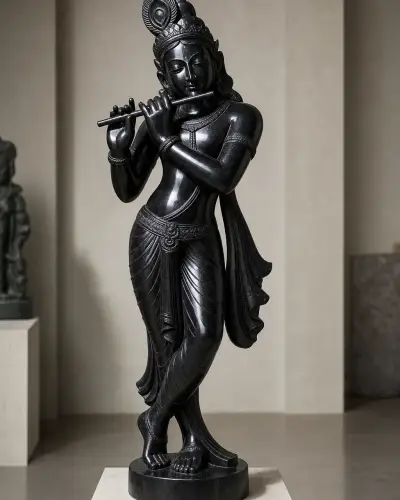
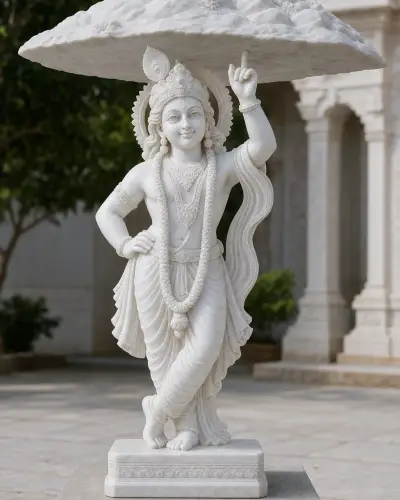
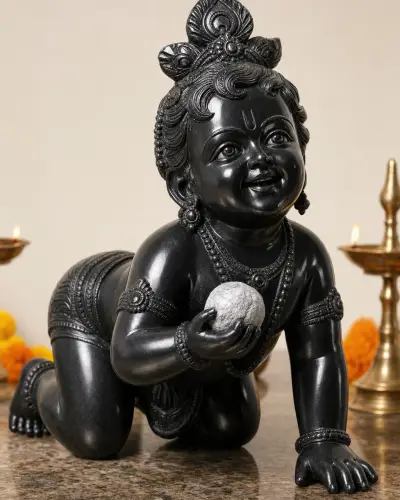
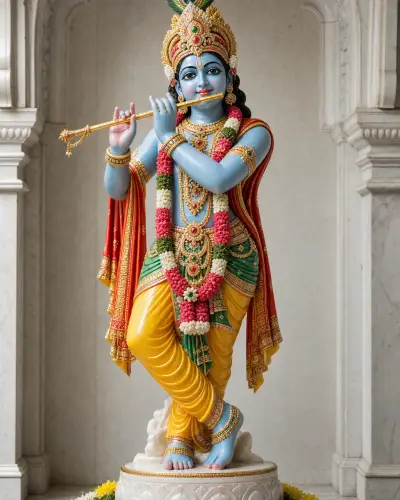
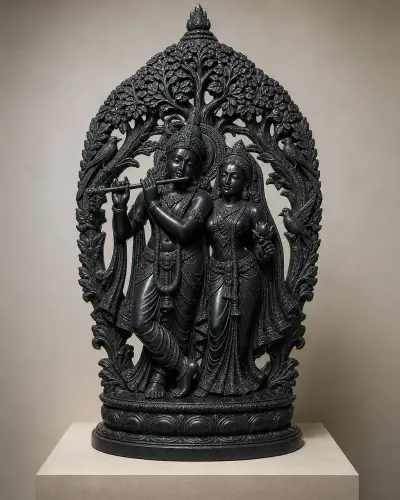
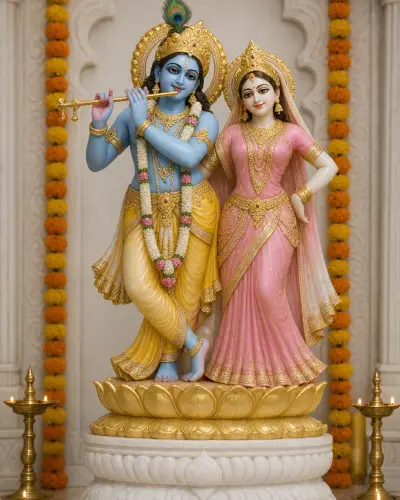
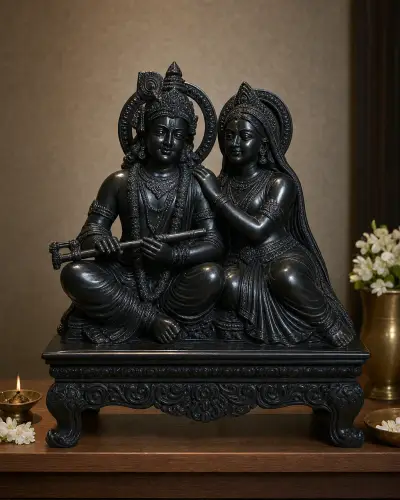
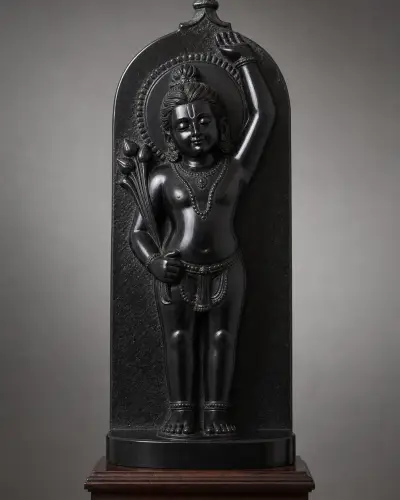
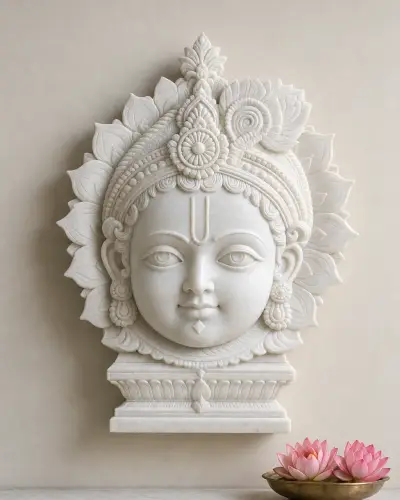
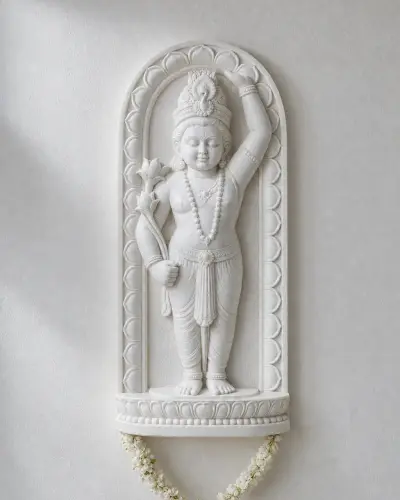
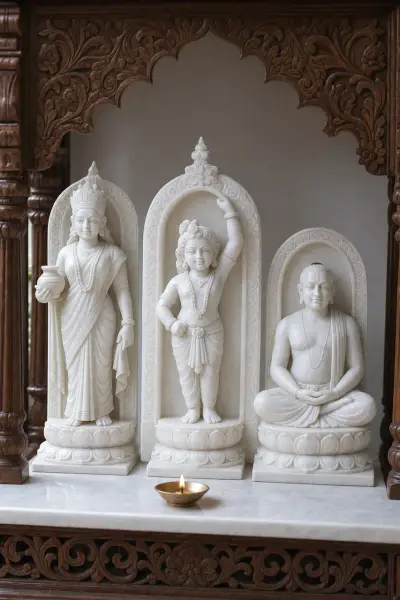
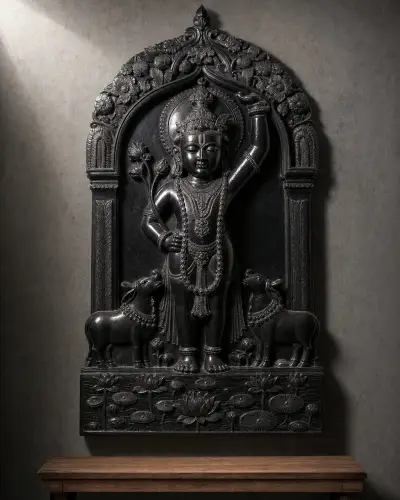
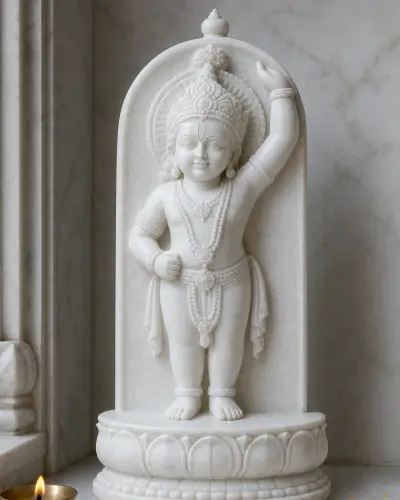
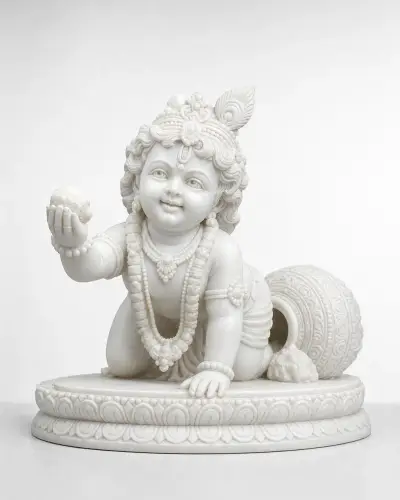
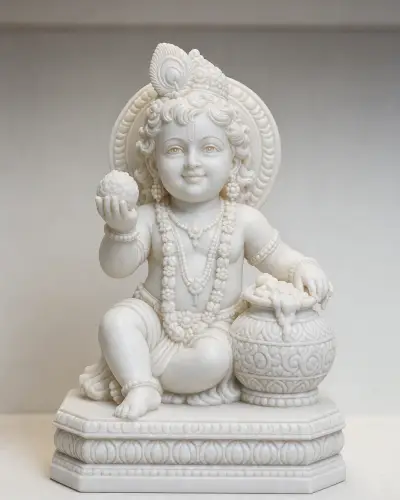
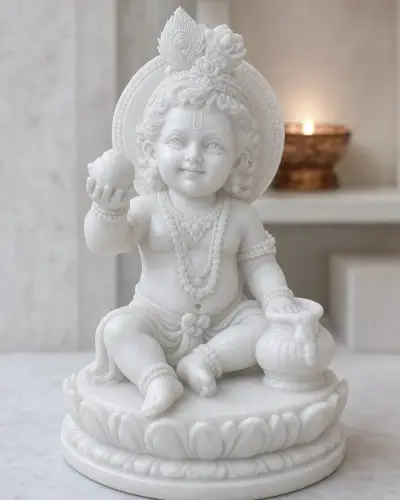
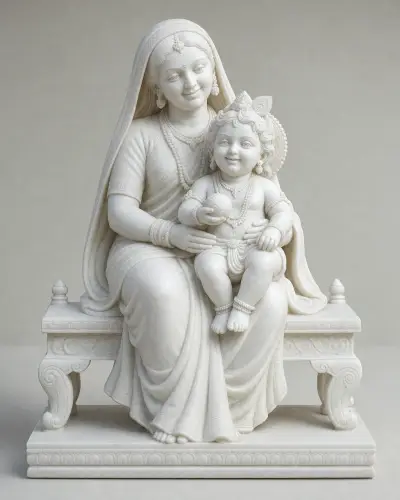
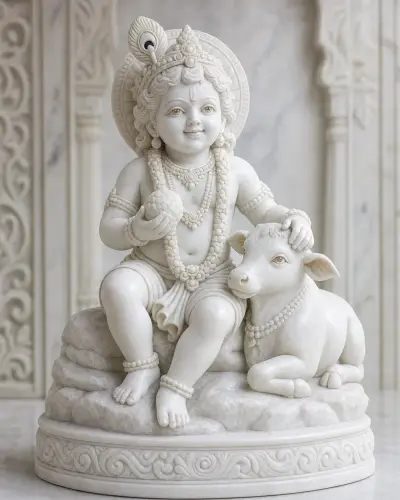
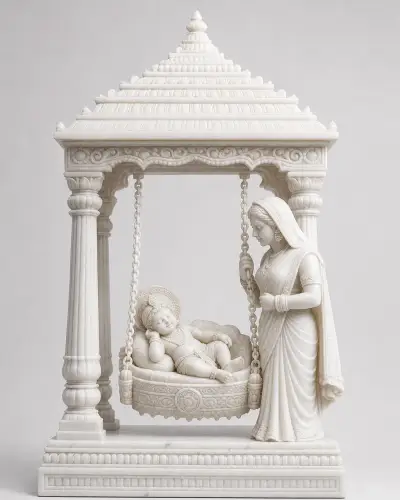
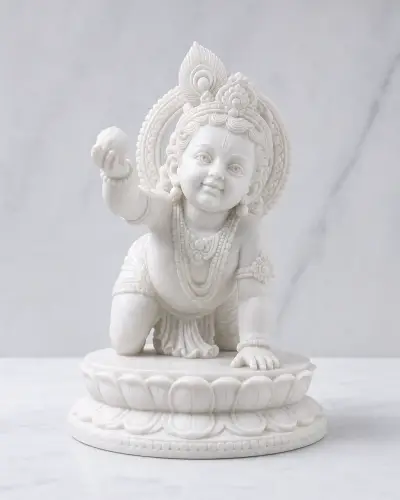
Showing 15 of 49 products
Krishna murtis for Janmashtami
Janmashtami falls on 4 September in 2026, and it is the one night of the year when the Krishna murti stops being something on a shelf and becomes the centre of the house. The birth is marked at midnight: the murti is bathed, dressed in new clothes, laid in a cradle and rocked. Families plan for it weeks ahead, and what they plan for depends a great deal on where they are from.
This collection gathers the whole Krishna line into one place for that week: the infant, the pair, the Nathdwara svarupa and the grown flute player. The pieces run from a six-inch murti made for a pooja shelf to four-foot temple-scale figures, carved for you by the master sculptors and artist families we work with in Rajasthan.
One festival, four different murtis
This is worth understanding before you choose, and it is the reason this page exists instead of sending you straight to a single deity page.
Janmashtami is Krishna's birth, so for most North Indian and Braj households the murti of the night is the infant: Laddu Gopal, Bal Gopal, or the crawling Makhan Chor caught with a stolen ball of butter. He is kept as a child of the house rather than as a deity at a distance.
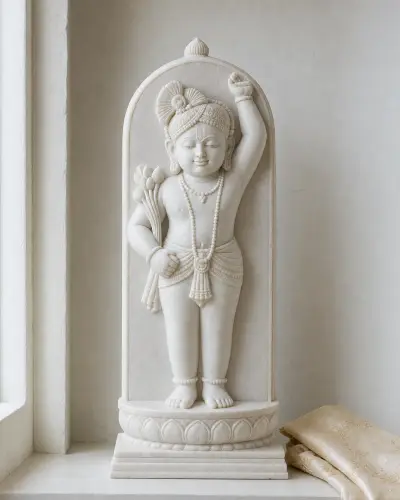
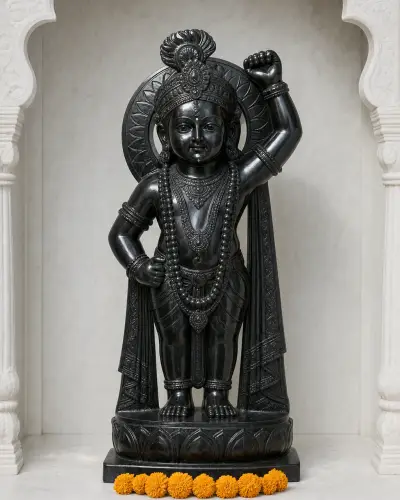
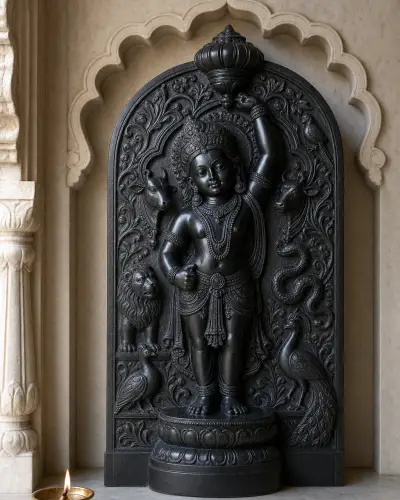
A Pushtimarg household installs no infant at all. Their darshan is Shrinathji, with the raised left arm and the stele rather than a figure in the round, and Janmashtami at Nathdwara is the largest utsav of their year.
Families whose mandir is devotional rather than parental keep the Radha Krishna jugal jodi as the year-round murti and bring out an infant only for the utsav.
A temple, a hall or a courtyard usually wants the grown Krishna: Venugopal with the flute and a calf at his feet, or Govardhan-dhari with the hill lifted on one finger.
None of these is more correct than the others. They are four traditions arriving at the same night, and all four are here.
What this collection gathers
- Infant forms: seated with a butter ball, crawling as Makhan Chor, Santan Gopal on a lotus chowki, and Yashoda holding the infant, from 6 to 18 inches.
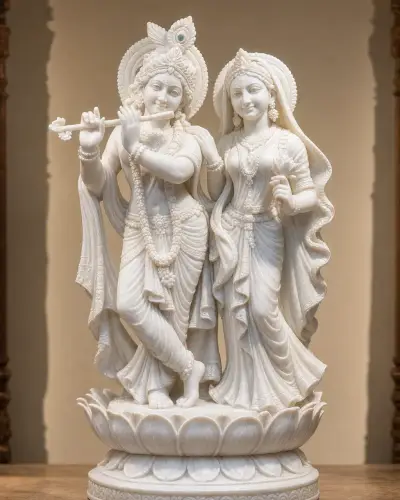
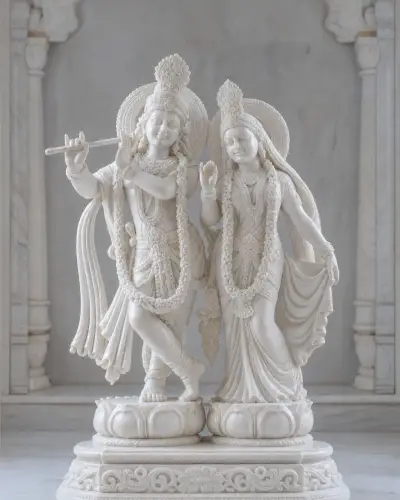
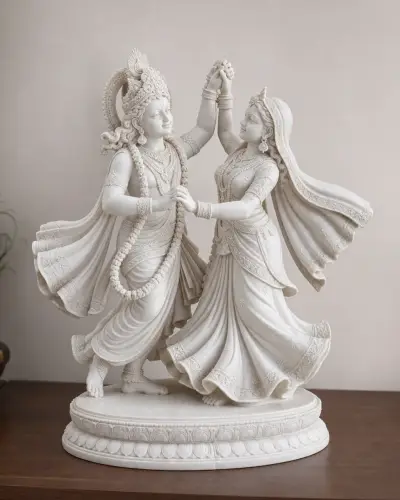
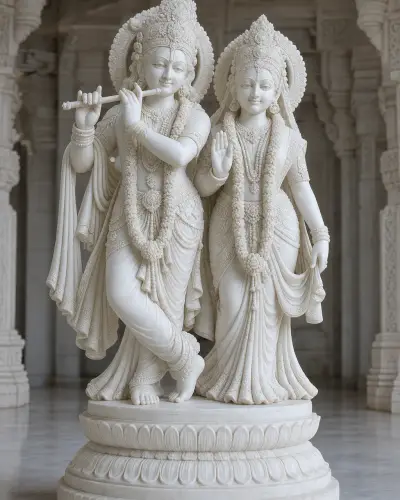
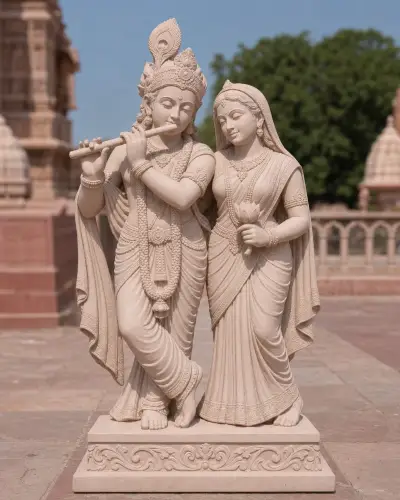
- Radha Krishna pairs: standing in tribhanga, seated on a carved chowki, dancing the raas leela, an ISKCON-style temple deity pair at 3.5 ft, and a Braj courtyard pair in pink sandstone at 4 ft.
- Shrinathji: the arched stele from 9 to 36 inches, the mukharvind panel where the lotus face alone is carved, a pichwai-style relief, and the matched Yamunaji and Mahaprabhuji set.
- Grown Krishna: Murli Manohar with the flute raised, Gopala with a calf, Kaliya Mardan dancing on the serpent, and Govardhan-dhari.
The pieces the night itself needs
Janmashtami is unusual among festivals in that the ritual needs objects, not only an image, and those objects are carved here too.
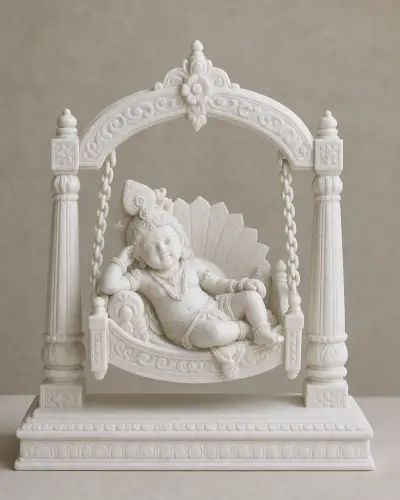
The jhula is the cradle the infant is placed in and rocked at midnight. It comes as a chain-hung cradle on a simple arched stand at 12 inches, and as a pillared pavilion at 18 inches with Krishna reclining asleep inside it. If you already own a murti and want a jhula sized to hold it, send us its measurements. That is a common request in August.
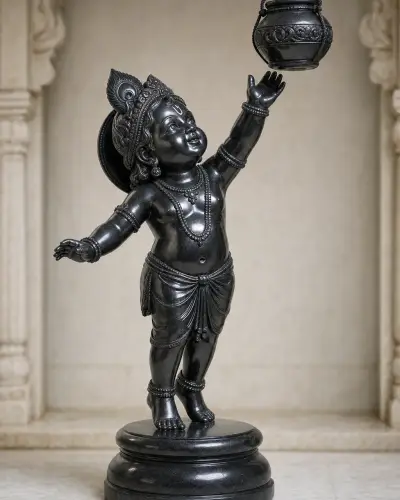
The dahi handi belongs to the morning after, when the pot is strung up and the govindas form their pyramid. The 18-inch piece shows Bal Krishna reaching for the suspended pot, cut in black granite so the polished surface reads against a white mandir.
And the butter runs through the whole infant line: a ball in the hand, a pot at the knee, a smear at the mouth. It is the iconography of the festival, not decoration.
Ready now, or carved for you
Two things can happen when you ask us for a Janmashtami murti, and it is worth knowing which one you are in.
Many pieces are already carved. The sculptors and artist families we work with keep finished work, and once you tell us the form and rough size we ask them directly and send you photographs of the actual piece, not a render. If one of them is right, there is no carving wait at all. The only thing left is getting it to your address, and we will tell you what that looks like for your city or country. Smaller murtis turn up ready far more often than temple-scale work does.
The rest is commissioned. You choose the form, the stone, the size and the finish, and it is carved to that brief over roughly six to ten weeks. That is the honest number, and it means a commission begun in late August is better aimed at Nandotsav, at the utsavs that follow, or at next year's Janmashtami with room to spare.
Tell us your date at the start and we will tell you which of the two you are looking at.
Choosing the stone
Every one of the five stones we work in appears somewhere in this collection.
Makrana white marble is the classic warm temple white, the stone of the Taj Mahal, and the most common choice for an infant murti. Vietnam white marble is cooler and brighter with a fine even grain, and it suits a piece that will be dressed in strong colours. Black stone takes a mirror polish and is striking for a Shrinathji stele or a dahi handi group, where a dark ground throws the carving forward. Dholpur pink sandstone is warm, matte and weather-tolerant. It is culturally at home here, since Vrindavan's own Govind Dev Ji and Madan Mohan temples are built from it, and it is the right answer for a courtyard pair. Cast marble dust carries fine detail at small sizes and keeps a modest budget sensible.
Tell us the stone on WhatsApp before anything begins, so the right block is sourced.
Sizing it for the mandir
For a pooja shelf, 6 to 12 inches is the working range and the one most infant murtis fall in. A mandir cabinet or a console takes 15 to 24 inches comfortably. A hall, a courtyard or a temple installation starts around 30 inches and runs up to the 4 ft pairs at the top of this collection.
Depth catches people out more often than height does: a Shrinathji stele is shallow and sits close to the wall, while a jhula pavilion needs clearance all round to be rocked. Send a photograph of the space with a rough shelf depth and we will suggest something that actually fits.
Caring for the murti after the utsav
Janmashtami is hard on stone in a way ordinary display is not. The murti is given abhishek with milk and panchamrit, marked with haldi and kumkum, and dressed in fabric that may run.
Wipe it down within a day or two rather than leaving residue to sit. Use a soft dry cloth first, then a barely damp one. Never use an acidic or bleach-based cleaner on marble. Lemon, vinegar and descaling liquids will etch a polished surface permanently, and haldi left in a carved fold will stain. Hand-painted and gold-leaf finishes want dry dusting only. Treated this way a marble murti outlasts the family that installs it.
Make it yours
Everything here is a starting point rather than a catalogue to pick from. If a piece is close but not right (a different stone, a jhula instead of a plinth, eighteen inches instead of twelve, plain stone instead of painted), say so, and we will design it with you and follow it through to your door.
And if what you have in mind is not on this page at all, that is just as welcome. Send a photograph, a family piece, a temple murti you grew up with, or a rough description. We will tell you honestly whether it exists ready-made somewhere, what it would take to commission, and what it will cost, before you commit to anything.
Why choose Tilak Mandirwala for Janmashtami murtis
Krishna murtis for the utsav, ready to ship or carved to your brief, in the stone and size you choose
Ready or commissioned
Some pieces are already carved and ship fast; the rest we commission for you.
Every Krishna form
Infant Laddu Gopal, the jugal jodi, Shrinathji reliefs and the flute-playing Murli Manohar.
Choice of stone
Five stones, from Makrana white through black granite to cast marble dust.
Sized for your mandir
From a 6-inch shelf murti to 4 ft temple-scale pairs.
Heritage Jaipur work
Carved by the master sculptors and artist families we work with in Rajasthan.
Insured delivery
Multi-layer crating, shipped across India and worldwide, insured in transit.
How we create your personalised Janmashtami murti
From idea to the murti in your mandir: every step is transparent and custom
Share your idea
Tell us the form, size and your date; send a reference photo if you have one.
Ready stock or commission
We check what is already carved and send photographs, or we confirm your commission brief.
Clear quote & timeline
We provide a transparent quotation and an honest delivery schedule for your date.
Advance to begin
A partial advance secures stone and supports initial artisan work.
Sculpting updates
We share photos of carving progress so you stay in control.
Approval & packing
Final photos shared before multi-layer wooden crating for safe transit.
Balance on delivery
Pay remaining balance only once your murti arrives safely.
Frequently asked questions
Get answers to common questions about our custom sculptures
Can I get a murti in time for Janmashtami on 4 September?
Is everything made to order, or do you have ready pieces?
Which Krishna form do families install for Janmashtami?
Do you make the jhula and the dahi handi pieces?
Which stone can I choose for a Janmashtami murti?
What size murti should I choose for a home mandir?
Can you ship abroad in time for the festival?
Setting up your mandir for Janmashtami?
Share a reference or your shelf dimensions on WhatsApp, and we will quote stone, size and an honest timeline.
WhatsApp for a QuoteImporting statues for your store or gallery? Marble statue supplier for importers
Prefer to see the marble before you order? Visit our showroom in Jaipur, or send us your size and budget.
Browse Other Collections
Discover more collections that might interest you
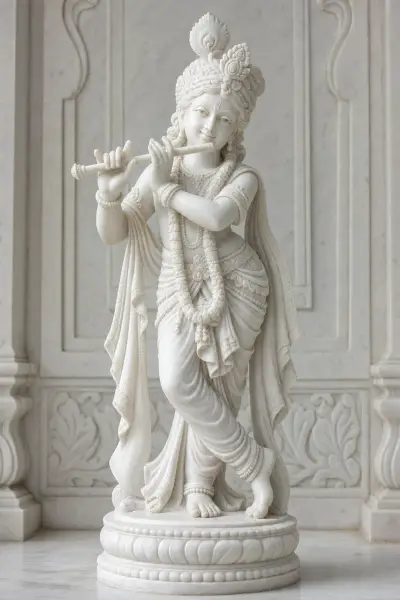
Custom Made Krishna Statues in Marble Stone
Hand-carved Krishna statues in marble: Murli Manohar with flute, Bal Gopal, Radha-Krishna pairs, and narrative forms like Kaliya Mardan. Choose your stone, size, and pose. Traditional Jaipur craftsmanship. Start with a free WhatsApp consultation.
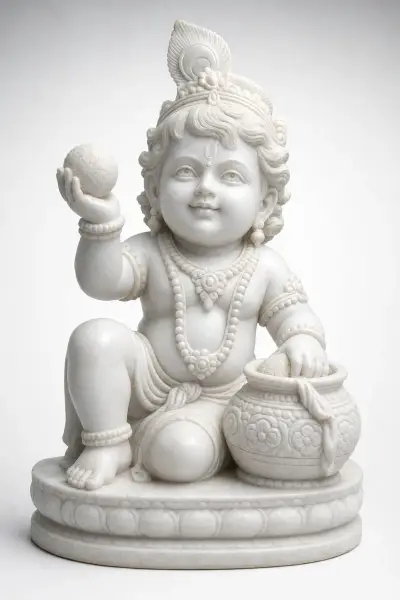
Custom Made Laddu Gopal Marble Murtis — Bal Gopal & Makhan Chor
The infant Krishna, carved to order in Makrana and Vietnam white marble, Dholpur pink sandstone, black stone and cast marble dust, from a 6-inch shelf murti to an 18-inch jhula.
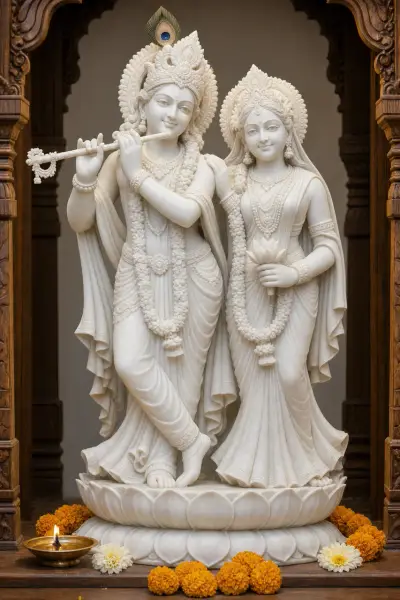
Custom Made Radha Krishna Jugal Jodi Statues in Marble Stone
Hand-carved Radha Krishna jugal jodi pairs in marble. Choose your stone, size and pose. Standing, seated, with peacock or cow. Start with a free WhatsApp consultation.
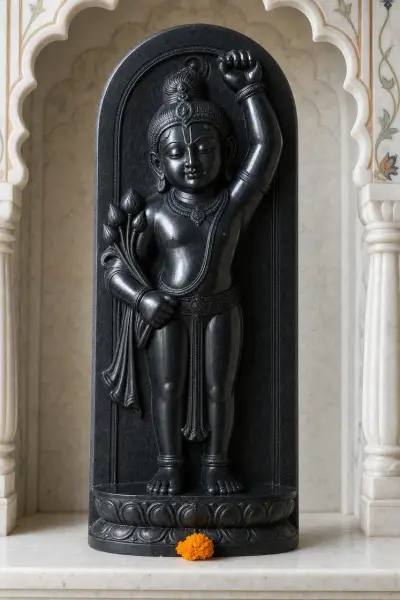
Custom Made Shrinathji Marble Murti — Nathdwara Swaroop
The Nathdwara swaroop, his left arm raised to the arch and his right hand at his waist, carved to order in black stone or white marble, from a 9-inch apartment mandir piece to a 36-inch wall panel.
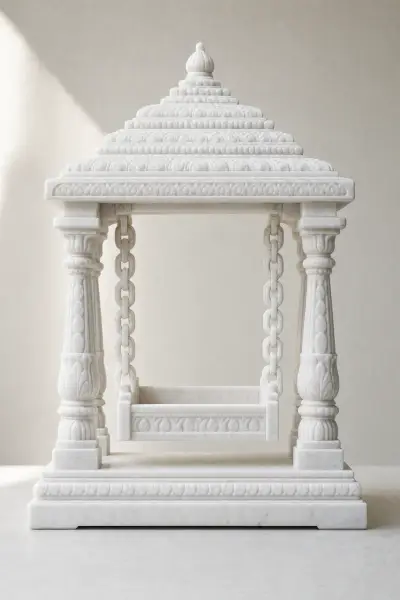
Custom Made Marble Jhula for Laddu Gopal & Krishna
Swings carved to order for the murti you already have, in Makrana and Vietnam white marble, Dholpur pink sandstone, black stone and cast marble dust, from a 9-inch cradle to a 24-inch pavilion.
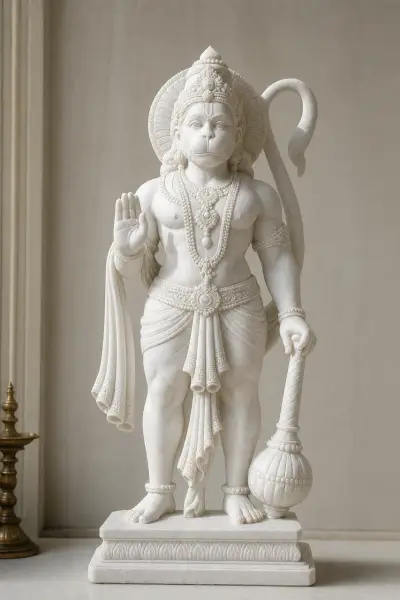
Custom Made Hanuman Statues in Marble Stone
Hand-carved Hanuman murtis in marble: standing blessing, Sankat Mochan kneeling, Panchmukhi, fierce Veer with gada, or flying with the Sanjeevani mountain. Choose your stone, size, and pose. Start with a free WhatsApp consultation.