
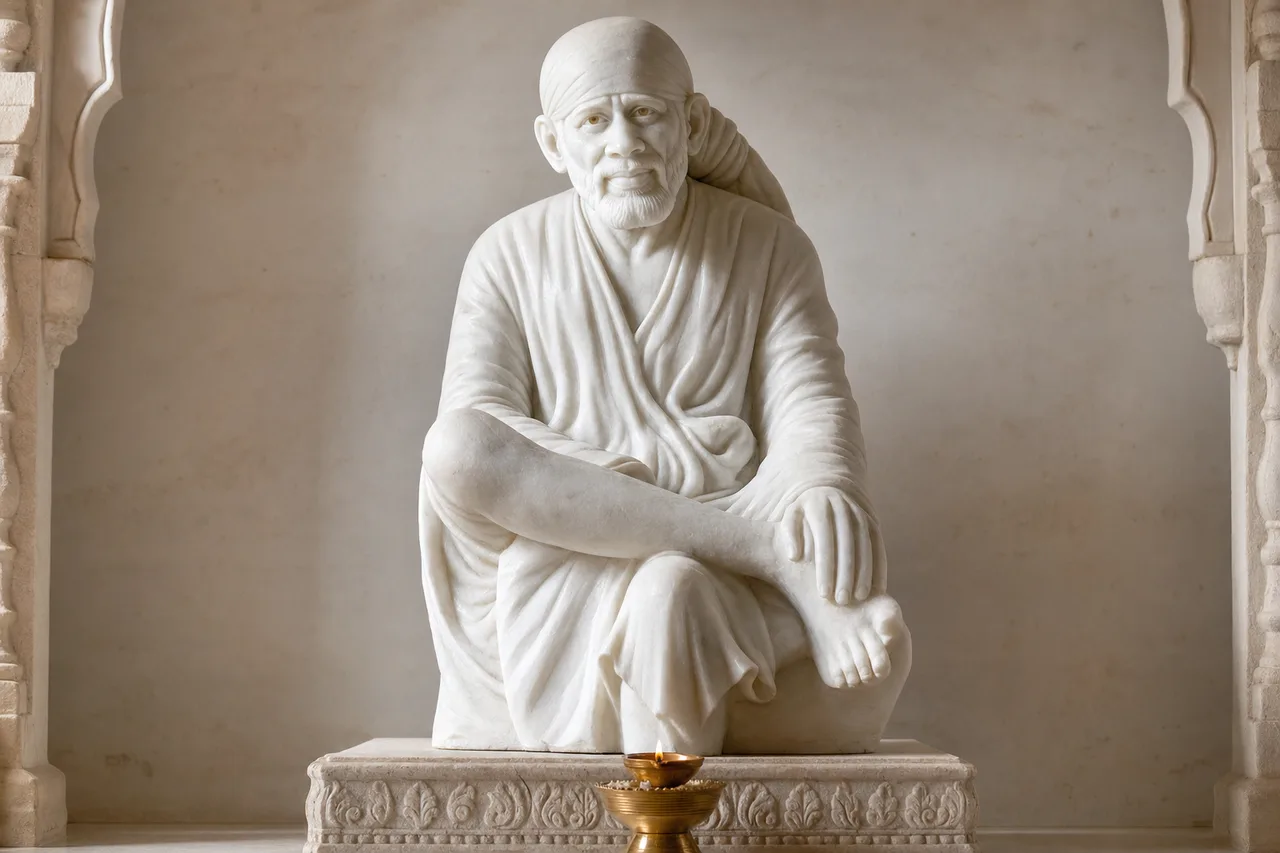
Custom Made Sai Baba Statues in Marble Stone
Hand-carved Shirdi Sai Baba murtis in marble and stone. Choose your stone, size, and form. The Dwarkamai stone posture, the Ashirwad blessing, the singhasan darshan form, or a standing murti for your courtyard, all in faithful iconography. Start with a free WhatsApp consultation.
Browse Sai Baba design inspirations
Every Sai Baba murti is made-to-order in your choice of stone. Browse the gallery for stone, size, and form inspiration, then share what catches your eye on WhatsApp.
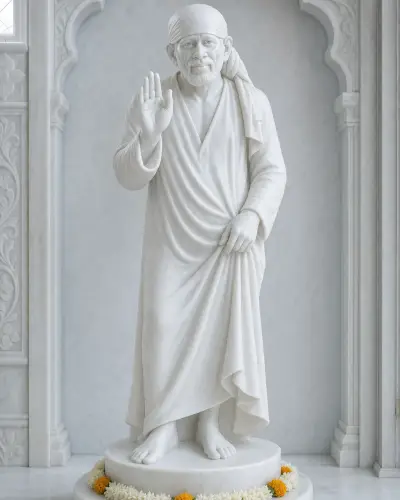
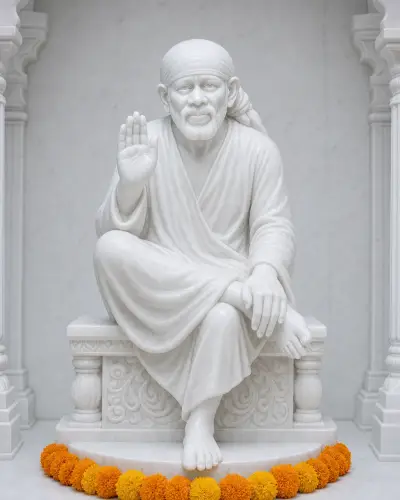
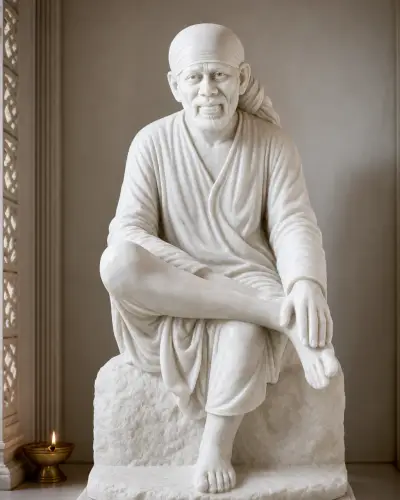
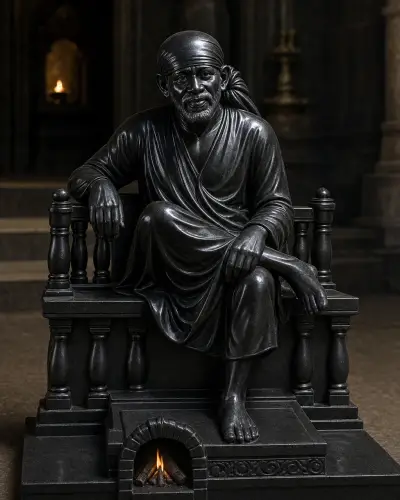
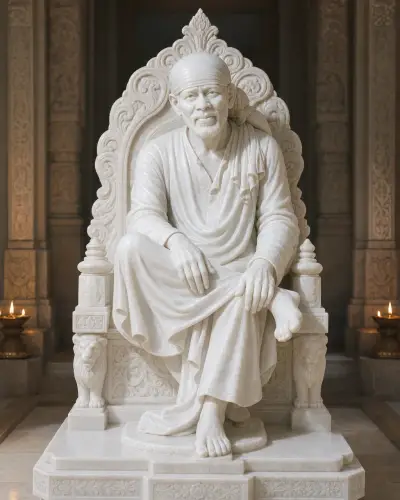
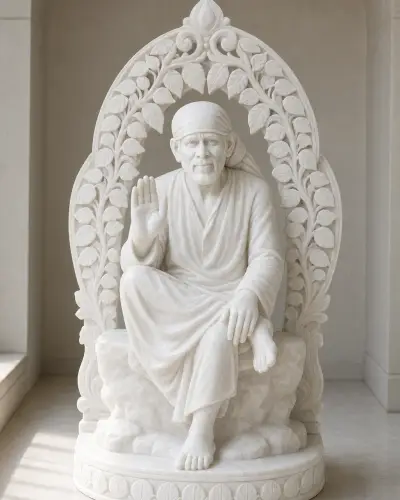
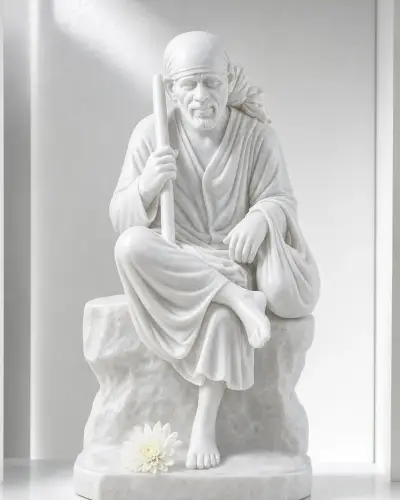
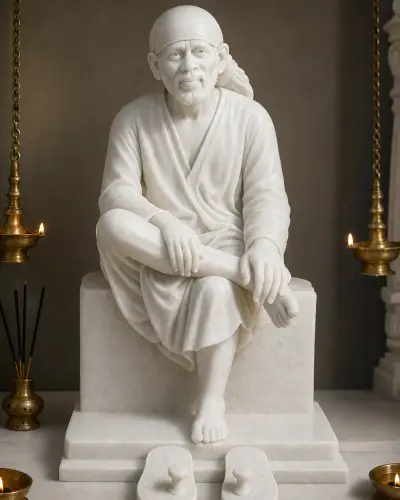
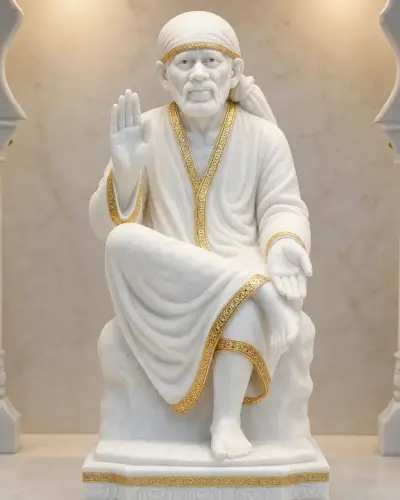
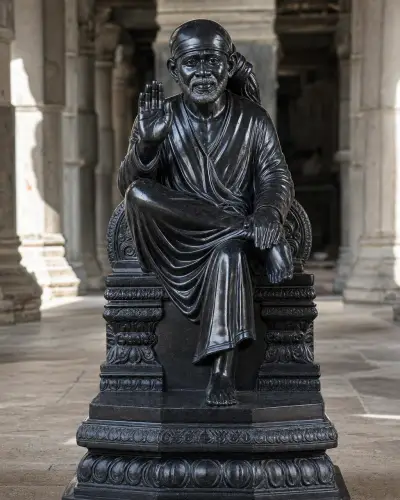
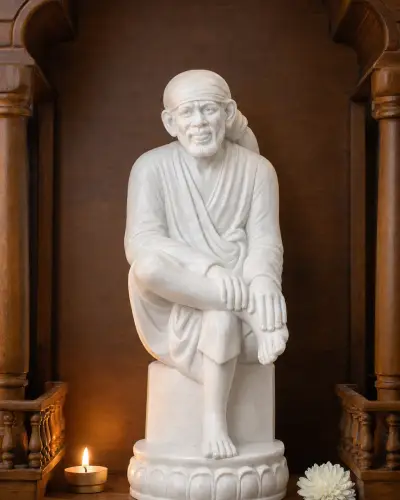
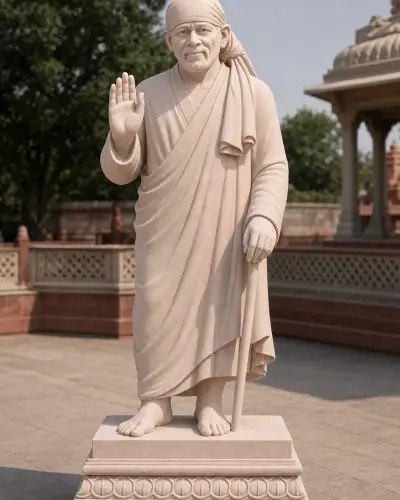
Shirdi Sai Baba murtis
Sai Baba is worshipped across an unusually wide spread of Indian households (Hindu and Muslim, Maharashtrian and Tamil, in Mumbai flats and in Gulf apartments), and the murti people want is almost always a likeness rather than an interpretation. That is the defining constraint of this collection. Unlike a deity whose form is carried by tradition, Baba lived within living memory and about seven photographs of him survive. Those photographs are what a devotee checks a murti against, and getting them right is the job. The pieces here are carved to order by the master sculptors we work with, in the stone, size and posture you choose.
The forms carved here
The Dwarkamai stone posture is the one most people picture: Baba seated on the stone slab at the mosque, right leg crossed over the left knee. The Ashirwad blessing form raises the right hand in benediction, and the singhasan throne murti follows the Samadhi Mandir at Shirdi, at 66 inches the scale a temple hall needs. Beyond those there is Baba before the dhuni, the fire he kept burning; beneath the neem canopy; with the satka and jholi, the staff and cloth bag of a wandering fakir; and with carved padukas, the footprints that are themselves an object of worship. Standing murtis are made too, at 36 inches and, in sandstone for a courtyard, at 60.
Getting the likeness right
A murti of a historical person is judged differently from a murti of a deity, and this is where most mass-produced Sai Baba statues quietly go wrong.
Four things carry the likeness. The kafni, the plain single-piece robe, falls straight, without the drapery flourishes a sculptor trained on classical figures tends to add. The head cloth is knotted, not wound like a turban and not a crown. The beard is short and close, not flowing. And the seated posture puts the right leg over the left knee, which reads as a man resting rather than a figure in meditation. Get the last one wrong and the murti stops looking like Baba and starts looking like a generic seated ascetic, which is the single most common error we are asked to correct on pieces bought elsewhere.
There is a second thing worth saying plainly. A murti becomes an object of worship through consecration and daily seva in your home, not through anything done at the bench. What the sculptor is responsible for is a faithful, well-finished likeness in sound stone. The rest is yours.
Choosing the stone
Makrana white marble is the most requested here and suits the forms where the robe and the face carry the detail: it is dense, close-grained, and holds a soft edge without chipping. Vietnam white marble is cooler and brighter, which lifts a smaller murti out of a dim alcove. Black stone gives a very different, quieter reading, and it is the usual choice for a temple darshan murti where the piece is seen from a distance under lamps. Dholpur pink sandstone is matte and warm and belongs outdoors, in a courtyard or an entrance shrine. Cast marble dust keeps a 10-inch home altar piece within easy reach.
Plain stone, gold leaf, or hand-painted
The finish changes the murti more than the stone does, and this collection deliberately shows both ends of it. Most pieces are left as plain polished stone, where the form and the grain do the work. The gold-leaf kafni takes 22k leaf on the robe against white marble, the treatment used on temple murtis dressed for festival days. Hand-painting is also available if you want the ochre robe and the skin tones of the well-known Shirdi portraits. Painted work needs a gentler cleaning routine and occasional touch-up over the years; plain stone essentially does not. Neither is more correct; it depends whether you want the murti to read as sculpture or as darshan.
Size and placement
Twelve inches suits a shelf altar or a niche; the 10-inch piece is for a compact home mandir where space is genuinely tight. Between 15 and 30 inches you are at the scale most pooja rooms settle on, large enough for aarti and garlanding without crowding the space. Above that (the 36-inch standing murti, the 48-inch darshan piece, the 66-inch singhasan), you are furnishing a hall, a trust temple or a covered courtyard, and access to the site matters as much as the stone. Baba is traditionally placed facing the worshipper at seated eye level, so measure the plinth before you settle on a height.
Caring for it
Dust dry with a soft cloth. If the murti is garlanded daily, lift the flowers off rather than letting them sit and stain. No acidic cleaners on any of the stones: no vinegar, no lemon, no descaler. Gold leaf and hand-painted surfaces take a dry cloth only, never a damp one.
Make it yours
The twelve pieces here are a starting point, not a fixed range. A form in a different stone, a different size, the Dwarkamai posture at the scale of the singhasan murti: those are ordinary requests, and they are settled before anything is cut. If you have a photograph of a murti from your own Sai Baba mandir, or from a temple you visit, send that instead; working from a reference you already trust is often the easiest way to get what you actually want. Message us on WhatsApp, and we will discuss it, quote it, and follow it through to delivery.
Why choose Tilak Mandirwala for Sai Baba statues
Shirdi Sai Baba murtis in marble and stone, personalised for your home shrine, mandir, or institutional install
Faithful likeness
Baba as devotees know him: the kafni robe, the head cloth knotted at the shoulder, and the right leg crossed over the left, worked from the canonical Shirdi references.
Every canonical form
The Dwarkamai stone posture, the Ashirwad blessing, the Samadhi Mandir singhasan darshan, a standing murti, or Baba with his satka and jholi.
Choice of stone
Makrana white marble, Vietnam white marble, black stone, Dholpur pink sandstone, or cast marble dust.
Sized for your space
From 10-inch home-altar murtis to 5ft-plus mandir installations at the height of the Shirdi original.
Heritage Jaipur work
Designed with you and carved for you by the master sculptors and artist families we work with, in a craft tradition Jaipur has held for centuries.
Insured delivery
Secure wooden crating and insured shipping for safe arrival, India and worldwide.
How we create your personalised Sai Baba statue
From idea to sacred murti, every step is transparent and custom
Share your idea
Pick from our gallery or send your own reference, size, and stone preference.
Finalise details
We confirm the form, the robe and head-cloth detailing, the base style, and the finish to match your vision.
Clear quote & timeline
We provide a transparent quotation and delivery schedule.
Advance to begin
A partial advance secures the stone and supports initial artisan work.
Sculpting updates
We share photos of carving progress so you stay in control.
Approval & packing
Final photos shared before multi-layer wooden crating for safe transit.
Balance on delivery
Pay the remaining balance only once your murti arrives safely.
Frequently asked questions
Get answers to common questions about our custom sculptures
How long does a custom Sai Baba marble statue take to make?
What size Sai Baba statue should I choose?
Which stone is best for a Sai Baba murti?
Can you make the Dwarkamai stone pose, exactly as in the famous photograph?
Do you make the Samadhi Mandir form with the throne?
Can the statue be finished with gold leaf or hand-painted?
Is this suitable as an NRI gift? Can you ship internationally?
Ready to commission your custom Sai Baba statue?
Share a reference image on WhatsApp and we will quote stone, size, and timeline. No obligation.
WhatsApp for a QuoteImporting statues for your store or gallery? Marble statue supplier for importers
Prefer to see the marble before you order? Visit our showroom in Jaipur, or send us your size and budget.
Browse Other Collections
Discover more collections that might interest you
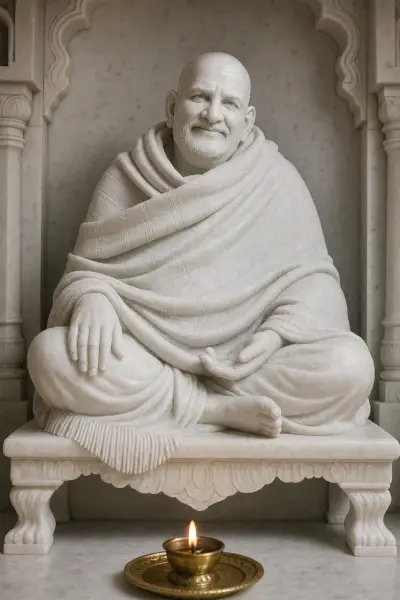
Custom Made Neem Karoli Baba Marble Murti
Carved to order by the master sculptors we work with in Jaipur: the bare head, the short grey beard and the chequered blanket, hand-painted or left in plain white marble, in the size your ghar mandir needs.
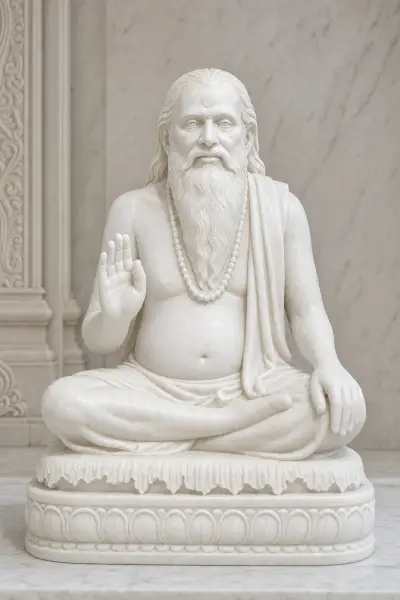
Custom Made Swami Samarth Statues in Marble Stone
Hand-carved Shree Swami Samarth (Akkalkot Maharaj) murtis in marble. Choose your stone, size and pose. Seated darbar, meditation, throne or lotus, in white or black marble. Start with a free WhatsApp consultation.
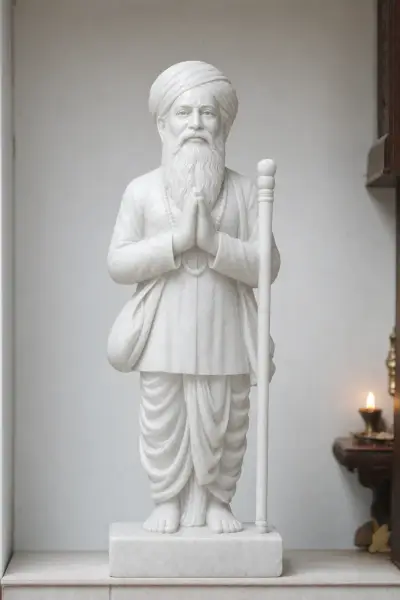
Custom Made Jalaram Bapa Marble Murti
Carved to order by the master sculptors we work with in Jaipur: the turban, the long white beard, the jholi and the danda, in the stone and size your ghar mandir needs.
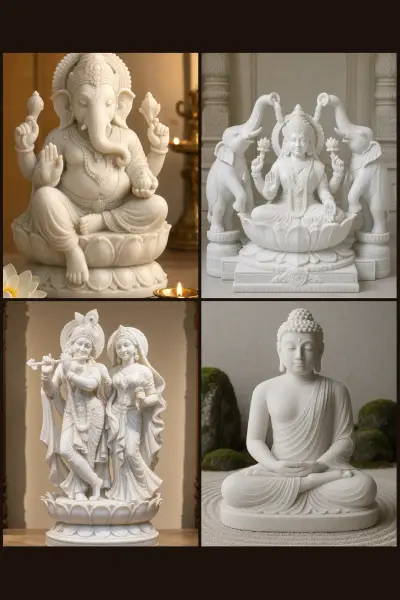
Custom Marble Statues
We build custom marble statues in many sizes and forms, from deities and saints to bespoke designs. Each is carved by the artisans we work with in India and tailored to your space.
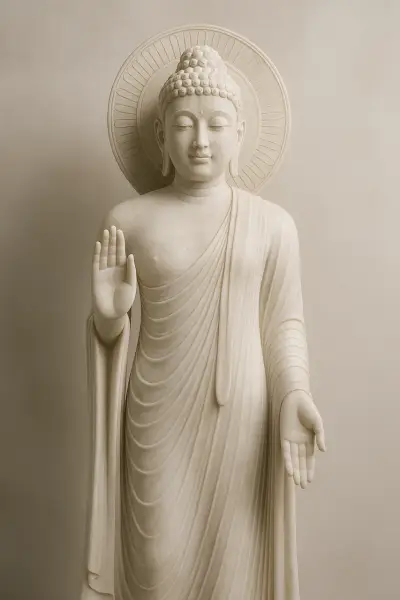
Custom Made Standing Buddha Statues in Marble Stone
Standing Buddha statues in marble stone, hand-carved in Jaipur and customised to your size, style and finish.
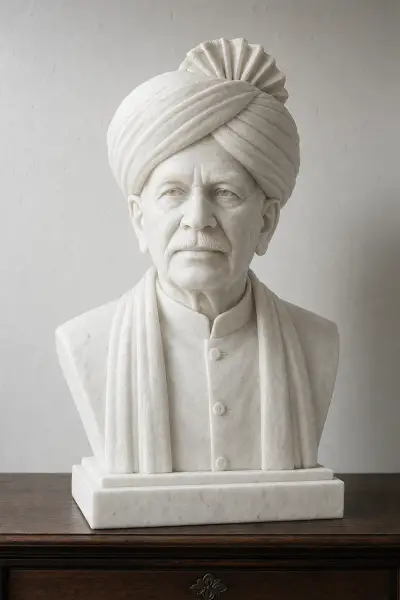
Custom Made Marble Bust Statues from Your Photograph
Send us their photographs. We build the likeness in clay first, and we do not touch stone until you tell us it is them.