

Custom Made Buddha Mudra Statues in Marble Stone
Choose the gesture first. Every mudra marks a different moment in the Buddha’s life, and the piece is then carved to the stone, size and finish you ask for.
Trade buyer outside India? Buddha statue export from Jaipur
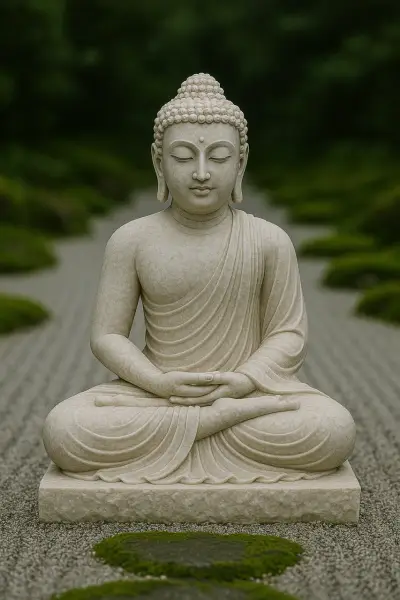
Architect or designer? Zen garden Buddha statues
Buddha Mudras and the Statues That Carry Them
Each gesture below belongs to a different episode in the Buddha’s life. Browse the forms, then tell us the mudra, stone and height you want.
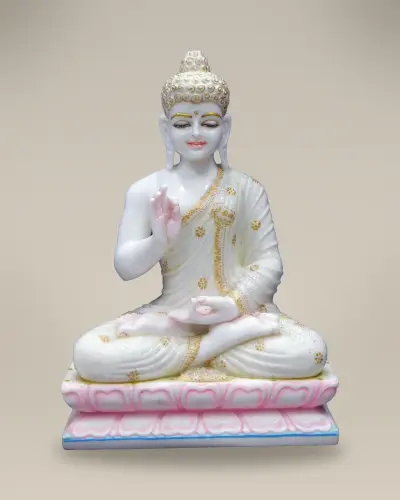
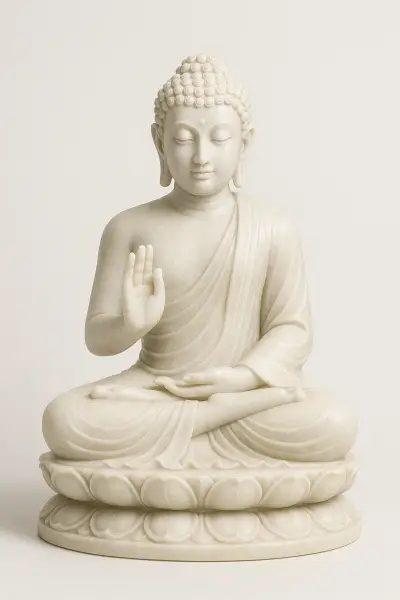
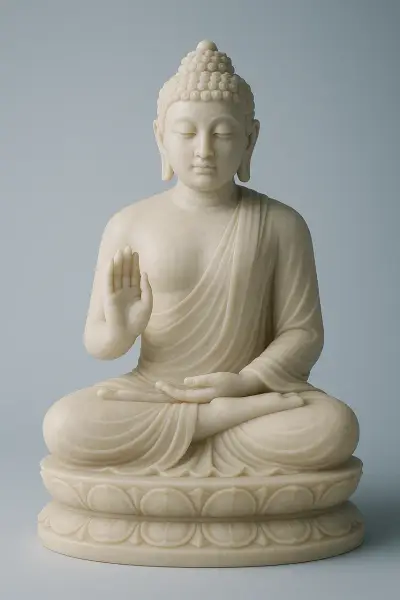
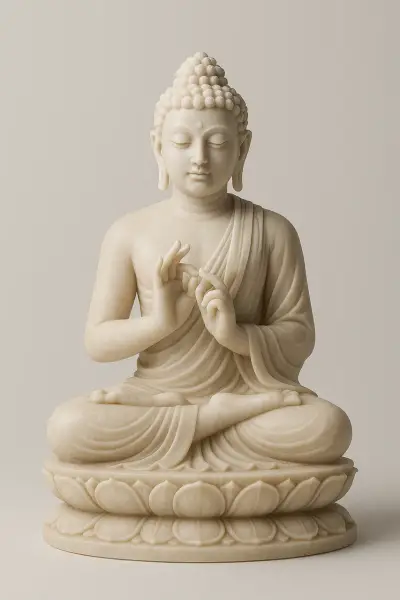
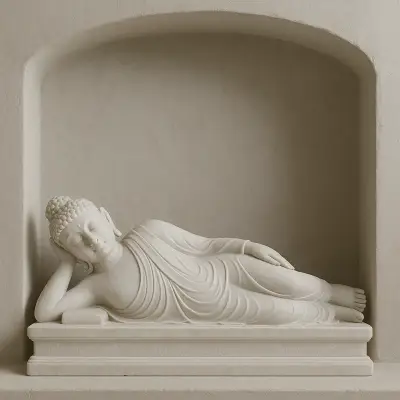

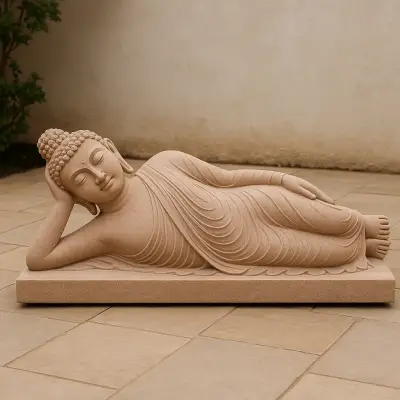
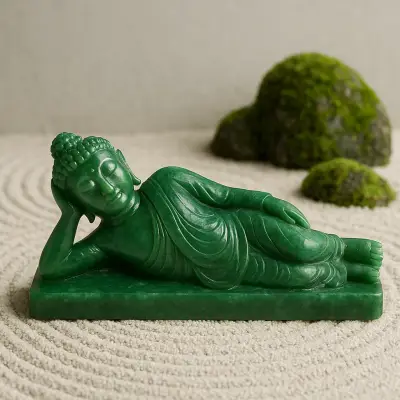


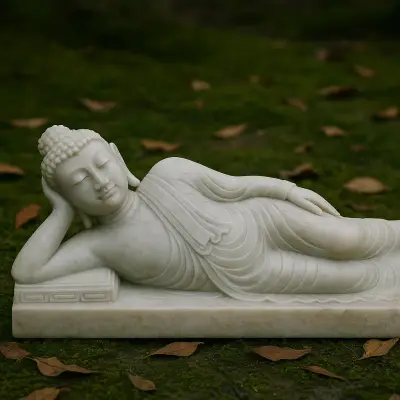


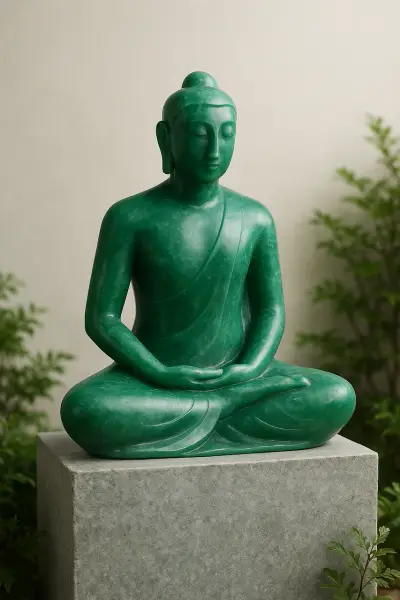
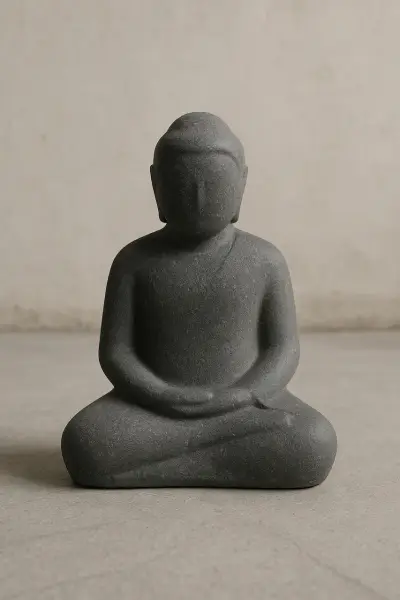
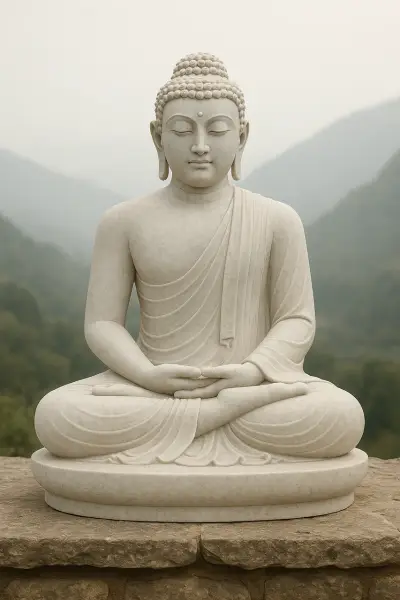
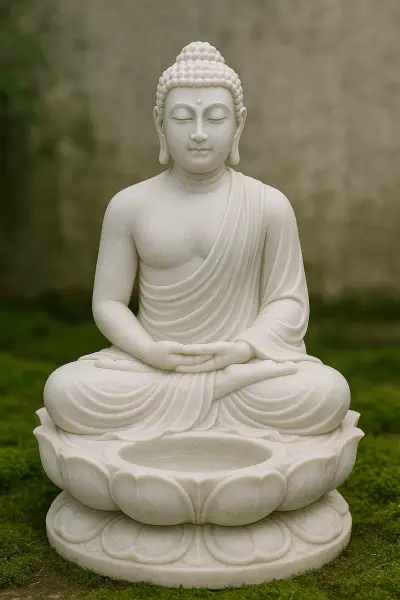
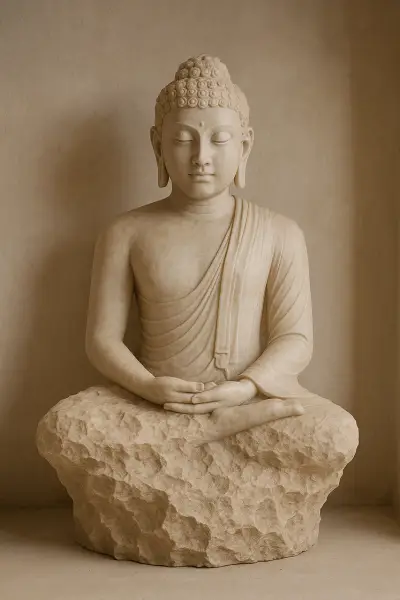
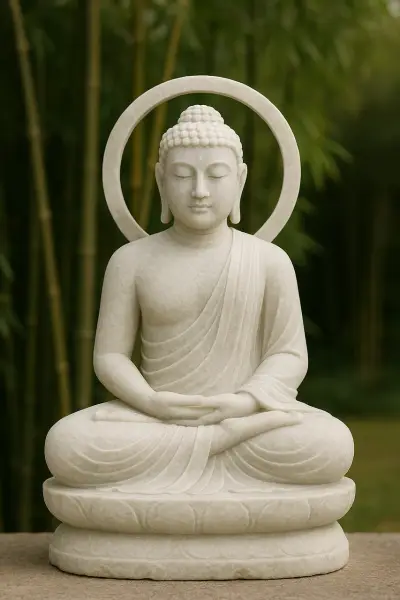
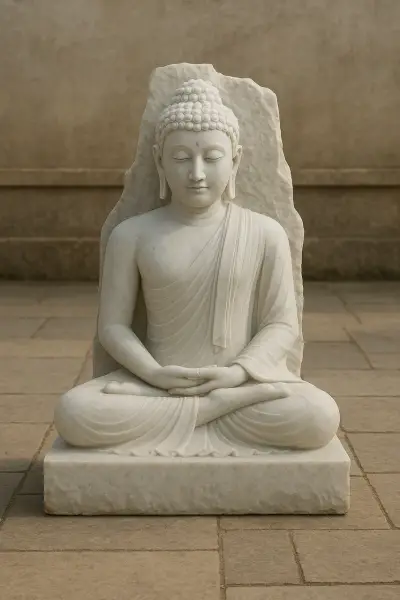

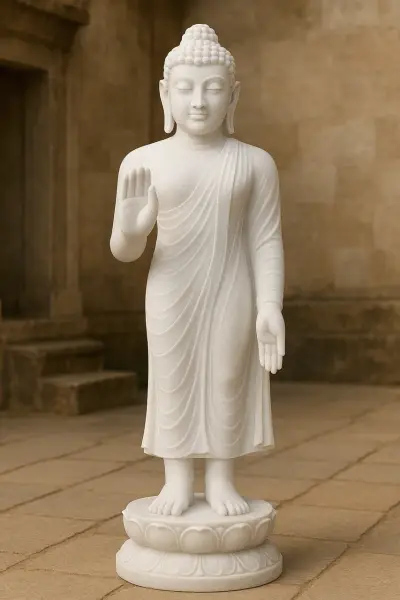


Showing 15 of 54 products
Buddha statues chosen by the mudra
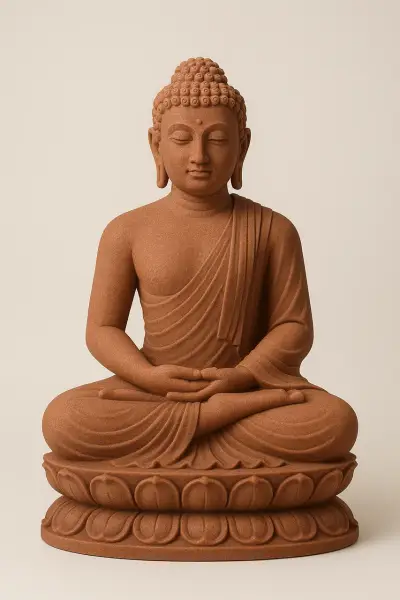
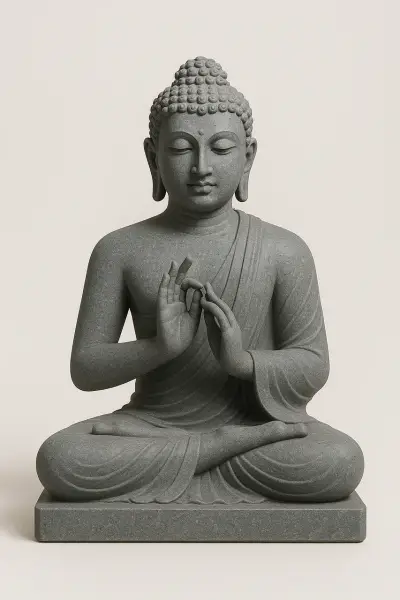
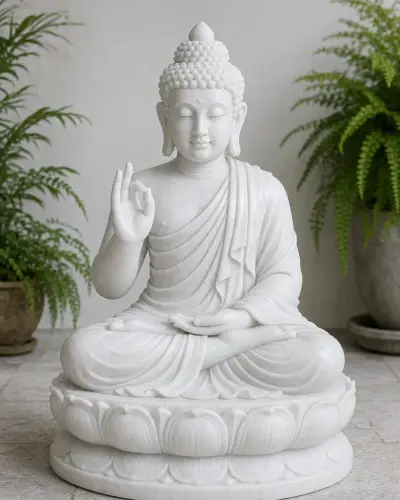
A mudra is a hand gesture, and on a Buddha statue it is not decoration. It is the whole subject. The same seated figure becomes a different moment depending on where the hands go: fingertips to the earth is the night of enlightenment at Bodh Gaya, both hands at the chest is the first sermon at Sarnath, hands folded in the lap is meditation. Most people arrive here already knowing which one they want, often by its Sanskrit name, and they are choosing between stones and sizes rather than between poses. This collection is arranged that way (gesture first, then stone, then scale) and runs from a 6-inch piece to a 60-inch garden figure.
The seated mudras
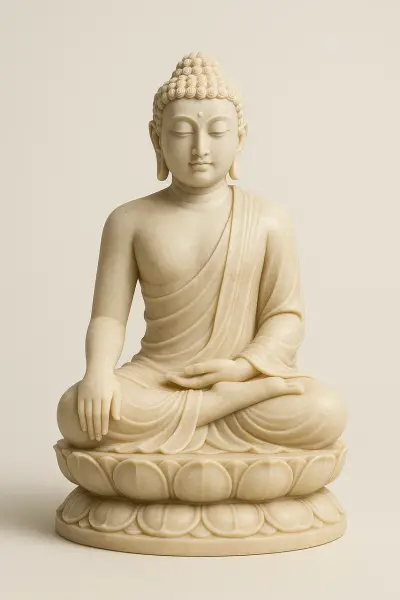
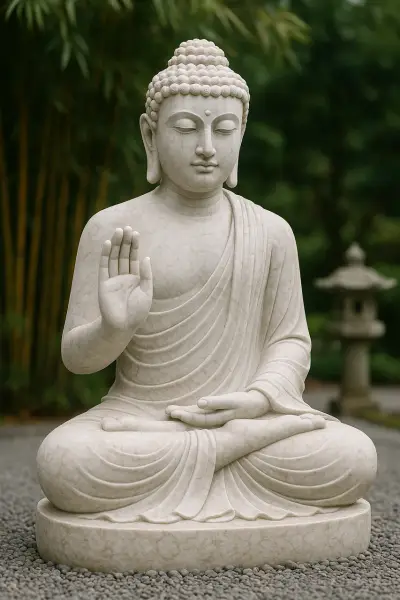
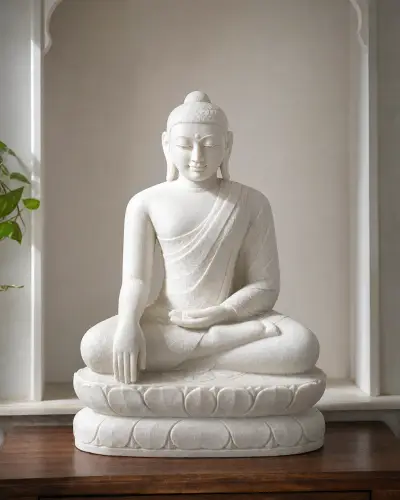
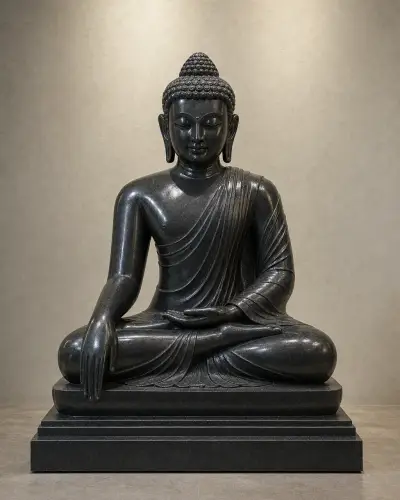
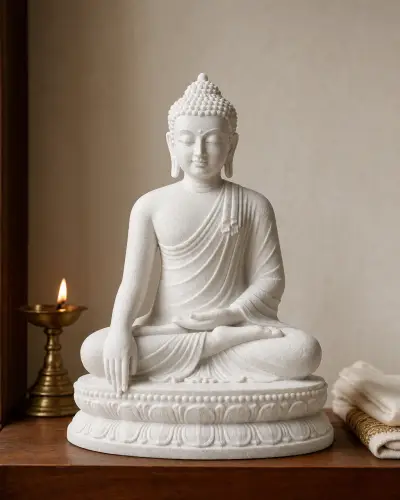
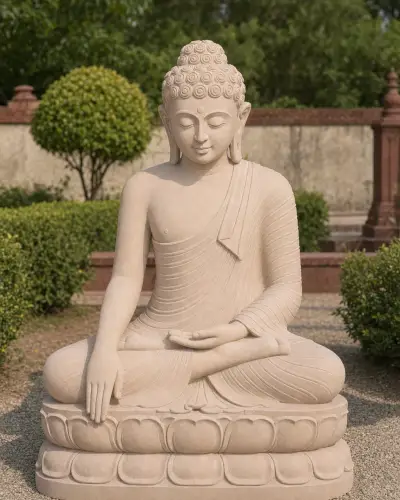
Bhumisparsha, the earth-touching gesture, is the most requested of all. The right arm reaches down over the right knee until the fingertips meet the pedestal, calling the earth to witness; the left hand lies open in the lap. It is carved here in Makrana white marble at 24 inches, in black granite at 36 inches, as a 12-inch cast marble dust murti for a shelf altar, and at 48 inches in Dholpur pink sandstone for a garden.
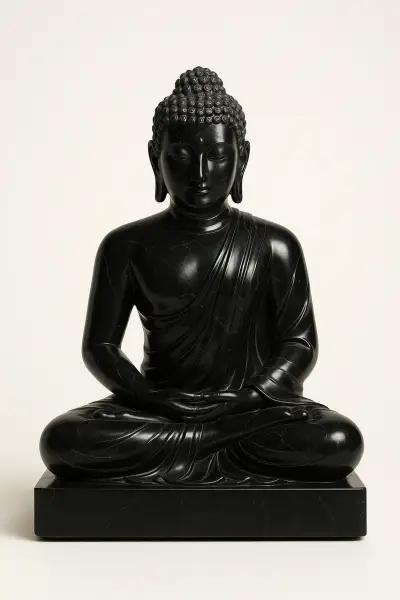
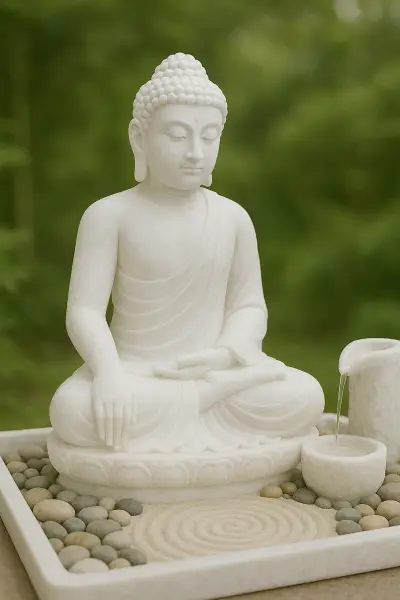
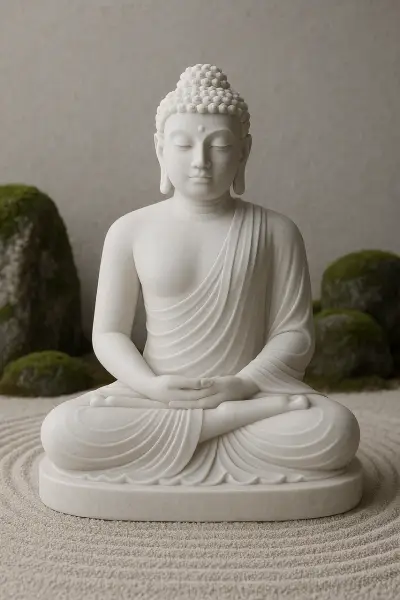
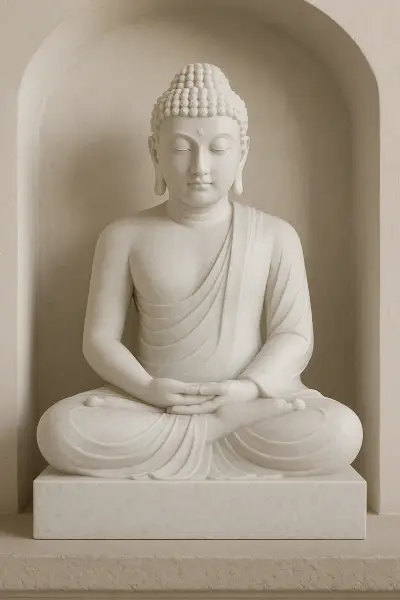
Dhyana, the meditation gesture, has both hands resting one above the other in the lap. It is the quietest of the group and the one most often commissioned for a meditation room, in Makrana white at 3 feet or Vietnam white at 2 feet.
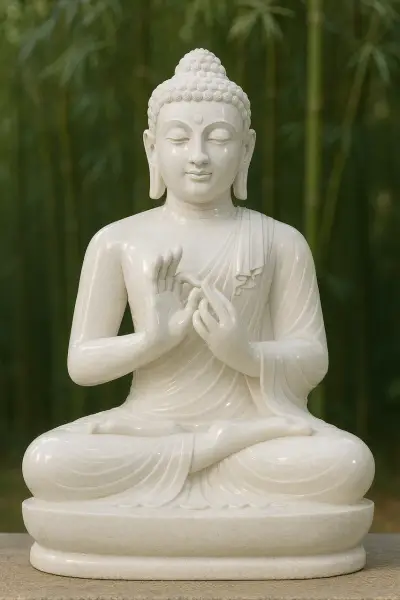
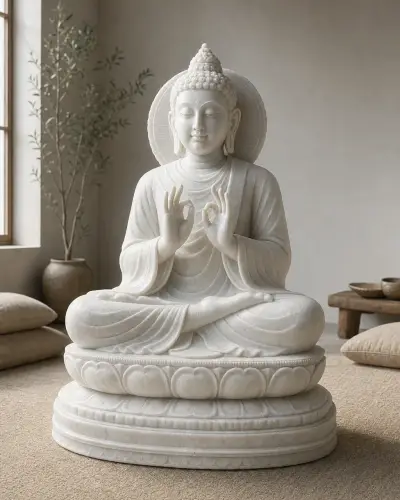
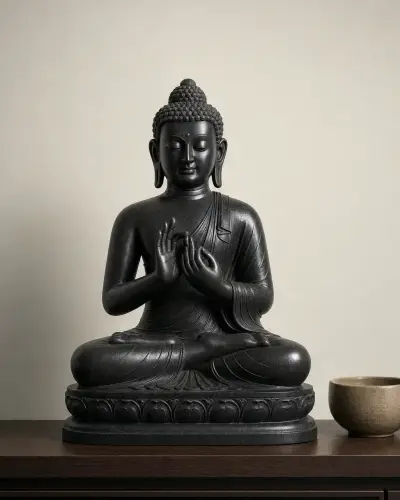
Dharmachakra, the wheel-turning gesture of the first sermon, raises both hands to chest height with thumb and forefinger closed into a circle on each. See it in Makrana white at 30 inches and black granite at 24 inches.
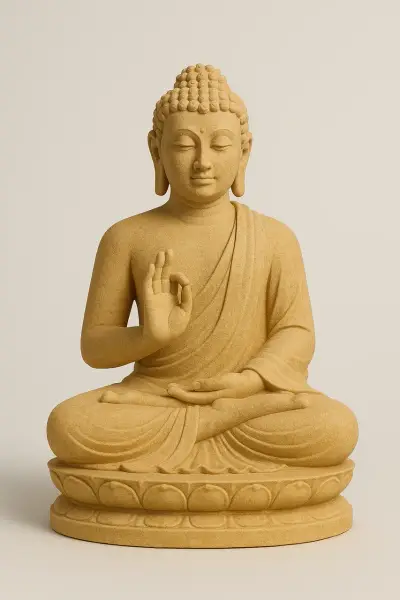
Vitarka, the gesture of discourse, is the single-handed cousin of dharmachakra: one circle of thumb and forefinger, raised, the other hand in the lap, as in the 36-inch Vietnam white marble figure.
The standing, reclining and walking forms
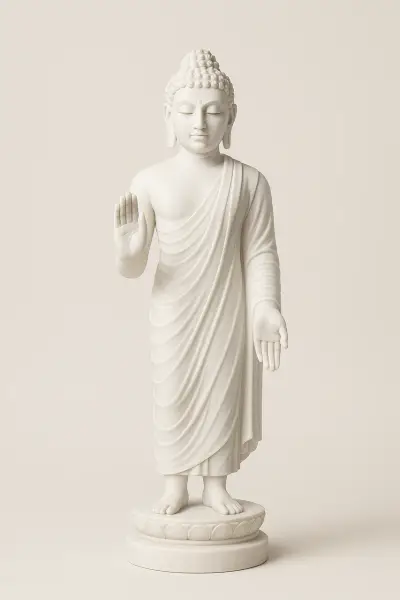
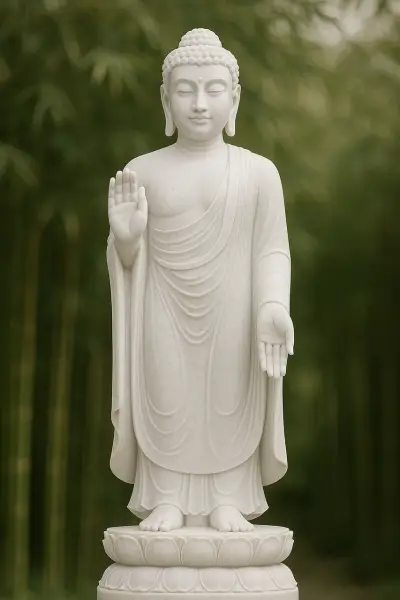
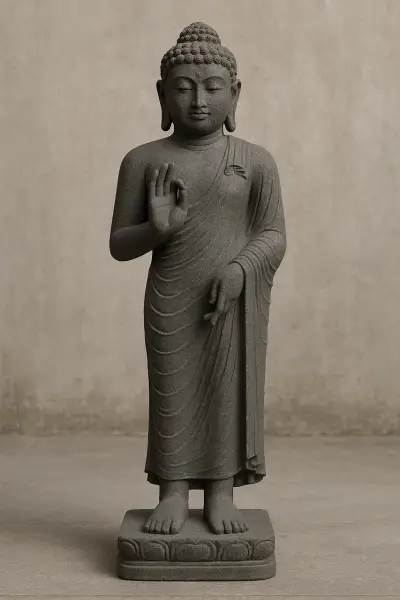
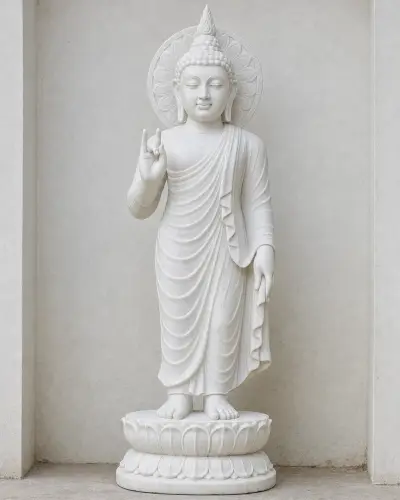
Abhaya, fearlessness, is an open raised palm on a standing Buddha and reads as welcome, which is why it is commissioned for entrances and courtyards, at 3 feet or 18 inches in Makrana white. Its mirror is varada, the giving gesture, palm open and lowered, as on the 4-foot black granite standing figure; the two are often carved together on one 5-foot standing piece.
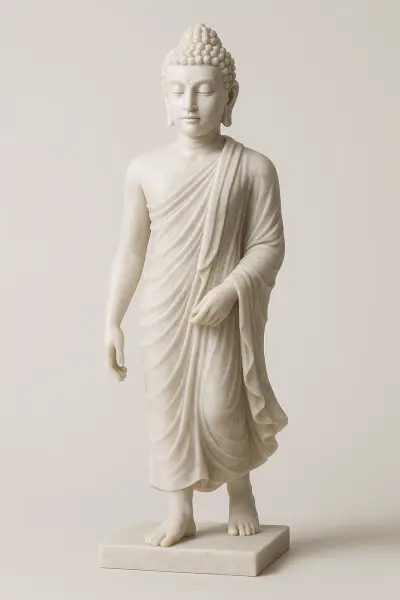
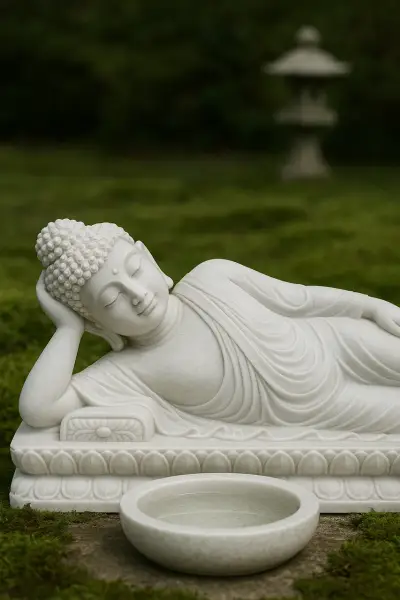
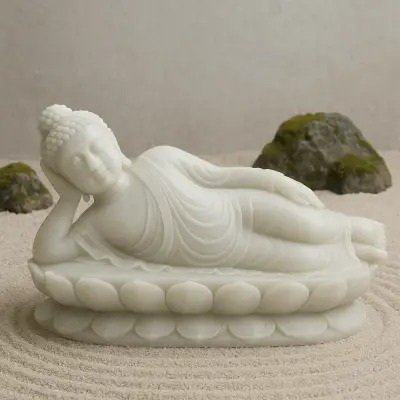
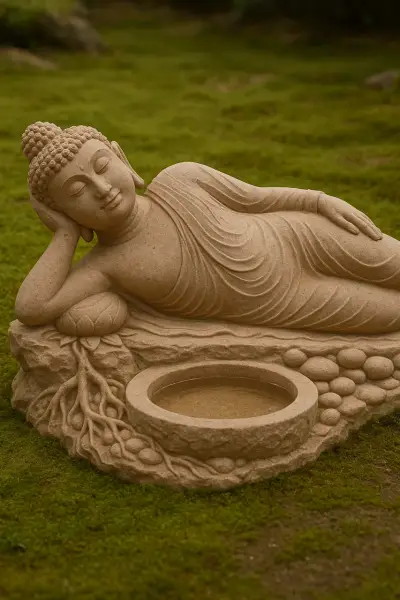
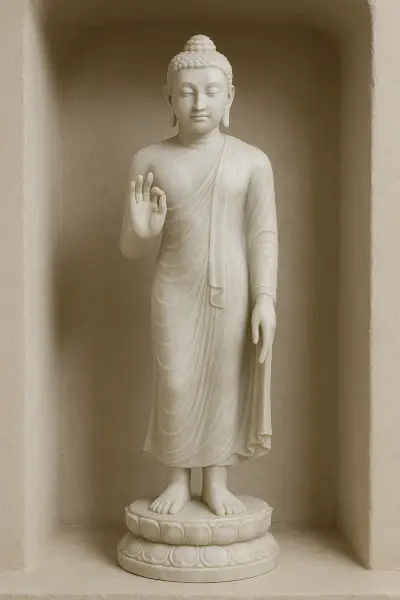
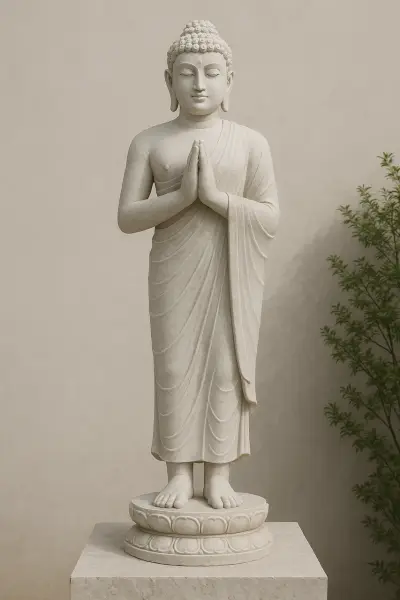
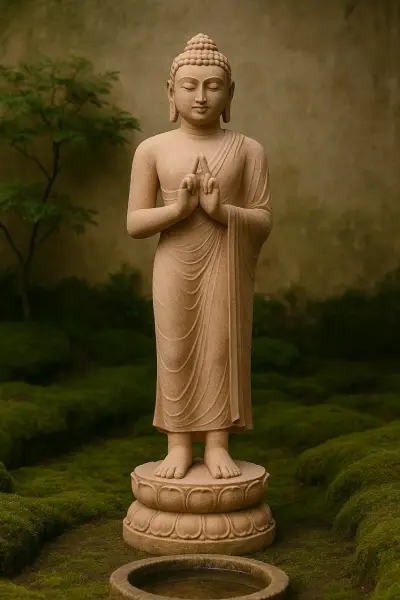
Karana wards off negative influence: index and little finger raised, the middle two folded under the thumb. It is uncommon and worth knowing about, in Makrana white at 24 inches or black granite at 3 feet. Namaskara, palms joined at the heart, appears on the 3-foot Makrana white figure. Beyond the hand gestures, the reclining parinirvana Buddha depicts the final passing, and the walking Buddha at 30 inches is the rarest form in the collection. It is a Sukhothai-derived posture in which the figure is mid-stride rather than seated or standing still.
Which hand does what, and why it matters in stone
This is the one detail worth getting right before carving starts, because it cannot be corrected afterwards. A mudra is defined by a specific hand doing a specific thing: bhumisparsha is the right hand that reaches to the earth, never the left; vitarka raises the right while the left stays in the lap. A mirrored gesture is not a stylistic variation, it is a different statue, and in stone there is no undo. So when a brief is agreed we state the gesture hand explicitly and confirm it again from the sculptor's progress photographs, before the piece goes to finishing. If you are working from a photograph of a Buddha you have seen somewhere, send it. Reading the hands off a real image is far more reliable than naming a mudra from memory, and the Sanskrit names overlap more than people expect.
Seated, standing or reclining: the posture the gesture sits in
Not every mudra works in every posture, and pairing them wrongly is the most common thing we correct at the brief stage. Bhumisparsha and dhyana are always seated, because both depend on the lap; a standing earth-touching Buddha is not a form that exists. Abhaya, varada and karana are usually standing, though abhaya is also carved seated alongside dhyana on a single figure. Dharmachakra and vitarka work either way. Parinirvana, the reclining form, is a posture rather than a hand gesture (the hands simply rest), so it is chosen for the moment it depicts rather than for what the hands are doing. Posture also drives footprint: a seated 36-inch figure occupies roughly a 28-inch square, while a reclining one of the same height needs a base two to three times longer.
Choosing the stone
Five stones are in regular production, and for a Buddha each reads differently. Makrana white marble is the traditional shrine choice, a warm-toned white that takes a satin polish and looks right by lamplight. Vietnam white marble is cooler and brighter, which suits a contemporary room and photographs cleanly. Black stone (granite or black marble) gives the weight and gravity of a South Indian temple figure, and a mirror polish on it makes the mudra read from across a room. Dholpur pink sandstone is the outdoor stone: matte, warm and blush-toned, and it weathers rather than degrades, which is why the garden pieces here use it. Cast marble dust is the option for a small murti where a carved block would be disproportionate to the size.
Size and placement
The pieces here run from 6 inches to 60. For a pooja room or a shelf altar, 12 to 24 inches sits at eye level when you are seated on the floor, and the 12-inch marble dust murti and the 24-inch Makrana bhumisparsha are both made for that. For a living room, entrance or meditation room, 24 to 36 inches holds the space without dominating it. Above 48 inches you are into courtyard, garden and lobby scale, where the piece is read from ten or fifteen feet away and detail in the hands matters less than silhouette. Weight rises with volume rather than height, so a 48-inch seated figure is a great deal heavier than twice a 24-inch one. Tell us the floor, the access route and whether there are stairs, and that goes into the quote rather than becoming a surprise on delivery day.
Caring for a marble Buddha
Dust a marble or sandstone Buddha dry, with a soft cloth, working into the folds of the robe and around the fingers where dust settles first. Avoid every acidic cleaner (vinegar, lemon, bathroom sprays), because they etch calcite permanently and the damage shows most on a polished surface. A mirror-polished black granite piece shows fingerprints and benefits from an occasional wipe with a barely damp cloth, then dry. Outdoors, Dholpur pink sandstone needs nothing at all; it will darken slightly and gather a patina over the years, which is the intended behaviour of the stone rather than a fault.
Make it yours
Everything on this page is a starting point. If a mudra here is right but you want it in another stone or at another height (the 24-inch Makrana white bhumisparsha in black granite at 36 inches, say, or on a plain plinth instead of a lotus base), that is an ordinary request and not a special one. If you want a gesture we have not shown, such as uttarabodhi or a form you have seen at a particular temple, send the photograph and we will design it with you, brief the sculptor, and follow it through to your door. Some pieces are already carved and waiting, in which case there is no carving wait at all and we will send you photographs of the actual statue; a fresh commission takes eight to twelve weeks depending on size, stone and the amount of detail. Tell us the gesture, the stone and roughly where it will stand, and we will come back with options and a quote.
Why commission your Buddha mudra statue through Tilak Mandirwala
The gesture is the whole point of the piece, so it is the part we brief hardest.
The gesture, carved correctly
Each mudra has a defined hand position. We brief it precisely and check it before the piece leaves the workshop.
Any mudra you name
Bhumisparsha, dhyana, dharmachakra, abhaya, vitarka, karana, varada, or a gesture from your own reference photograph.
Five production stones
Makrana white marble, Vietnam white marble, black stone, Dholpur pink sandstone or cast marble dust.
Sized to the room
From a 12-inch shelf murti to a 60-inch garden figure, proportioned for where it will actually stand.
Jaipur master sculptors
Carved by the artist families we have worked with for years, briefed and followed through by us.
Crated and delivered
Wooden crating, insured transit and installation guidance, in India and overseas.
Tell us the gesture
Name the mudra, or describe the feeling you want and we will suggest one. A reference photograph helps.
We check what already exists
We ask the sculptors we work with whether a matching piece is already carved, and send you photographs if so.
Design it together
We settle the posture, robe treatment, pedestal, stone, finish and height with you before anything is cut.
Quote and timeline
A clear quotation and an honest date: 8 to 12 weeks for a commission, depending on size and detail.
Advance and carving begins
A part advance secures the block and starts the sculptor’s work.
Progress photographs
We send images as the form emerges, and again at finishing, so the mudra can be checked before polish.
Crating and delivery
The piece is crated, insured and delivered to your door, with guidance on siting and installation.
Frequently asked questions
Get answers to common questions about our custom sculptures
Which mudra should I choose?
How long will my Buddha mudra statue take?
Is everything made to order, or do you have ready pieces?
Which stones can a mudra statue be carved in?
Can I ask for a mudra that is not shown on this page?
What size suits a home shrine, and what suits a garden?
Ready to Commission Your Buddha Mudra Statue?
Tell us the mudra, the stone and the height, and we’ll send options and a quote on WhatsApp.
WhatsApp for a QuoteImporting Buddha statues for a store, a spa, a garden or a project outside India? Buddha statue export from Jaipur
Designing a Zen or meditation garden? Zen garden Buddha statues
Prefer to see the marble before you order? Visit our showroom in Jaipur, or send us your size and budget.
Browse Other Collections
Discover more collections that might interest you
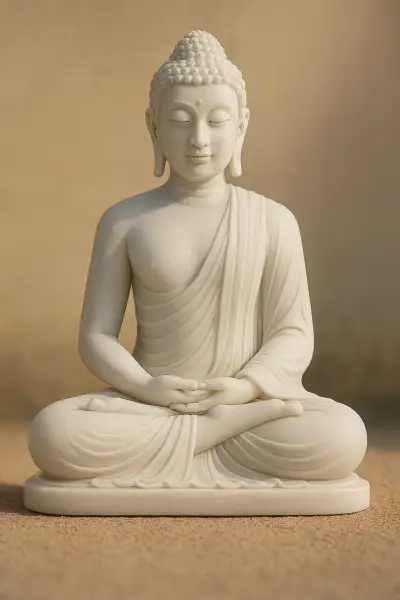
Custom Made Meditating Buddha Statues in Marble Stone
Design your own marble meditating Buddha. Choose posture, mudra, and size, all hand-carved in Jaipur.
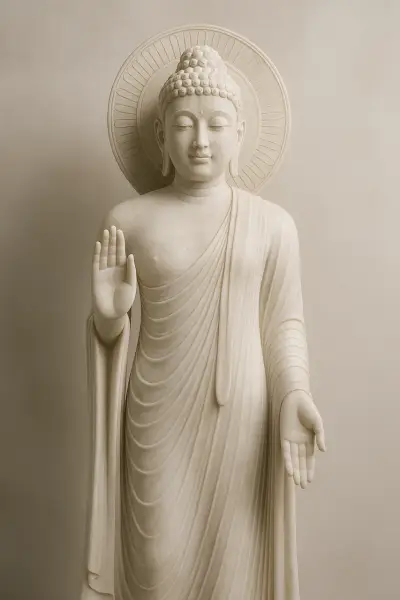
Custom Made Standing Buddha Statues in Marble Stone
Standing Buddha statues in marble stone, hand-carved in Jaipur and customised to your size, style and finish.
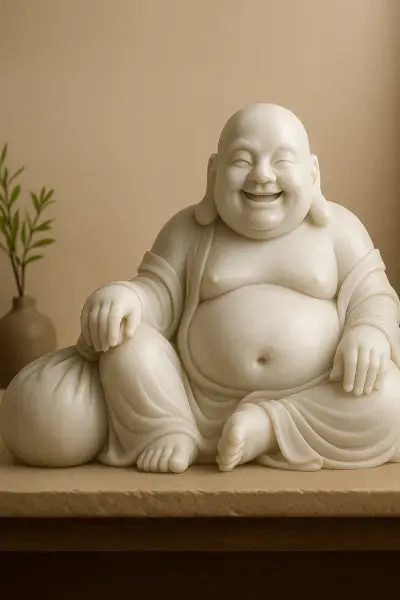
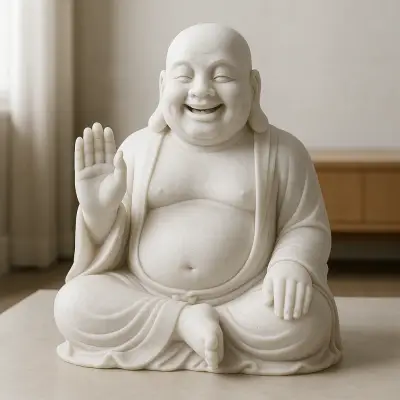
Custom Made Laughing Buddha Statues in Marble Stone
Design a hand-carved Laughing Buddha statue. Choose pose, size, and stone. Crafted to order by skilled Indian sculptors with insured delivery worldwide.
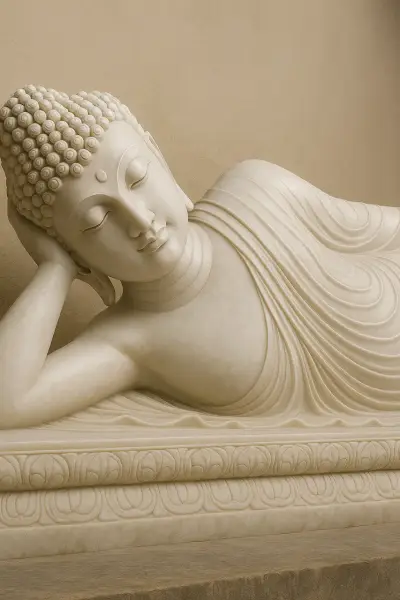
Custom Made Reclining Buddha Statues in Marble Stone
Explore serene Reclining Buddha statues, then customise posture, marble and detailing. Share your concept on WhatsApp today.
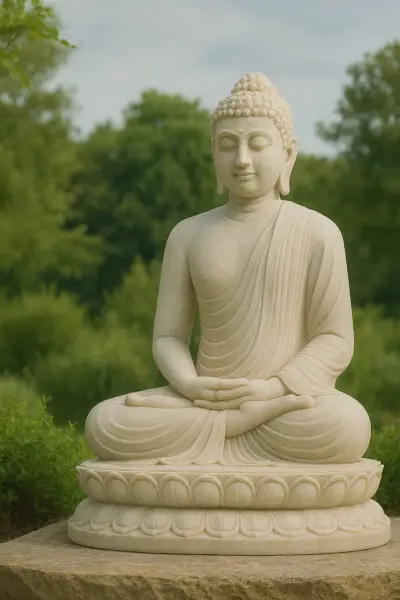
Custom Garden Buddha Statues for Outdoor Peace
A garden Buddha invites serenity to outdoor spaces. Define height, posture and patina, and Jaipur artisans craft it for you.
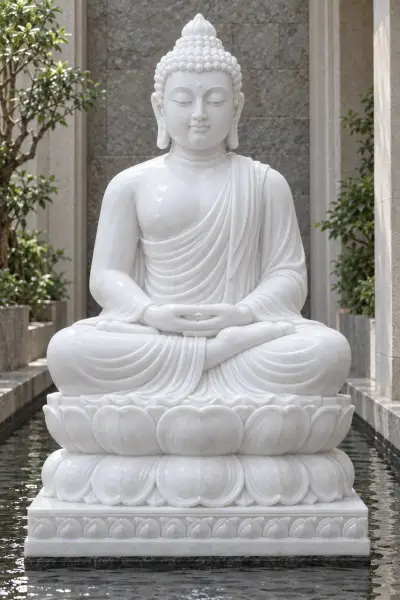
Buddha Statues for Water Features, Made to Order in Marble
A still pond and a Buddha belong together. These designs are made to sit at the water, raised on a lotus base or plinth: seated, standing, reclining, or sheltered by the naga who rose from the lake.