
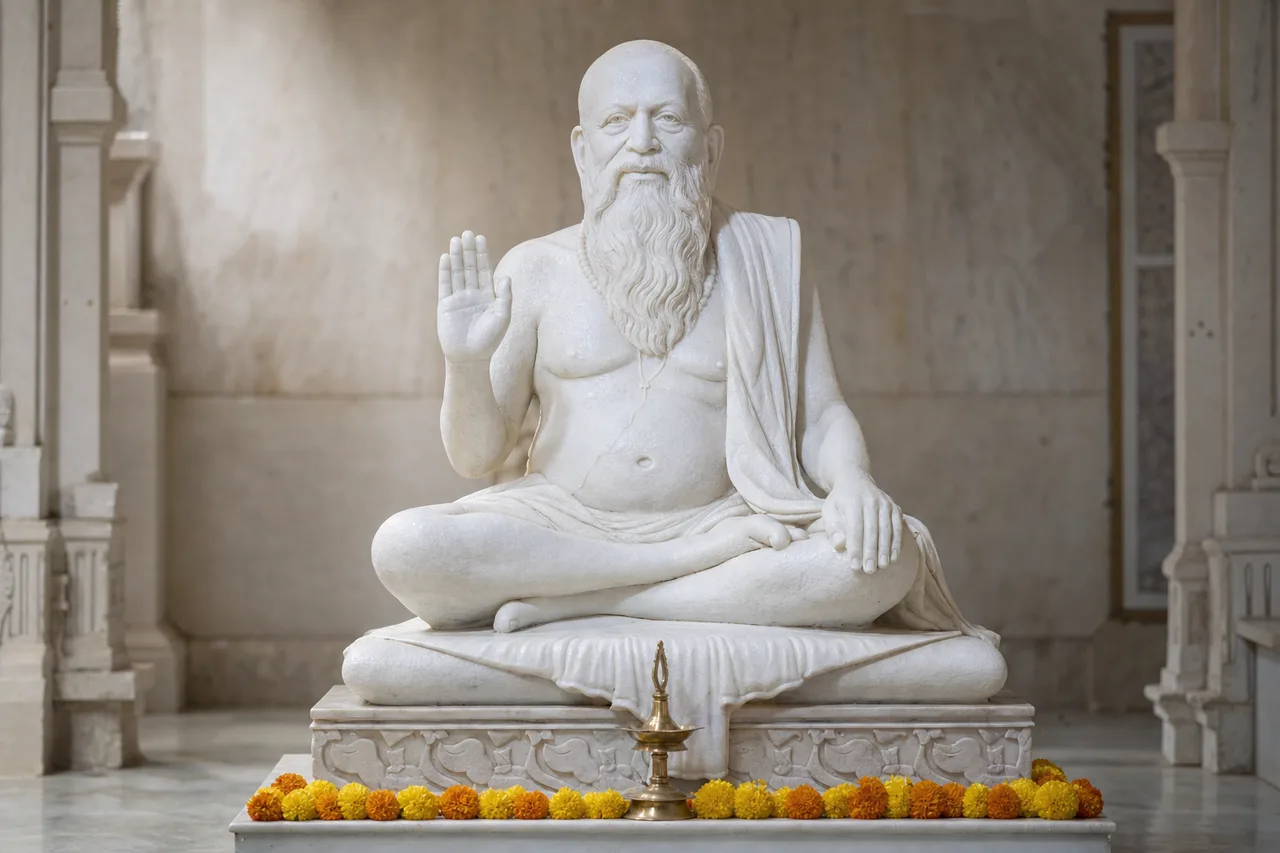
Custom Made Swami Samarth Statues in Marble Stone
Hand-carved Shree Swami Samarth (Akkalkot Maharaj) murtis in marble. Choose your stone, size and pose. Seated darbar, meditation, throne or lotus, in white or black marble. Start with a free WhatsApp consultation.
Browse Swami Samarth design inspirations
Each Swami Samarth murti is made-to-order in your choice of marble. Browse the gallery for stone, size, pose and finish inspiration. Then share what catches your eye on WhatsApp.
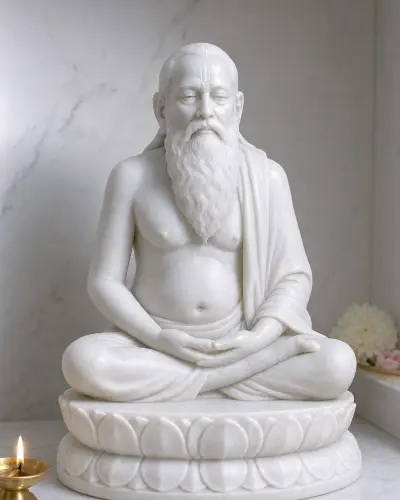
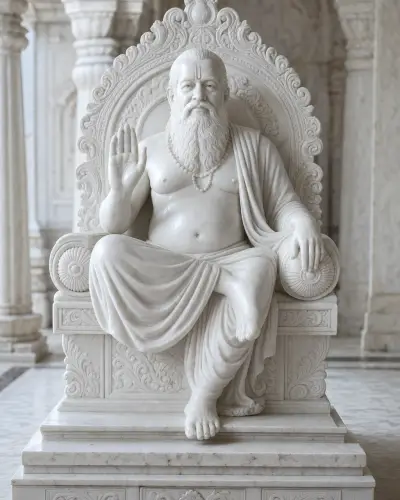
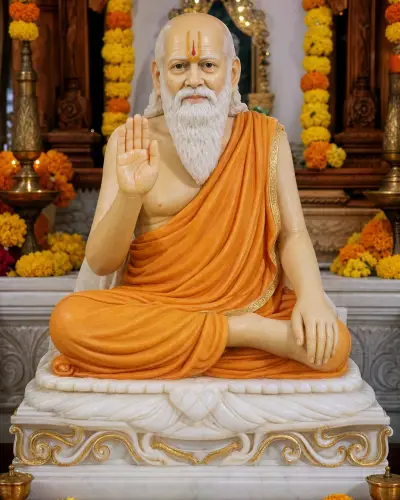
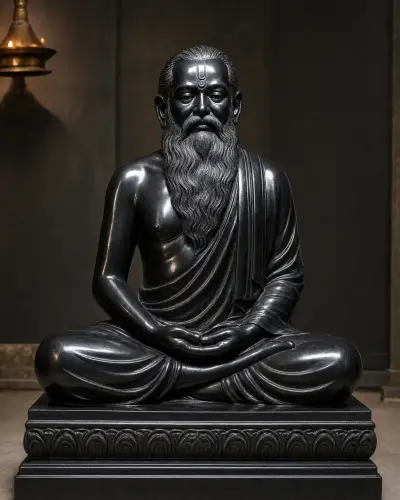
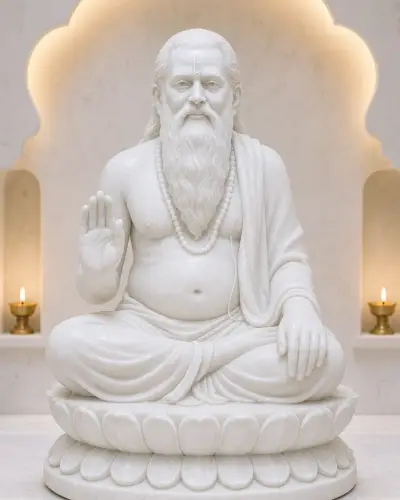
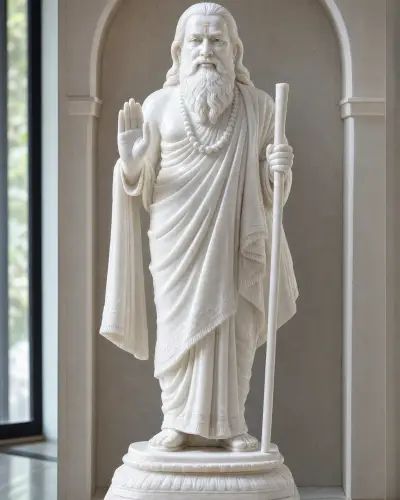
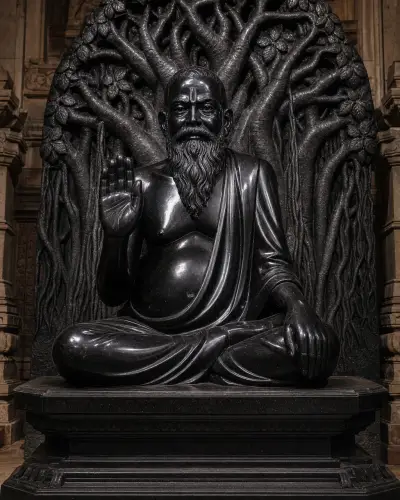
Shree Swami Samarth murtis for the home
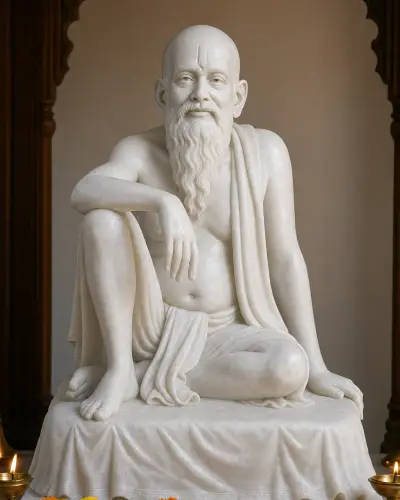
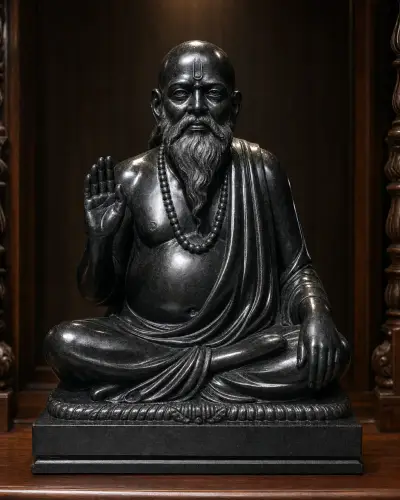
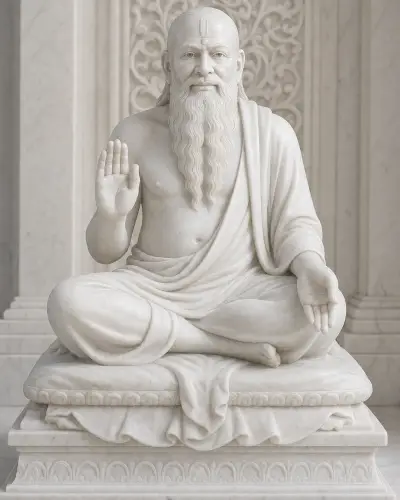
Swami Samarth of Akkalkot is a sant rather than a deity, and that changes how a murti of him is judged. Devotees across Maharashtra and Karnataka know the face from photographs and from the temple images at Akkalkot: the heavy build, the broad shoulders, the direct gaze, the beard. They are not looking for an idealised figure but for a recognisable one. Households commission Swami Samarth murtis for the ghar mandir, and increasingly for a shop or office shrine, since he is closely associated with protection and with the phrase devotees repeat daily. The ten Swami Samarth murtis here run from 12 inches to 3.5 feet in Makrana white marble, Vietnam white marble and black stone, all carved to order by the master sculptors we work with.
The Swami Samarth murtis carved here
The blessing form is the most requested, shown in Makrana white marble at 2 feet, black stone at 18 inches and in a relaxed 2.5-foot posture. The meditation swaroop appears at 12 inches in Vietnam white marble and as a 27-inch black marble dhyan murti. For a larger shrine there is Swami Samarth on a throne at 3 feet and the darbar form with the vat vruksha backdrop at 3.5 feet. Alongside these are a 15-inch murti on a lotus base, a 21-inch standing figure, and a hand-painted blessing murti with the saffron robe.
The vat vruksha, and why the darbar form is different
The banyan tree is not scenery. Swami Samarth is inseparable from the vat vruksha at Akkalkot: he sat beneath it, and the tree is part of how devotees picture the darbar. That is why the 3.5-foot darbar murti is carved with the tree behind the figure rather than as a separate object.
It has a practical consequence worth knowing before you choose it. A murti with a carved backdrop is a single composition, so it is substantially deeper and heavier than a seated figure of the same height, and it needs a plinth with real depth rather than a narrow shelf. It also has a front: unlike a figure in the round, a darbar murti is meant to be seen from one side, which suits a niche or a wall shrine and works poorly in the middle of a room.
The simpler seated and standing forms have none of that constraint, which is why most households choose them. The darbar form is for a dedicated shrine where the whole Akkalkot scene is wanted.
Getting the likeness right
Swami Samarth lived in the nineteenth century and is remembered through photographs, so a murti of him is judged as a likeness in the way a deity murti is not. Three things carry it: the heavy, broad-shouldered build rather than a slender ascetic frame; the full beard; and the direct, level gaze. He is usually shown seated at ease, often with one knee raised or a hand resting on it, which reads as a man holding court rather than a figure in formal meditation.
The meditation swaroop is the deliberate exception, and it is a different murti, with eyes lowered and posture closed. Both are correct; they are simply different moments, and it is worth being clear which one you want at the brief rather than after.
Choosing the stone
Makrana white marble is the most requested for a Swami Samarth murti and holds the detail of the beard and the robe folds without fragility. Black stone gives a quieter, weightier reading and suits the dhyan and darbar forms in particular, where the mood is inward. Vietnam white marble is cooler and brighter than Makrana, useful for a smaller murti that has to lift out of a dim ghar mandir. Dholpur pink sandstone is available for a covered courtyard shrine, and cast marble dust where a small piece needs to stay affordable.
Plain stone or hand-painted
Most Swami Samarth murtis here are plain polished stone, where the carving carries the likeness. The hand-painted version with the saffron robe is closer to how he appears in the framed prints most devotees grew up with, and for many households that familiarity is the point. Painted surfaces need a dry cloth only and occasional touch-up across the years; plain marble needs essentially nothing.
Size and placement for a Swami Samarth murti
Twelve to 15 inches suits a shelf shrine, a shop counter or a compact ghar mandir. Eighteen to 24 inches is where most homes settle, large enough for daily aarti and garlanding without dominating the room. Thirty inches upward wants a dedicated shrine, and the 3.5-foot darbar piece needs both depth and a wall behind it. Swami Samarth is conventionally placed facing east or north; tell us the direction and the niche and the murti is proportioned to the space you have.
Caring for a Swami Samarth murti
Plain marble takes dry dusting with a soft cloth and nothing more. Lift garlands off after aarti rather than letting them rest against the stone, since moisture and dye are what mark a polished surface over years. No acidic cleaners on any of the stones: no vinegar, no lemon, no descaler. Hand-painted murtis take a dry cloth only, never damp. Sandstone in a covered courtyard takes a soft brush and plain water.
Make your Swami Samarth murti yours
The ten Swami Samarth murtis here are a starting point rather than a fixed range. The blessing form at a size not listed, the dhyan swaroop in white rather than black stone, the vat vruksha backdrop on a smaller figure: all ordinary requests, and all settled before carving begins. If your family's murti follows the Akkalkot temple image or a photograph you have kept, send it and the sculptor will work from that instead. Message us on WhatsApp and we will talk it through, quote it, and follow it from the bench to your door.
Why choose Tilak Mandirwala for Swami Samarth statues
Marble Swami Samarth murtis, personalised for your home shrine, mandir, or gifting
Faithful Akkalkot likeness
Carved to the beloved darbar form, with the flowing white beard, the raised blessing hand, and the serene ascetic bearing devotees recognise at a glance.
Custom poses
Seated darbar, dhyana meditation, on a throne or lotus, the relaxed knee-raised posture, or standing, adapted to your reference image.
Choice of stone
Makrana white, cool Vietnam white, jet-black marble, or a hand-painted polychrome finish per your preference.
Sized for your space
From 12-inch pooja-shelf murtis to 3.5-ft temple-format centrepieces and institutional installations.
Heritage Jaipur work
Hand-carved by Jaipur artisans preserving centuries-old marble craftsmanship.
Insured delivery
Secure multi-layer wooden crating and insured shipping for safe arrival, India and worldwide.
How we create your personalised Swami Samarth murti
From idea to sacred murti, every step is transparent and custom
Share your idea
Pick from our gallery or send your own reference, size, and marble preference.
Finalise details
We confirm pose, base style, finish, and any hand-painting to match your vision.
Clear quote & timeline
We provide a transparent quotation and delivery schedule.
Advance to begin
A partial advance secures the stone and supports initial artisan work.
Sculpting updates
We share photos of carving progress so you stay in control.
Approval & packing
Final photos shared before multi-layer wooden crating for safe transit.
Balance on delivery
Pay the remaining balance only once your murti arrives safely.
Frequently asked questions
Get answers to common questions about our custom sculptures
How long does a custom Swami Samarth marble statue take to make?
What size Swami Samarth murti should I choose for my home?
Which marbles and finishes can I choose?
Can you make the traditional hand-painted (rangeen) Swami Samarth murti?
Is a Swami Samarth murti a good gift for Datta Jayanti or Prakat Din?
Can you ship internationally? What does it cost?
Ready to commission your Swami Samarth murti?
Share a reference image on WhatsApp and we'll quote stone, size and timeline. No obligation.
WhatsApp for a QuoteImporting statues for your store or gallery? Marble statue supplier for importers
Prefer to see the marble before you order? Visit our showroom in Jaipur, or send us your size and budget.
Browse Other Collections
Discover more collections that might interest you
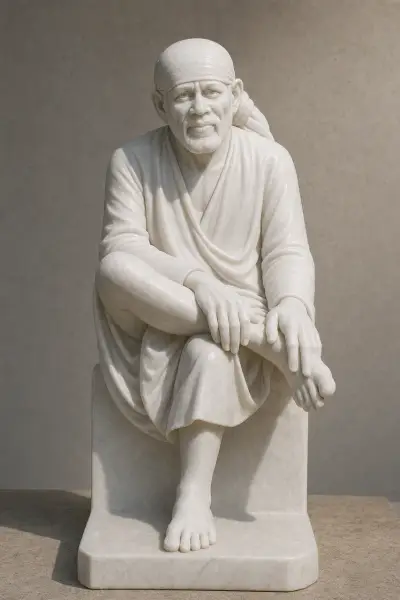
Custom Made Sai Baba Statues in Marble Stone
Hand-carved Shirdi Sai Baba murtis in marble and stone. Choose your stone, size, and form. The Dwarkamai stone posture, the Ashirwad blessing, the singhasan darshan form, or a standing murti for your courtyard, all in faithful iconography. Start with a free WhatsApp consultation.
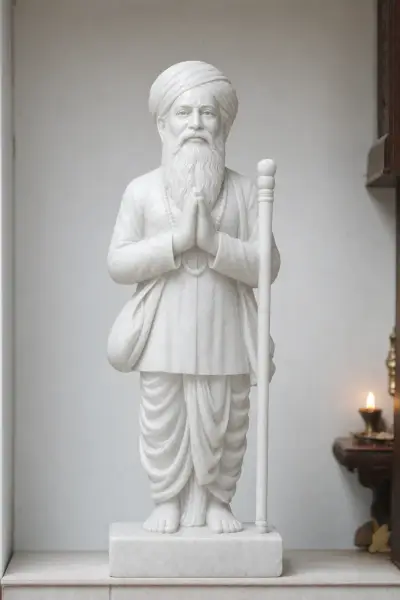
Custom Made Jalaram Bapa Marble Murti
Carved to order by the master sculptors we work with in Jaipur: the turban, the long white beard, the jholi and the danda, in the stone and size your ghar mandir needs.
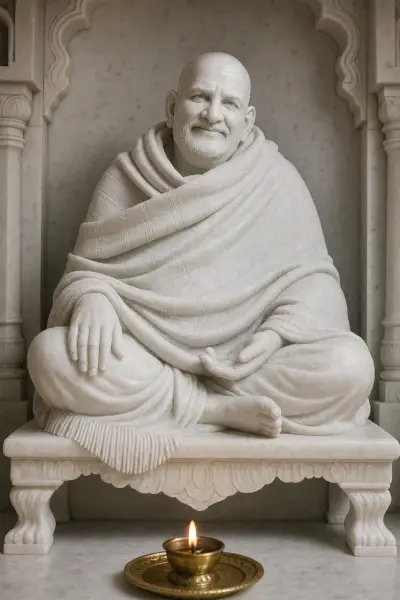
Custom Made Neem Karoli Baba Marble Murti
Carved to order by the master sculptors we work with in Jaipur: the bare head, the short grey beard and the chequered blanket, hand-painted or left in plain white marble, in the size your ghar mandir needs.
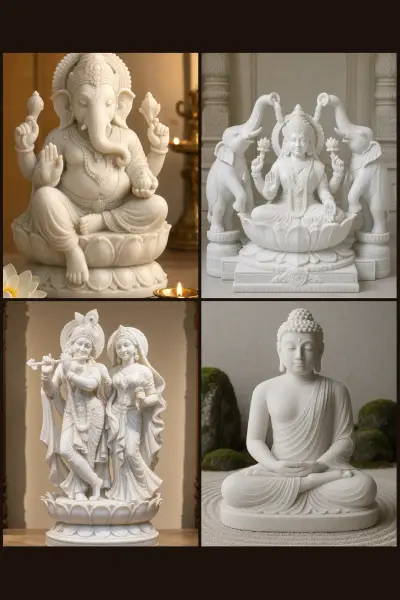
Custom Marble Statues
We build custom marble statues in many sizes and forms, from deities and saints to bespoke designs. Each is carved by the artisans we work with in India and tailored to your space.
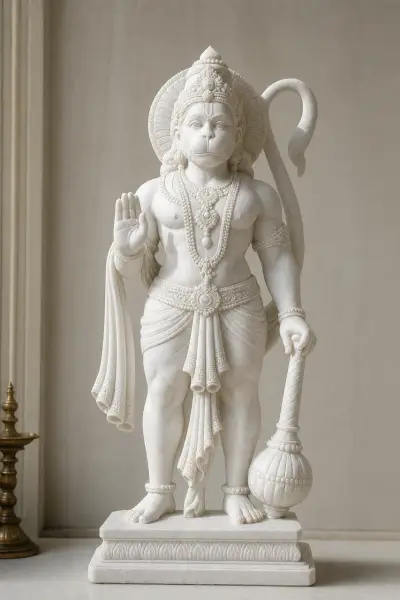
Custom Made Hanuman Statues in Marble Stone
Hand-carved Hanuman murtis in marble: standing blessing, Sankat Mochan kneeling, Panchmukhi, fierce Veer with gada, or flying with the Sanjeevani mountain. Choose your stone, size, and pose. Start with a free WhatsApp consultation.
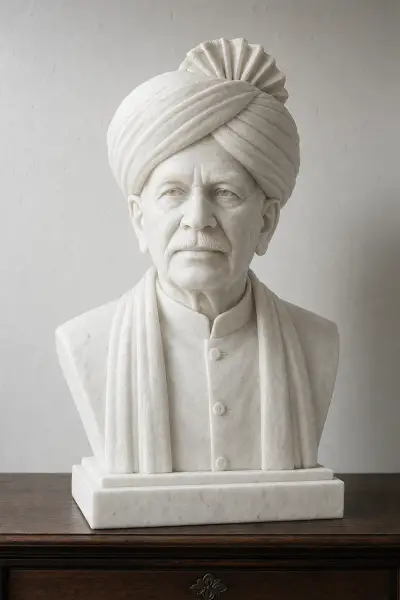
Custom Made Marble Bust Statues from Your Photograph
Send us their photographs. We build the likeness in clay first, and we do not touch stone until you tell us it is them.