
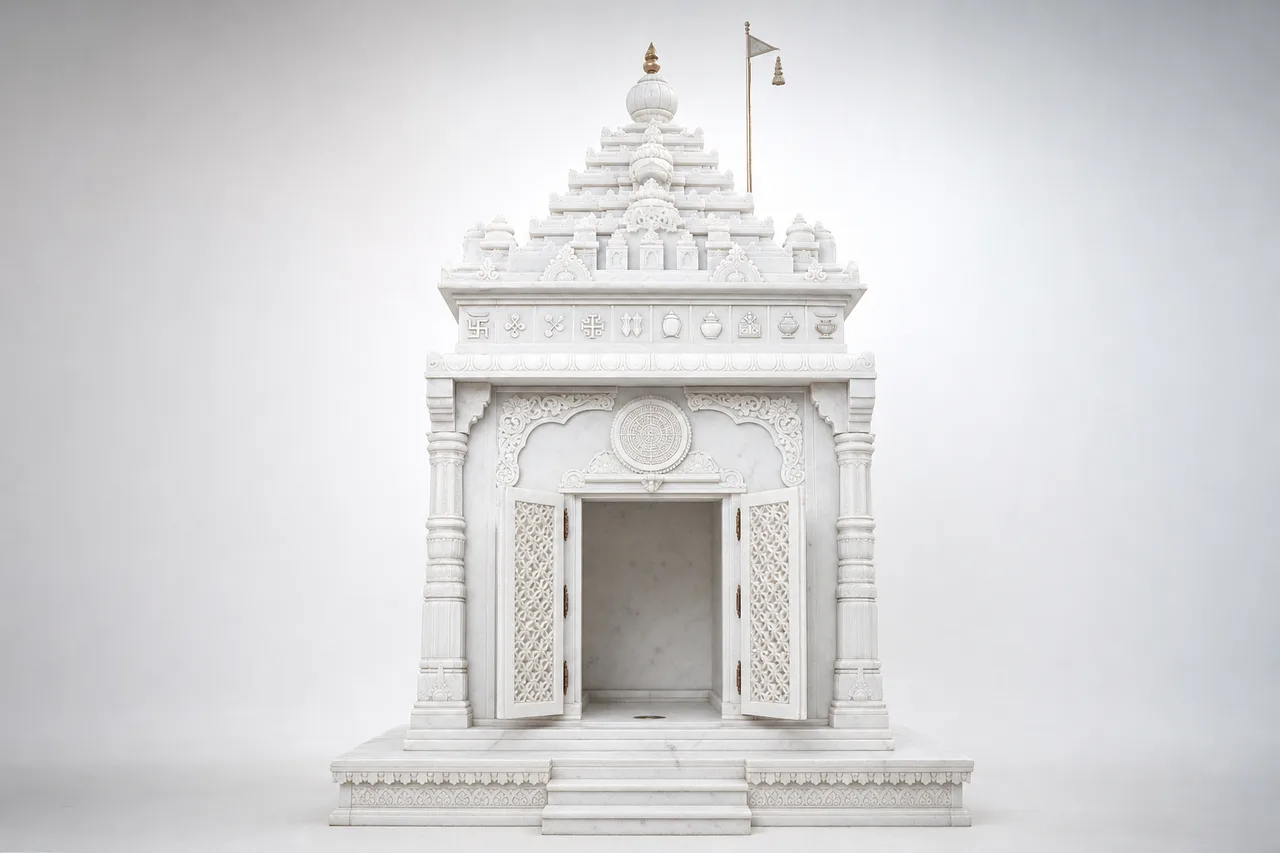
Custom Made Jain Ghar Derasar in Marble Stone
Ghar derasar carved to order in Jaipur in the Gujarati Shwetambar Murtipujak convention: a gabhara that closes, a floor that drains for prakshal, and the ashtamangal where they belong.
Architect or designer? Marble murtis for temple architects
Browse Jain ghar derasar designs
Every derasar here is carved to order in white marble, in the size and the style of ornament you choose. Browse for the form and the scale; tell us the height of your mulnayak and we will proportion the gabhara around it.
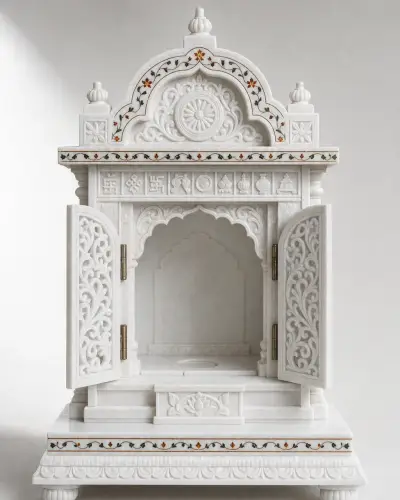
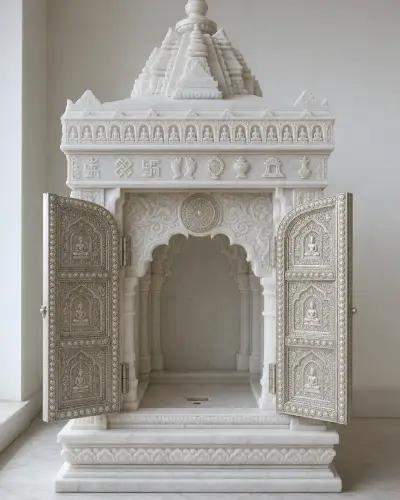
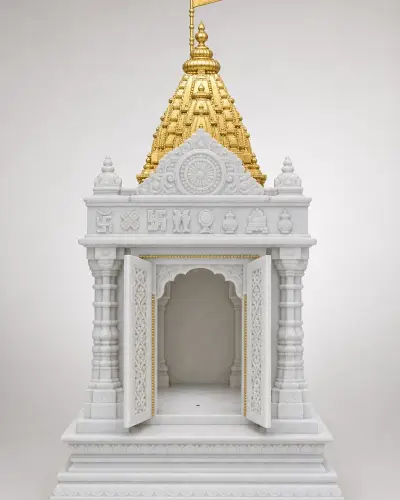
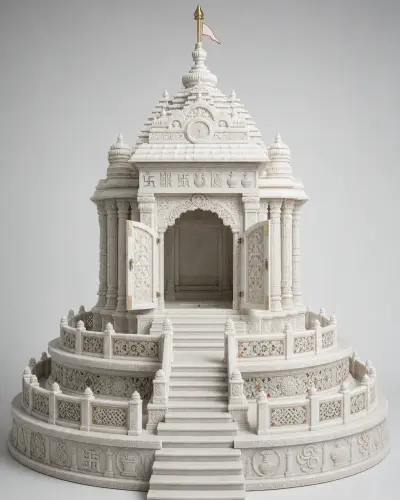
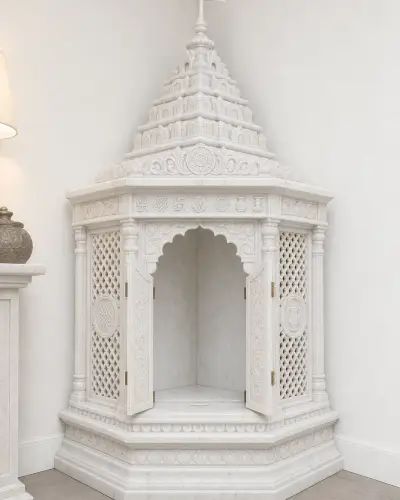
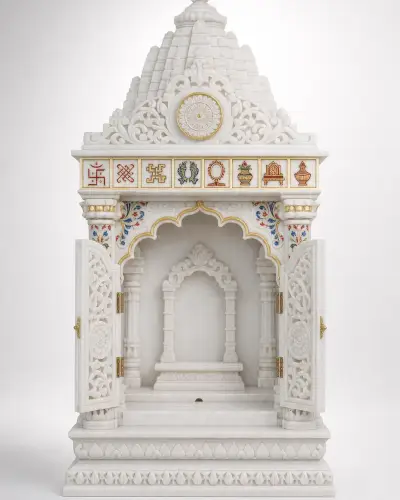
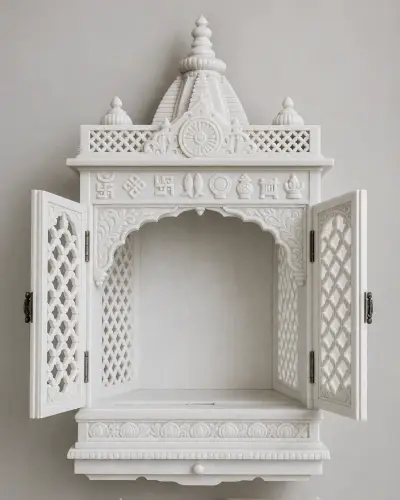
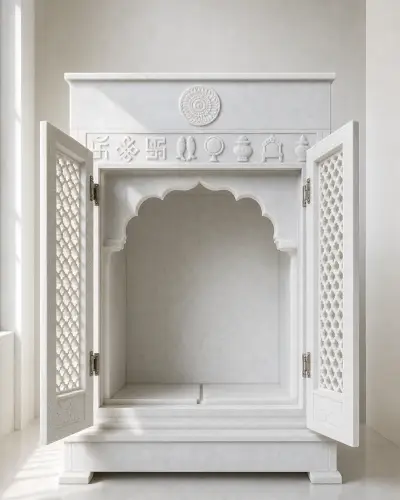
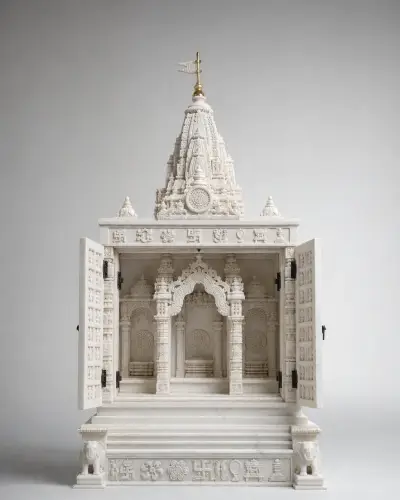
Ghar derasar in the Gujarati Shwetambar convention
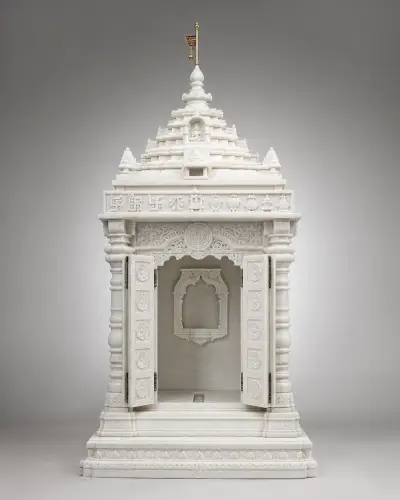
A ghar derasar is not a mandir with different carving on it. It is a different object, built around a different daily practice, and the differences are structural rather than decorative.
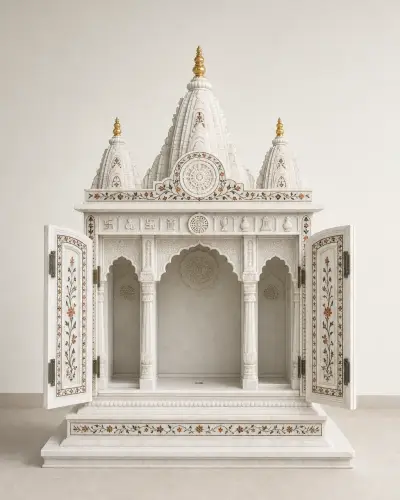
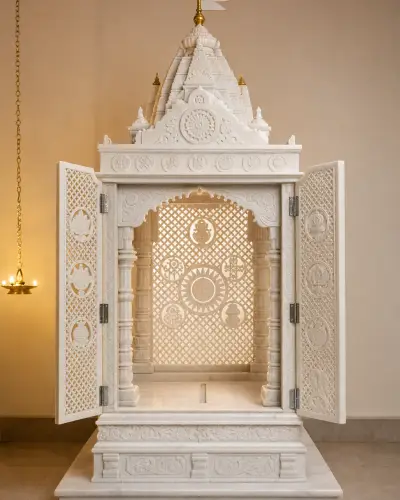
The twelve pieces in this collection are carved to order by the master sculptors we work with in Rajasthan, in Makrana white or Vietnam white marble, from an 18-inch tabletop shrine up to a 60-inch sanctum piece. Every one carries an enclosed gabhara, a drained sanctum floor, and an ashtamangal program. Those are the three things that make it a derasar.
What the gabhara changes about the design
The sanctum closes. That sounds small and it governs almost everything else about the piece.
Doors mean hinges that carry carved stone without sagging, a frame square enough that both leaves still meet in ten years, and clearance in front of the piece for the leaves to swing. That is usually a foot and a half you have to allow for in the room, which people discover after the derasar arrives. On the three-gokhla parchin kari derasar the leaves are inlaid on their outer faces precisely because they are seen closed for most of the day.
The second consequence is the floor. The murti is bathed daily, so the sanctum floor is cut with a shallow prakshal channel falling to an outlet, and the stone beneath is finished to shed water rather than hold it. A shrine built without that drains onto whatever it is standing on. On the wall-mounted gokhla derasar the channel feeds a removable tray instead of a fixed outlet, which is the only way daily prakshal works in a flat with no drain nearby.
The forms in this collection
Six architectural forms, so the choice is about the room as much as the piece:
- Shikharbandhi: the tiered spire with kalash and dhwaja, in plain carved Makrana at 24 inches and with a gold-leaf spire at 30.
- Three-gokhla: a wide mulnayak niche flanked by two, for families installing more than one murti.
- Samavsaran: tiered circular platforms rising to the sanctum. Fifty-four inches, and the most distinctly Jain form here.
- Corner: a triangular plan that sits into the angle of two walls and asks for no wall of its own.
- Wall-mounted and tabletop: the hanging niche and the 18-inch toran-arch shrine, for homes with no floor to give.
- Modern: a flat-roofed, clean-lined derasar with a single ashtamangal medallion, for a room where a gilded spire would fight every other line in it.
Samavsaran: the form that is only ours
Most of what a derasar and a mandir share is genuine. The spire, the kalash, the flag above it: all of these belong to both traditions, and a derasar does not become Jain by giving them up.
The samavsaran is the exception. It is the preaching assembly, the tiered circular arena in which a Tirthankar addresses all beings at once, and nothing in any other tradition resembles it. Built as a derasar, the concentric platforms rise to the gabhara at the summit, so the murti sits where the Jina sat. Its silhouette reads as Jain from across a room, before any carving is close enough to see, which is what a family wants when the derasar itself should say which tradition the house keeps.
Ashtamangal, and the swastika
Every piece here carries the eight auspicious symbols across the lintel: the shrivatsa, the nandyavarta, the paired fish, the mirror, the full water-pot, the throne, the powder-vase, and the svastika.
The svastika is worth a word, because families setting up a derasar in the United States, Canada or Europe often raise it before anything else. In Jain use its four arms are the four gatis and the three dots above it are the ratnatraya, beneath the crescent of the siddhashila; the symbol is thousands of years old and carries no relation to the twentieth-century appropriation that made it painful in the West. That history is real all the same, and a piece that lives in a hallway a neighbour walks past is a different decision from one in a dedicated shrine room. If you would rather have it rendered small, placed inside the gabhara where it is seen at darshan rather than from the doorway, or set as part of the frieze rather than picked out, say so at the enquiry stage. It is a straightforward change to make before carving, and an expensive one afterwards.
Six ways to ornament it
Ornament is a separate decision from form, and it is where most of the price range sits.
Plain carved is chisel work alone (mouldings, turned pillars, a carved arch), and it is the honest default rather than the budget option. Stone inlay, the parchin kari of the Agra and Jaipur tradition, sets coloured stone into the white. Jali is pierced straight through the slab, and on the backlit 48-inch piece the pattern reads on the wall behind it at aarti. Gold leaf and silver are applied metal, and the 42-inch piece has repoussé silver door leaves under a frieze of all twenty-four Tirthankars, which is as close as a derasar comes to holding the whole lineage above the sanctum. Hand-painted work puts the ashtamangal in colour, as on the 21-inch polychrome shrine, which is the surest way to tell the eight symbols apart at a glance.
Applied metal and paint want dusting rather than washing; bare and inlaid stone take a damp cloth.
For a home, and for a sangh
Most families keep a mulnayak between nine and fifteen inches, and a derasar of roughly twenty-one to thirty-six inches is proportioned for that. Start from the murti you already have or intend to install and let the gabhara be sized to it. The other way round produces a niche that swallows the murti or crowds it.
Above that the pieces stop being domestic. The 60-inch mulnayak derasar with full parikar, with its flanking pilasters holding miniature Tirthankar compartments, a makara toran closed by a tiered chhatra and elephants at the platform corners, is sanctum scale: the piece a sangh or a donor family commissions when a derasar is being built rather than furnished. It ships in sections that assemble on site without lifting gear.
Commissioning one
Tell us the height of your mulnayak, the space the derasar has to stand in, and where it is going. Anything here can change: the plan from one gokhla to three, the ornament, the stone, the proportions.
If you are also commissioning the murti, the two are better ordered together. See the Jain Tirthankar murtis carved in the same convention, so the gabhara is built to that exact piece and both crate as one consignment. For the broader range of shrines we build, including Hindu mandirs, see marble temples.
If you are working to a Pratishtha date, say so at the enquiry stage. The ceremony fixes the deadline and everything else is planned backwards from it.
Why choose Tilak Mandirwala
Discover why families and temples worldwide trust us for their sacred sculptures
Fully customizable designs
Every statue is made-to-order. Choose the size, marble type, posture, expression, and more to suit your space and spiritual needs.
Crafted in Jaipur by skilled artisans
Rooted in the Pink City's marble heritage, our artisans have a rich history of sculpting custom spiritual statues. Our studio in Khazane Walon Ka Rasta, Jaipur, sits at the heart of this tradition.
Trusted by 300+ families & temples
From NRIs to temple trusts, our clients rely on us for authentic, high-quality spiritual statues and marble temples.
Secure & global delivery
We ship across India and worldwide with multi-layered packaging and transport you can trust.
Better value from local production
Direct artisan collaboration allows us to offer unmatched quality at fair, factory-direct pricing, whether you're ordering a single spiritual statues or multiple pieces for a full temple setup.
Spiritual intent in every sculpture
We understand that every idol holds emotional and devotional meaning, and our process honors that, from first sketch to final polish.
How we create your custom spiritual statues
From your vision to sacred sculpture: our transparent 7-step process
Share your requirement on WhatsApp
Send us a picture you like, from our gallery or something you found elsewhere. Just share your ideas and preferences over WhatsApp.
We understand your vision
We'll connect via WhatsApp or a quick call to discuss size, marble, pose, and finish, and confirm what's possible with our artisans.
Quotation & timeline
Once details are clear, we'll share a quotation and estimated timeline to craft your custom spiritual statues.
Advance payment to get started
A small advance helps us begin. It covers the cost of stone and artisan time, as the process can't be reversed. (Varies by design and size.)
Production & progress updates
Our artisans begin sculpting your statue. We share images at key stages so you stay involved throughout.
Final approval & dispatch
You approve the final photos before we pack and ship the finished statue securely.
Delivery first, then final payment
We collect the remaining amount only **after your statue arrives safely**, because your peace of mind comes first.
Frequently asked questions
Get answers to common questions about our custom sculptures
What makes a derasar different from an ordinary marble mandir?
What size derasar suits the murti I already have?
Can it be made for three murtis rather than one?
Is the ornament Jain, or is it generic temple carving?
Do you ship to the USA, UK and Canada?
Can it be made to match a murti we are also commissioning?
How long does it take?
Planning a ghar derasar for your home or your sangh?
Tell us the height of your mulnayak, the space it has to sit in, and where it is going. We will send options, a firm quote, and a single landed-cost number for anywhere outside India.
Talk to us on WhatsAppImporting statues for your store or gallery? Marble statue supplier for importers
Designing a temple outside India? Marble murtis for temple architects
Prefer to see the marble before you order? Visit our showroom in Jaipur, or send us your size and budget.
Browse Other Collections
Discover more collections that might interest you
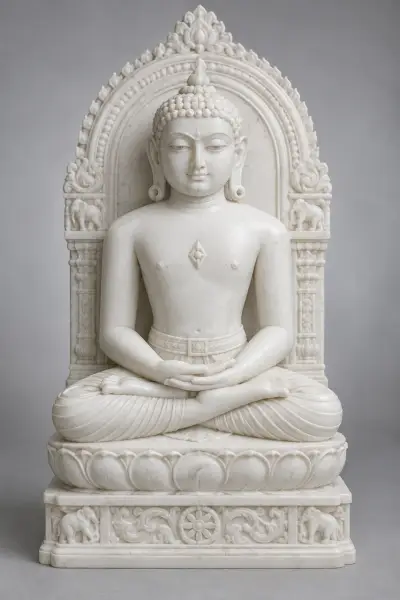
Custom Made Jain Tirthankar Statues in Marble Stone
Shwetambar Murtipujak murtis carved to order in Jaipur, with kandora and kachota, srivatsa, and the lanchhana that names each Tirthankar. Sized from a 9in ghar derasar murti to a 41in mulnayak with full parikar, in your choice of stone.
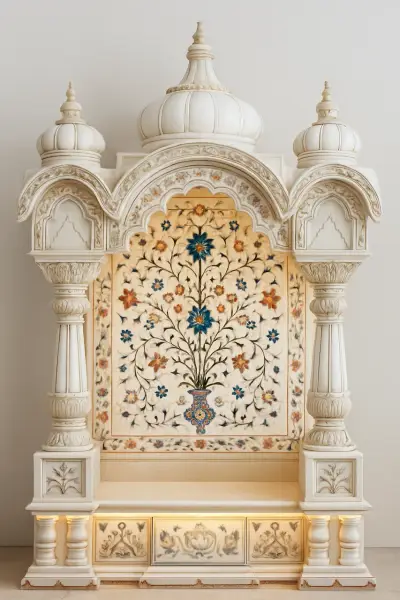
Custom Marble Temples
We create custom marble temples tailored to your home or commercial space. Choose the marble, carvings and dimensions for a unique, sacred centrepiece.
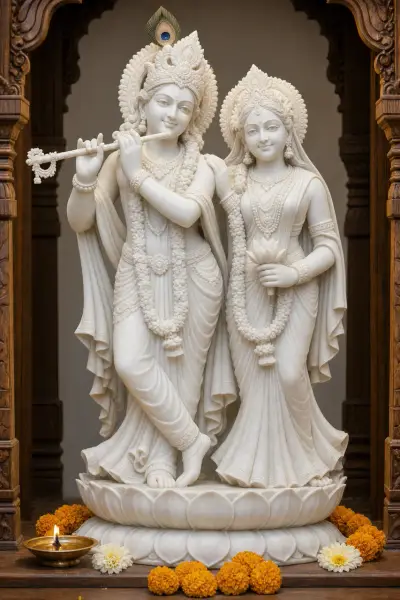
Custom Made Radha Krishna Jugal Jodi Statues in Marble Stone
Hand-carved Radha Krishna jugal jodi pairs in marble. Choose your stone, size and pose. Standing, seated, with peacock or cow. Start with a free WhatsApp consultation.
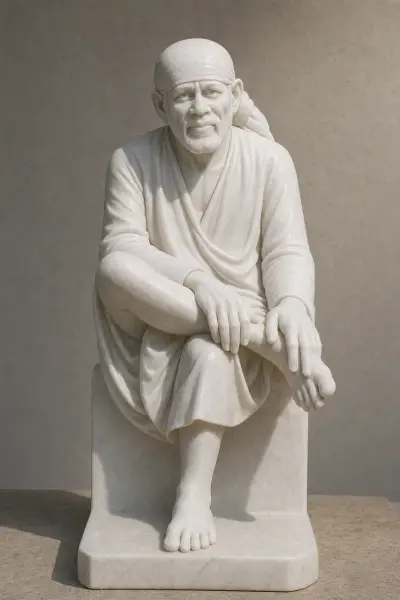
Custom Made Sai Baba Statues in Marble Stone
Hand-carved Shirdi Sai Baba murtis in marble and stone. Choose your stone, size, and form. The Dwarkamai stone posture, the Ashirwad blessing, the singhasan darshan form, or a standing murti for your courtyard, all in faithful iconography. Start with a free WhatsApp consultation.
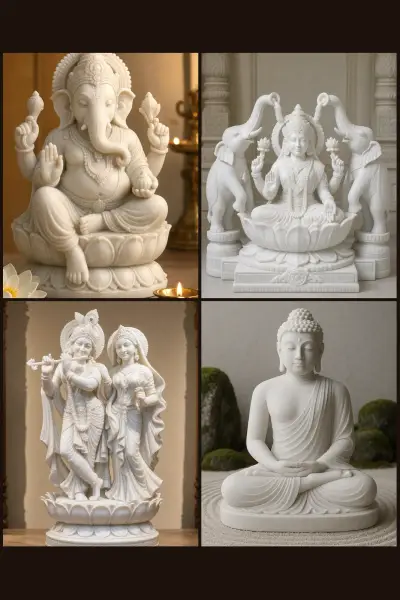
Custom Marble Statues
We build custom marble statues in many sizes and forms, from deities and saints to bespoke designs. Each is carved by the artisans we work with in India and tailored to your space.
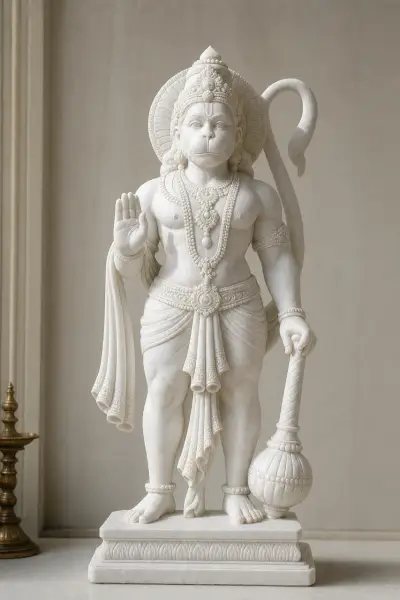
Custom Made Hanuman Statues in Marble Stone
Hand-carved Hanuman murtis in marble: standing blessing, Sankat Mochan kneeling, Panchmukhi, fierce Veer with gada, or flying with the Sanjeevani mountain. Choose your stone, size, and pose. Start with a free WhatsApp consultation.