
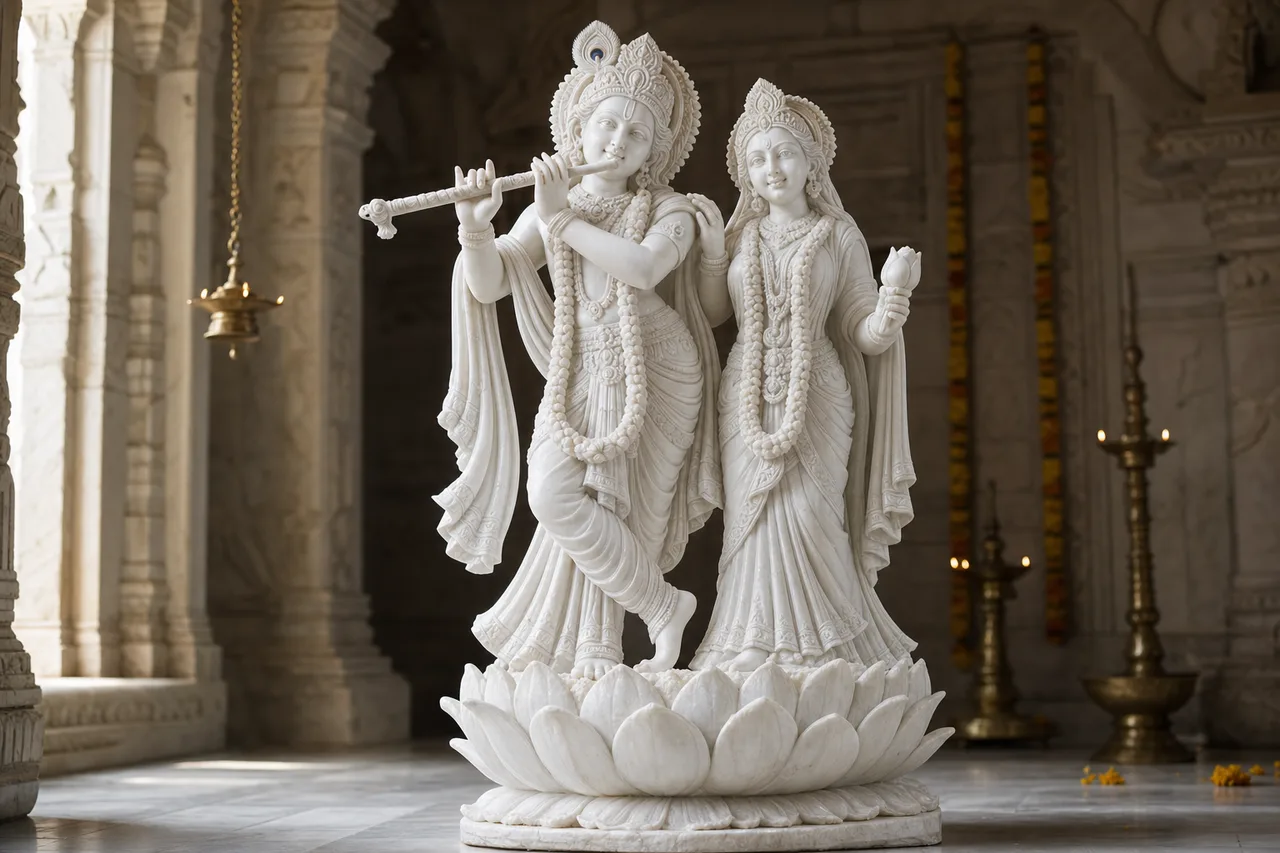
Custom Made Radha Krishna Jugal Jodi Statues in Marble Stone
Hand-carved Radha Krishna jugal jodi pairs in marble. Choose your stone, size and pose. Standing, seated, with peacock or cow. Start with a free WhatsApp consultation.
Architect or designer? Marble murtis for temple architects
Browse Radha Krishna jugal jodi design inspirations
Every Radha Krishna pair here is made to order in your choice of stone. Browse the gallery for pose, stone, size and finish inspiration. Then share what catches your eye on WhatsApp.
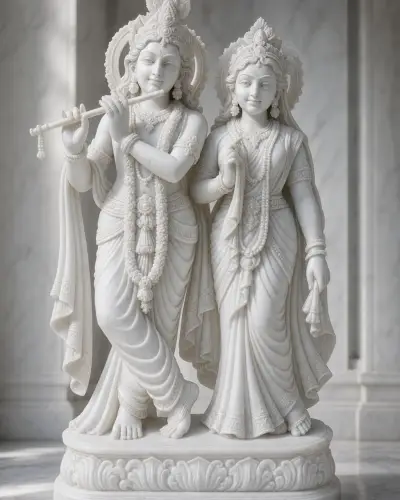
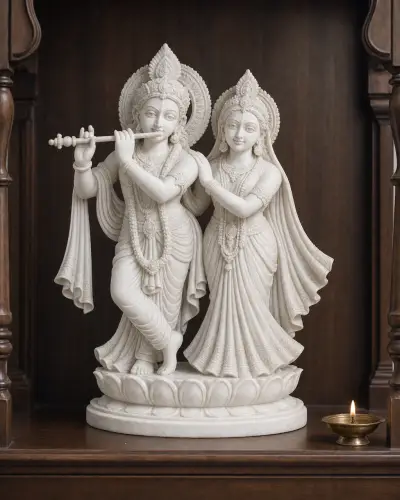
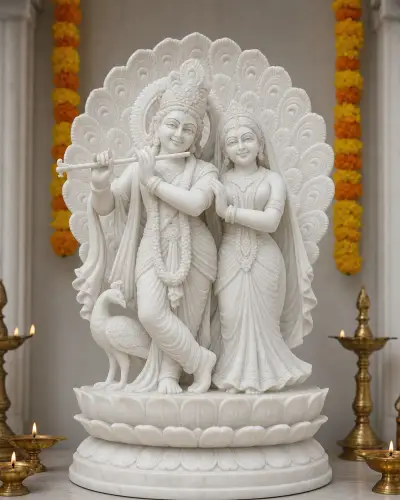
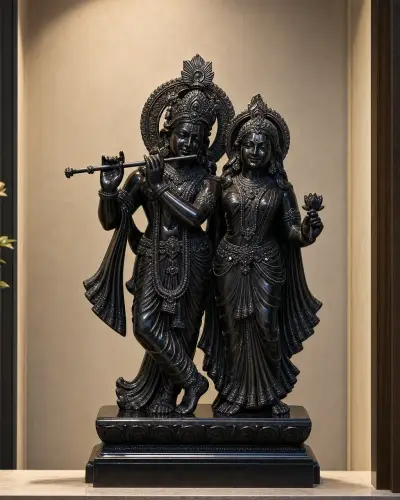
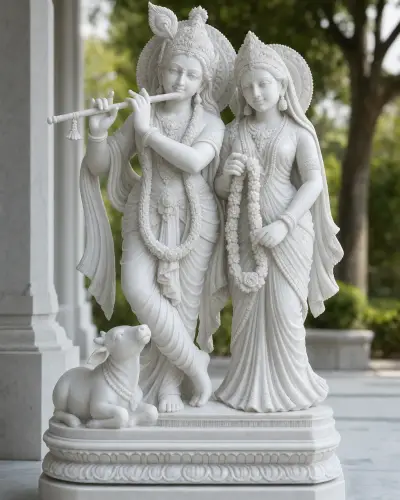
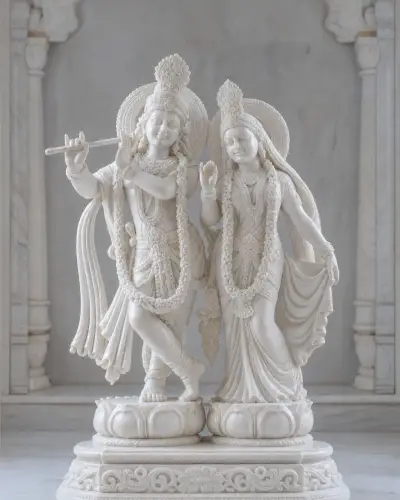
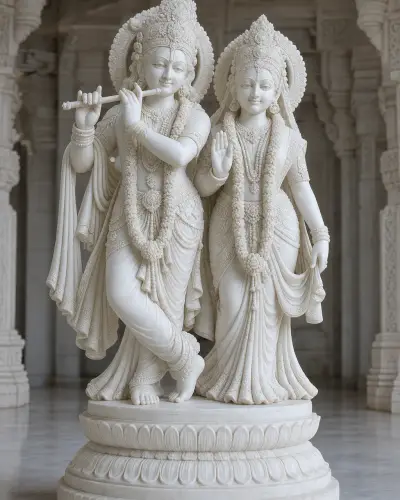
Radha Krishna jugal jodi murtis
Jugal Jodi (युगल जोड़ी) means the divine couple: Radha and Krishna carved together as one piece. It is the term used in the Jaipur murti tradition, and it is what most families mean when they ask for a Radha Krishna murti. In bhakti tradition the pair represents the soul and the divine in union, which is why a jugal jodi is so often chosen for a wedding, an anniversary, or a newly married couple's first home mandir.
If you are looking for Krishna on his own (Murli Manohar, Bal Gopal, Kaliya Mardan or Govardhan-dhari), you will find those in the Krishna collection.
Compositions we make
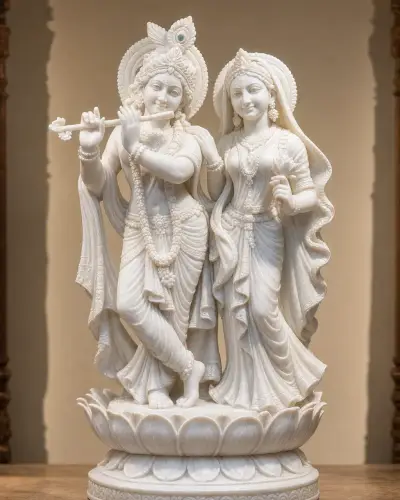
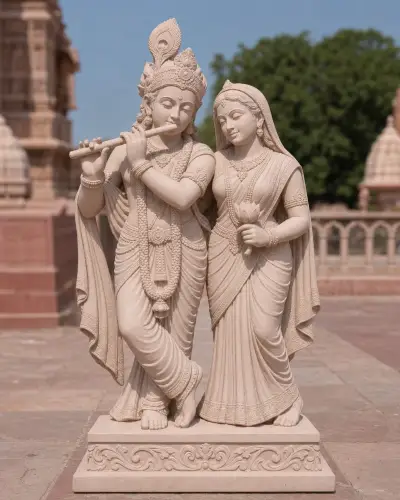
- Standing pair on a lotus base: Krishna in tribhanga with the flute at his lips, Radha at his left. The most-requested composition, and the easiest to place in a home mandir. Made in Makrana white at 2 feet, Vietnam white at 30 inches and black stone at 30 inches.
- ISKCON-style temple deities: tall kirita mukuta crowns, ornate jewellery, tulsi garlands, and the two figures on separate lotus pedestals joined by a single base. If you are commissioning for a temple, or have a particular temple's deities in mind, this is the form.
- With a peacock: the bird at their feet, its tail fanned behind them as a natural prabhavali. It gives the murti presence without adding height, which suits an 18-inch pooja piece.
- With a cow (Venugopal jodi): a calf resting at Krishna's feet and gazing up at him, the pastoral Vrindavan scene. Carved at 3 feet.
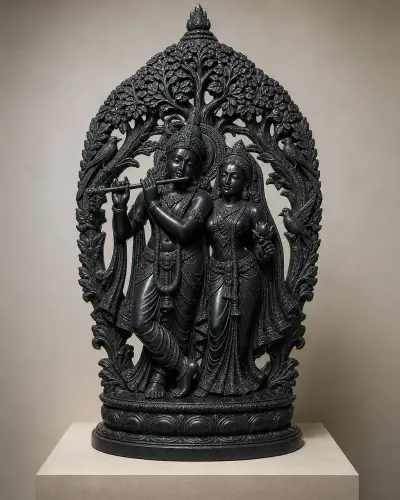
- Beneath a kadamba tree: branches worked into a Vrindavan arch rising behind the pair, with foliage and small birds cut into the relief. In black stone the polish brings out the depth of the arch.
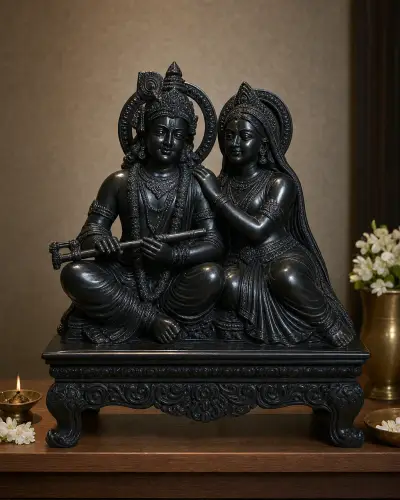
- Seated on a carved chowki: Krishna cross-legged with the flute across his lap, Radha at his left. A quieter, lower composition for a shelf with limited height. At 21 inches.
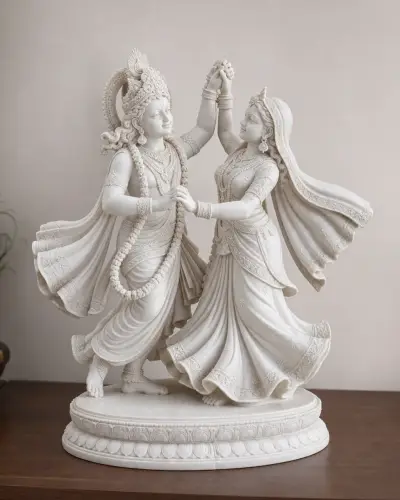
- Raas Leela: Radha and Krishna mid-turn in the dance, hands joined, garments flowing outward. An 18-inch pair.
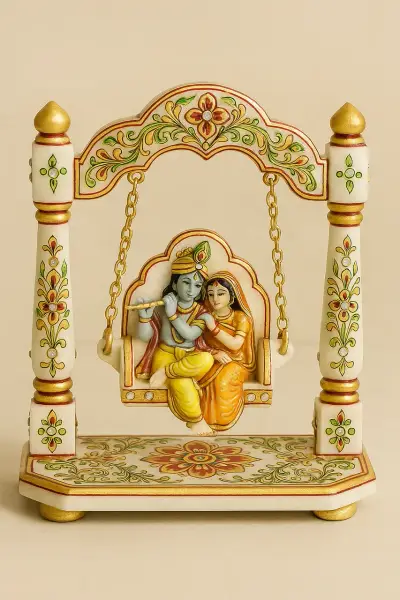
- On a jhula (swing): the decorative form, hand-painted with meenakari work, traditionally brought out for Hindola and Janmashtami.
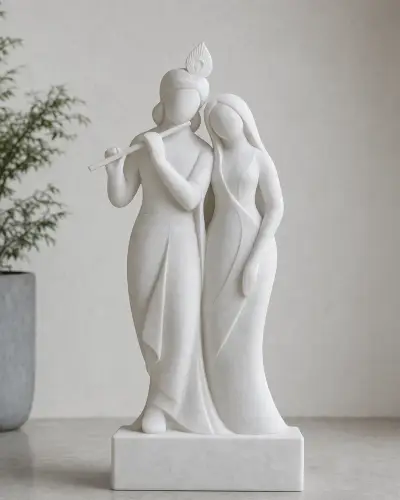
- Contemporary: two softly stylised figures leaning toward one another, with the flute and a simplified crown as the only carved detail. For a modern interior.
- Temple scale: the jugal jodi at 4 feet in Makrana white, ornaments deep-cut, on a tall stepped pedestal.
Plain stone or hand-painted shringar
Both are traditional, and both are made here.
Plain stone lets the carving and the material speak, and it is what most temple installations choose.
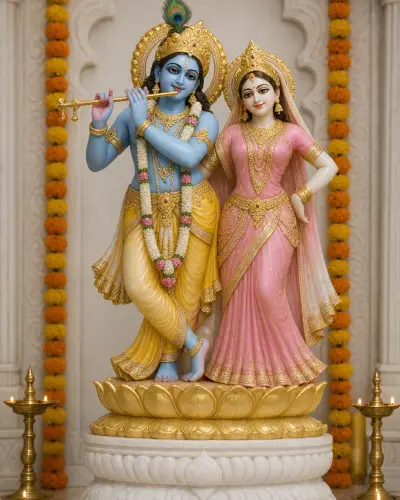
Hand-painted shringar (Krishna with a blue complexion and yellow pitambar dhoti, Radha in a coloured lehenga, gold-leaf crowns and jewellery, painted eyes and tilak) is the festival-ready look most people picture when they think of a dressed murti. It is painted over a white marble base; see the gold-leaf shringar pair. A painted murti is dusted dry and never washed.
How the pair is composed
On a jugal jodi the two figures are carved to relate to one another. Krishna stands in tribhanga, the three-bend stance (weight on one leg, the body gently curving), with the flute at his lips and a peacock feather at his crown. Radha stands at his left, her posture answering his rather than mirroring it, so the two lean slightly together and the gazes meet. Getting that relationship right is the difference between a pair and two separate murtis, and it is what the sculptors give the most attention to.
Choosing the stone
Every murti is made to order in whichever of these five you prefer.
- Makrana white marble: the traditional warm temple white, dense and fine-grained, the same stone as the Taj Mahal. The classic choice, and the base for hand-painted work.
- Vietnam white marble: cooler and brighter with a very even grain. It holds crisp detail, which matters on a pair, where two crowns, two sets of jewellery and two garlands all need definition.
- Black stone: mirror-polishable and striking, and especially good with relief and arch work, where the polish brings out the depth.
- Dholpur pink sandstone: warm, matte and weather-tolerant, suited to a courtyard or a sheltered outdoor shrine. It is also the stone of Vrindavan's own temples. See the 4-foot courtyard pair.
- Cast marble dust: lighter and more affordable, and it holds fine detail well, so it suits smaller home-mandir pairs and gifting pieces.
Size and placement
These murtis are made from 12 inches to 4 feet.
- 12 to 18 inches: a home mandir shelf or a pooja room niche.
- 21 to 30 inches: a living-room mandir or a dedicated prayer corner.
- 36 inches and above: a large pooja hall, an entrance, or a temple.
When you measure, please check the width as well as the height. Two figures on a shared base, more so with a peacock, a calf or an arch, take up more width than a single murti of the same height. Send us a photograph of the space on WhatsApp and we will suggest a size that sits well in it.
Vastu and direction
- Place the murti so the worshipper faces east or north, which usually means the murti sits against a west or south wall.
- The north-east corner is traditional for a household shrine.
- Never place a murti directly on the floor; always use a chowki, plinth or mandir shelf.
When families commission one
Janmashtami is the busiest time of year for Radha Krishna murtis, and Radhashtami, a fortnight later, brings a second wave. It is the festival that belongs to Radha, and a jugal jodi is the natural murti for it. Hindola, the swing festival in Shravan, is when jhula pieces are brought out.
Beyond the festival calendar, a Radha Krishna pair is one of the most common wedding commissions we take, and a frequent griha pravesh gift for a new home.
Because every murti is carved to order, please allow lead time ahead of a festival or wedding date.
Caring for your murti
- Dust with a dry, soft cloth, paying attention to the space between the two figures and behind the garlands.
- Avoid acidic cleaners: lemon, vinegar and household bathroom products etch polished marble permanently.
- Wipe away ghee, oil and kumkum promptly, as they stain light stone if left.
- Hand-painted murtis are dusted dry only, never with a damp cloth or any cleaner.
Commissioning yours
Every murti in this collection is made to order, carved for you by the master sculptors and artist families Tilak Mandirwala has worked with in Jaipur for years. Tell us the composition, the stone and the size you have in mind; we work through the design with you, brief the sculptor, share photographs as the piece takes shape, and deliver it to your door. A clear quotation and timeline always come before any work begins.
Why choose Tilak Mandirwala for Radha Krishna statues
Made-to-order jugal jodi pairs in marble, personalised for your home shrine, temple, or wedding gift
Two figures, one composition
Radha and Krishna are carved to relate to each other, with matched proportions, answering postures, and the gazes composed as a single piece.
Custom poses
Standing jugal jodi, seated on a chowki, Raas Leela, or with a peacock or cow, adapted to your reference image.
Choice of stone
Makrana white marble, Vietnam white marble, black stone, Dholpur pink sandstone, or cast marble dust.
Sized for your space
From 12-inch home-mandir pairs to 4-foot temple installations.
Jaipur master sculptors
Carved for you by the master sculptors and artist families we have worked with in Jaipur for years.
Insured delivery
Multi-layer wooden crating and fully insured shipping, India and worldwide.
How we create your personalised Radha Krishna jugal jodi
From idea to sacred pair, every step is transparent and custom
Share your idea
Pick from our gallery or send your own reference, size, and stone preference.
Finalise the design
We work through pair posture, ornaments, base style and finish with you until the design is settled.
Clear quote & timeline
You get a transparent quotation and delivery schedule for the full pair before anything begins.
Advance to begin
A partial advance secures the stone for both figures and starts the sculptor on the work.
Sculpting updates
We share photographs of carving progress for both figures so you stay in control throughout.
Approval & packing
Final photographs shared for your approval before multi-layer wooden crating.
Balance on delivery
Pay the remaining balance only once your pair arrives safely.
Frequently asked questions
Get answers to common questions about our custom sculptures
What does "Jugal Jodi" mean?
How long does a custom Radha Krishna marble statue take to make?
What size Radha Krishna statue should I choose for my home?
Which stones can I choose?
Can you make ISKCON-style Radha Krishna deities?
Can I have the murti hand-painted with shringar?
Can you ship internationally? What does that cost?
Ready to commission your custom Radha Krishna jugal jodi?
Share a reference image on WhatsApp and we will quote stone, size, and timeline. No obligation.
WhatsApp for a QuoteImporting statues for your store or gallery? Marble statue supplier for importers
Designing a temple outside India? Marble murtis for temple architects
Prefer to see the marble before you order? Visit our showroom in Jaipur, or send us your size and budget.
Browse Other Collections
Discover more collections that might interest you
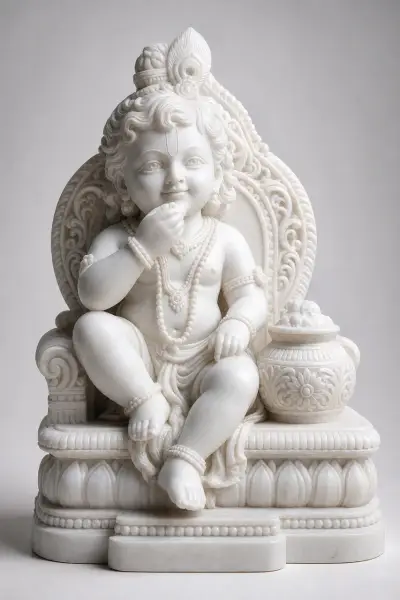
Marble Krishna Murtis for Janmashtami
Hand-carved marble murtis for Janmashtami: the infant Laddu Gopal, the Radha Krishna jugal jodi, Shrinathji and the flute-playing Murli Manohar. Start with a free WhatsApp consultation.
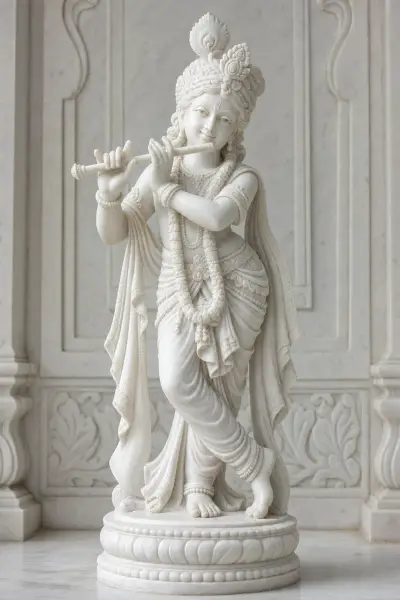
Custom Made Krishna Statues in Marble Stone
Hand-carved Krishna statues in marble: Murli Manohar with flute, Bal Gopal, Radha-Krishna pairs, and narrative forms like Kaliya Mardan. Choose your stone, size, and pose. Traditional Jaipur craftsmanship. Start with a free WhatsApp consultation.
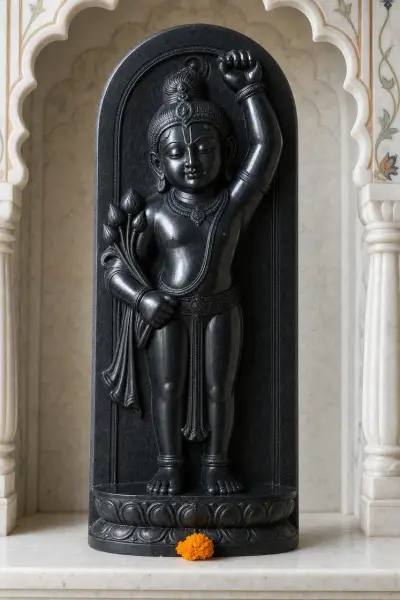
Custom Made Shrinathji Marble Murti — Nathdwara Swaroop
The Nathdwara swaroop, his left arm raised to the arch and his right hand at his waist, carved to order in black stone or white marble, from a 9-inch apartment mandir piece to a 36-inch wall panel.
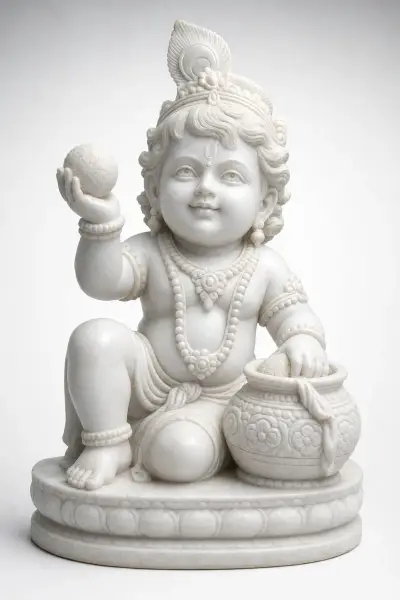
Custom Made Laddu Gopal Marble Murtis — Bal Gopal & Makhan Chor
The infant Krishna, carved to order in Makrana and Vietnam white marble, Dholpur pink sandstone, black stone and cast marble dust, from a 6-inch shelf murti to an 18-inch jhula.
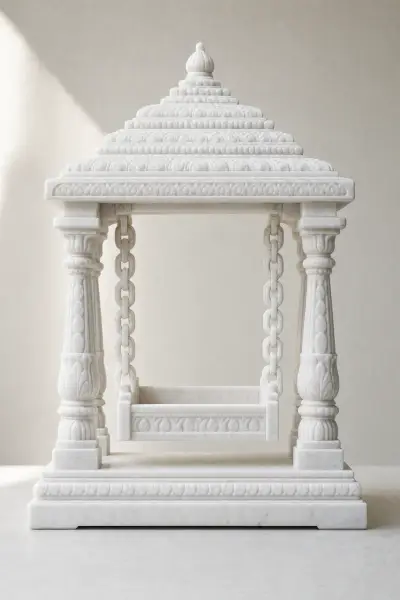
Custom Made Marble Jhula for Laddu Gopal & Krishna
Swings carved to order for the murti you already have, in Makrana and Vietnam white marble, Dholpur pink sandstone, black stone and cast marble dust, from a 9-inch cradle to a 24-inch pavilion.
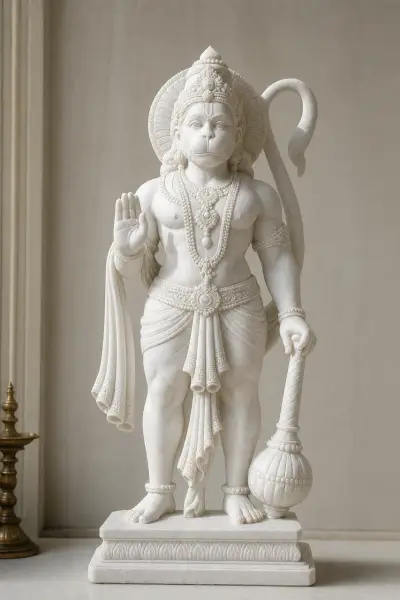
Custom Made Hanuman Statues in Marble Stone
Hand-carved Hanuman murtis in marble: standing blessing, Sankat Mochan kneeling, Panchmukhi, fierce Veer with gada, or flying with the Sanjeevani mountain. Choose your stone, size, and pose. Start with a free WhatsApp consultation.