

Custom Made Ashtavinayak Marble Statues — The Eight Ganpati Swaroops
The eight swaroops of the Ashtavinayak yatra (Moreshwar, Siddhivinayak, Ballaleshwar, Varadvinayak, Chintamani, Girijatmaj, Vighneshwar and Mahaganapati), each made to order in the stone, size and surface you choose. Start with a free WhatsApp consultation.
Browse the eight Ashtavinayak swaroops
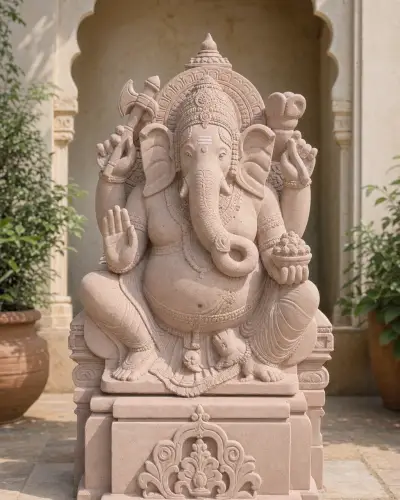
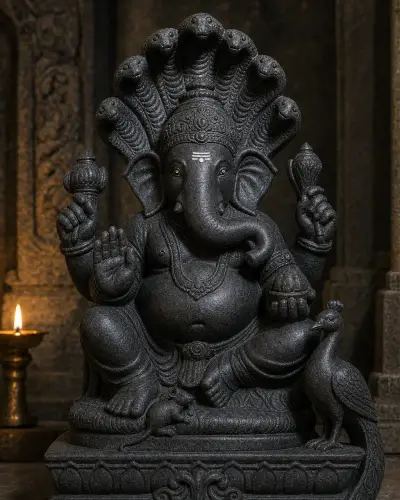
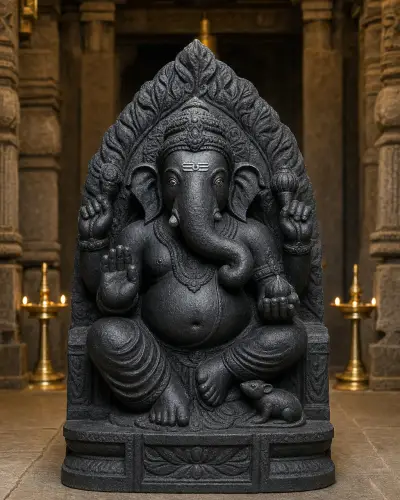
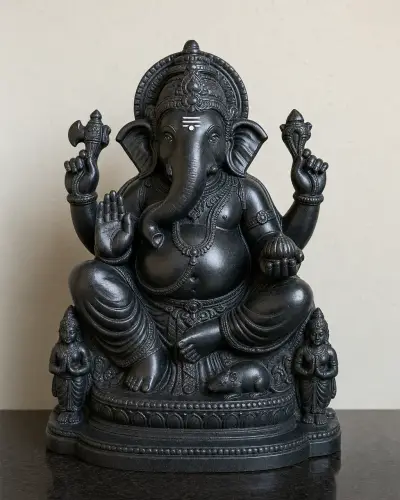
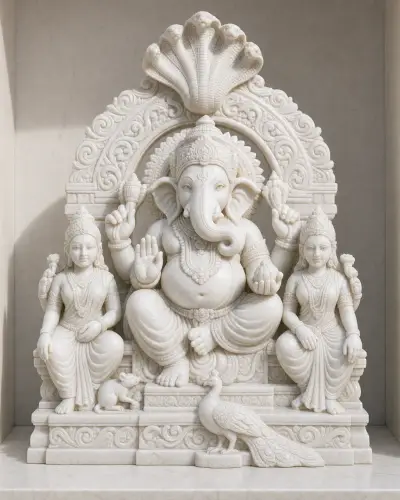
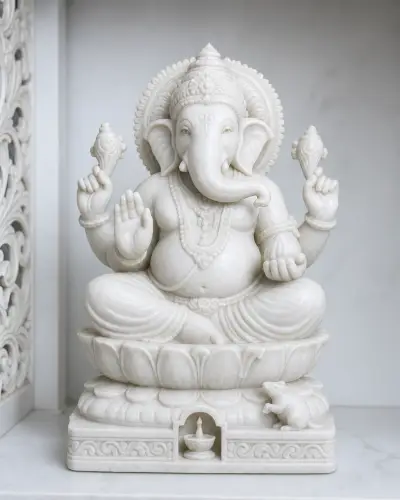
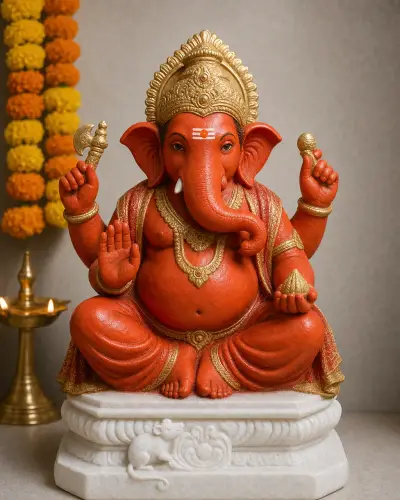
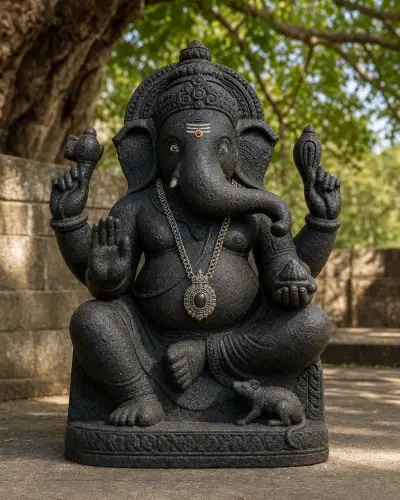
Every piece here is made to order, so treat the gallery as a starting point rather than a fixed catalogue. Compare the swaroops, the raw and polished black stone, the white marbles and the hand-painted pieces, then tell us on WhatsApp which direction appeals to you.
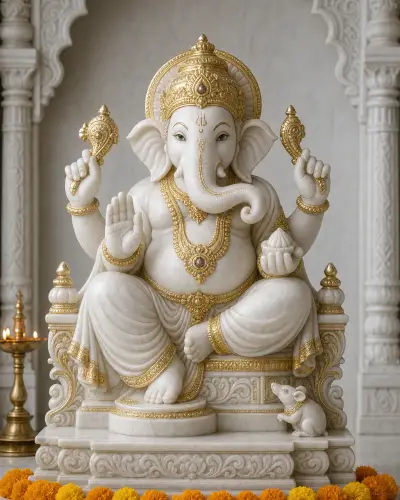
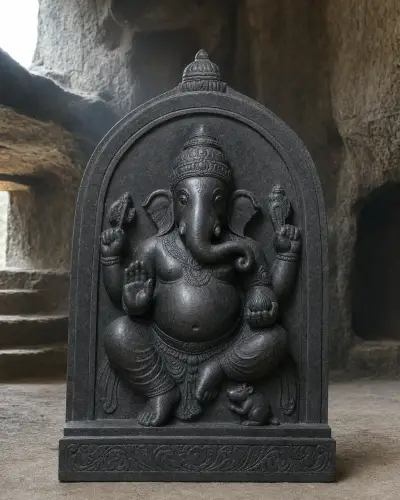
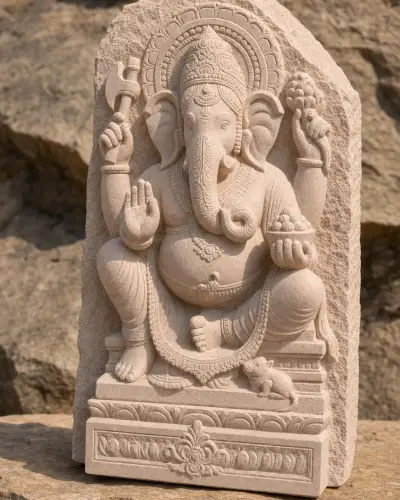
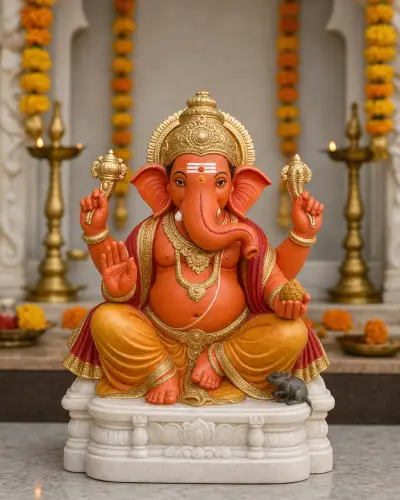
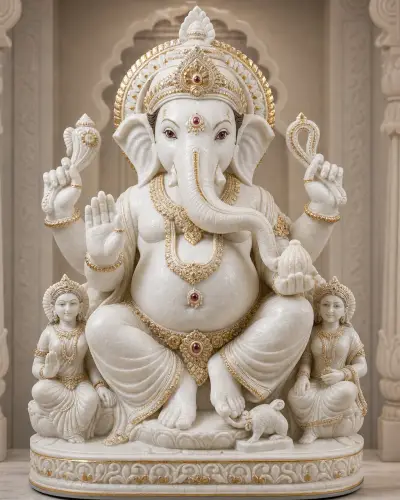
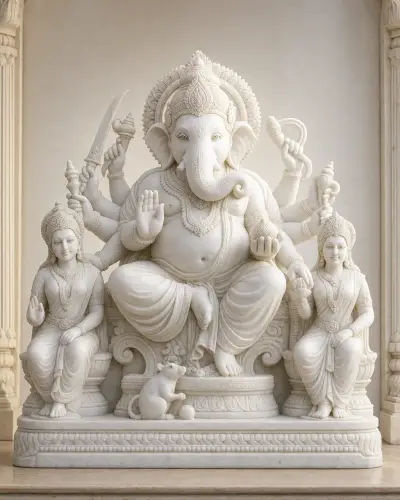
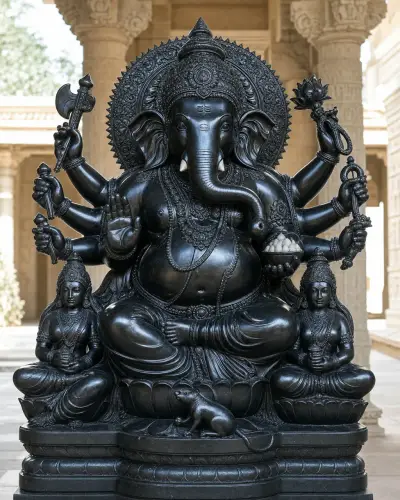
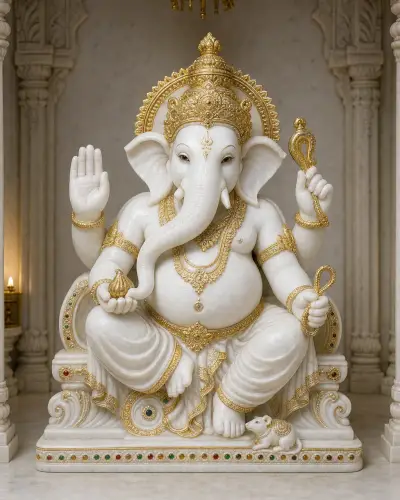
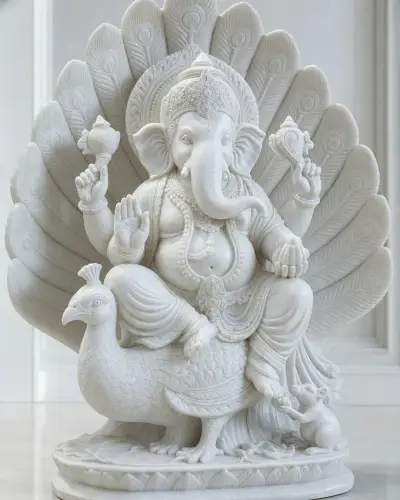
Showing 15 of 17 products
The eight swaroops, and why they are commissioned together
Ashtavinayak means eight Vinayaks. They are eight Ganpati temples scattered across the countryside around Pune and Raigad, and the pilgrimage that joins them is one of the oldest continuous circuits in Maharashtra, begun and closed at Morgaon, with the seven others visited in a fixed order in between. What matters for a murti is that these are swayambhu forms: not sculpted portraits of a deity, but rock in which the form was found, each one a little different from the next.
That is why a family that has walked the yatra rarely wants a generic Ganesh idol afterwards. They want the one they stood in front of. Single-swaroop commissions are the common case (a household's kuladaivat, or the temple of a darshan that stayed with them), while the complete set of eight is usually ordered for a home mandir or a community temple.
The eight forms in this collection
Every swaroop is made here in two treatments, so each one can be had as raw stone or as a finished, ornamented piece.
Moreshwar of Morgaon is where the circuit begins and ends. He is shown beneath a multi-hooded Nagraj canopy with a peacock at the plinth (the mayura that gives him his other name), as a raw black stone piece or beneath a carved prabhavali arch with Riddhi and Siddhi.
Siddhivinayak of Siddhatek is the exception among the eight, and gets its own section below. He is made as a mirror-polished black stone murti and on a gold-leaf singhasan.
Ballaleshwar of Pali is the only one of the eight named after a devotee rather than the deity. His throne is carved as a cypress tree, which is the detail to look for. It comes in raw black stone or warm pink sandstone.
Varadvinayak of Mahad is the boon-giver, and his temple keeps an oil lamp that has burned since 1892. That lamp appears as a niche in the base of the white marble piece; the hand-painted version carries the shendur orange-red of the darshan itself.
Chintamani of Theur wears the wish-granting jewel at his neck, picked out in gold leaf on a singhasan, or set against a deliberately rough-hewn black stone surface.
Girijatmaj of Lenyadri is the only swaroop that lives inside a cave, cut into a rock face partway up a hill. Both versions keep that form (a relief inside an arched stele rather than a figure in the round), one in black stone and one in pink sandstone left at its natural split face.
Vighneshwar of Ozar is the remover of obstacles, and his temple murti is heavily jewelled: rubies at the eyes, a gem at the brow. That reads either as gem-set eyes under a gold-leaf crown or in full temple polychrome.
Mahaganapati of Ranjangaon closes the circuit as the cosmic form, multi-armed and broad of brow, with Riddhi and Siddhi beside him, shown at three feet in mirror-polished black stone or enthroned in white marble.
The trunk that turns right
Seven of the eight swaroops have a trunk that curls to the deity's own left. Siddhivinayak at Siddhatek is the only one that turns right.
This is not a small detail to the people who order him. A right-turned trunk (valampuri, or ujavya sondecha) is held to be the stricter, more exacting form: quicker to grant, and less forgiving about how the worship is kept. That reputation is exactly why some families seek him out and why others deliberately do not. The left-turned forms are the ordinary household choice, easier to keep and the default in almost every home mandir.
If you are ordering a Siddhatek piece, check the direction in the photograph before you approve it, and say plainly which way you want it when you write to us. It is worth being certain about rather than assuming.
Raw stone, polish, or paint
The swayambhu murtis are unpolished rock, and a good number of buyers want that honesty in the piece rather than a showroom shine. So the same swaroop is offered three ways.
Left raw, the black stone keeps a visible granular texture, the closest finish to the temple murtis, and it reads quite differently by lamplight than a polished surface does. Mirror-polished, black stone takes one of the deepest finishes in the trade, which suits a modern room better than a traditional mandir. Hand-painted, cast marble dust carries the vivid shendur orange-red and gold of the actual darshan, and it is the closest thing here to what you see through the sanctum door.
None is more correct than the others. It is a question of whether you want the object to look like the rock it was found in, like a finished heirloom, or like the deity as he is dressed for worship.
Choosing the stone
Makrana white marble is the traditional Rajasthani choice and holds fine ornament and gold-leaf work best, which is why the crowned and jewelled versions are made in it. Vietnam white marble is cooler and cleaner in tone, and suits a bright modern shelf. Black stone carries both the raw and the mirror-polished treatments, and is the closest in colour to the temple murtis themselves. Dholpur pink sandstone is a warm matte stone quarried a few hours away in eastern Rajasthan, and is well suited to the cave-relief and cypress-throne pieces. Cast marble dust is the value option and takes hand-painting well.
Size and placement
The pieces here run from 12 inches to 3 feet. A 12 to 18 inch murti fits an apartment pooja shelf or a single-door mandir without crowding it; 21 to 24 inches suits a dedicated home mandir where the murti is the focus; the 30 and 36 inch pieces are meant for a temple, a mandap or a large hall. A murti is traditionally placed so the worshipper faces east or north while offering, and it should sit raised on its own plinth rather than directly on the floor.
If you are building toward the full set of eight, order them in one commission where you can. Matching stone and base across eight separate orders is much harder after the fact.
Caring for your murti
Dust dry, with a soft cloth. Nothing acidic (no vinegar, no lemon, no bathroom cleaner) on any of these stones. Raw and natural-cleft surfaces hold dust in the texture, so an occasional soft brush works better than wiping. Gold leaf and hand-painted surfaces should be touched lightly and kept out of direct sun, which fades pigment over years. Wipe up spilled oil, ghee or kumkum reasonably soon; sandstone in particular will take a stain if it is left.
Make it yours
Everything above is a starting point, not a fixed catalogue. If one of these is close but not quite right, say so: a different stone, a taller piece, a plain base instead of a jewelled one, the raw finish instead of the polish. That kind of change is ordinary and costs nothing to ask about.
And if you have something else in mind entirely (a photograph from a darshan, a murti your family has had for years, a form none of these covers), that is just as welcome. Send the picture on WhatsApp. We will design it with you, brief the sculptor who will carve it, and stay with it through to delivery at your door.
Why choose Tilak Mandirwala
Discover why families and temples worldwide trust us for their sacred sculptures
Fully customizable designs
Every statue is made-to-order. Choose the size, marble type, posture, expression, and more to suit your space and spiritual needs.
Crafted in Jaipur by skilled artisans
Rooted in the Pink City's marble heritage, our artisans have a rich history of sculpting custom spiritual statues. Our studio in Khazane Walon Ka Rasta, Jaipur, sits at the heart of this tradition.
Trusted by 300+ families & temples
From NRIs to temple trusts, our clients rely on us for authentic, high-quality spiritual statues and marble temples.
Secure & global delivery
We ship across India and worldwide with multi-layered packaging and transport you can trust.
Better value from local production
Direct artisan collaboration allows us to offer unmatched quality at fair, factory-direct pricing, whether you're ordering a single spiritual statues or multiple pieces for a full temple setup.
Spiritual intent in every sculpture
We understand that every idol holds emotional and devotional meaning, and our process honors that, from first sketch to final polish.
How we create your custom spiritual statues
From your vision to sacred sculpture: our transparent 7-step process
Share your requirement on WhatsApp
Send us a picture you like, from our gallery or something you found elsewhere. Just share your ideas and preferences over WhatsApp.
We understand your vision
We'll connect via WhatsApp or a quick call to discuss size, marble, pose, and finish, and confirm what's possible with our artisans.
Quotation & timeline
Once details are clear, we'll share a quotation and estimated timeline to craft your custom spiritual statues.
Advance payment to get started
A small advance helps us begin. It covers the cost of stone and artisan time, as the process can't be reversed. (Varies by design and size.)
Production & progress updates
Our artisans begin sculpting your statue. We share images at key stages so you stay involved throughout.
Final approval & dispatch
You approve the final photos before we pack and ship the finished statue securely.
Delivery first, then final payment
We collect the remaining amount only **after your statue arrives safely**, because your peace of mind comes first.
Frequently asked questions
Get answers to common questions about our custom sculptures
What is an Ashtavinayak murti?
Which swaroop has the right-turned trunk?
Can I order all eight as a set?
Which stones and surfaces can I choose?
What sizes are usual, and how long does it take?
Ready to bring an Ashtavinayak swaroop home?
Tell us which of the eight you have in mind, and we will design it with you, brief the sculptor and quote stone, size, surface and timeline. No obligation.
WhatsApp for a QuoteImporting statues for your store or gallery? Marble statue supplier for importers
Prefer to see the marble before you order? Visit our showroom in Jaipur, or send us your size and budget.
Browse Other Collections
Discover more collections that might interest you
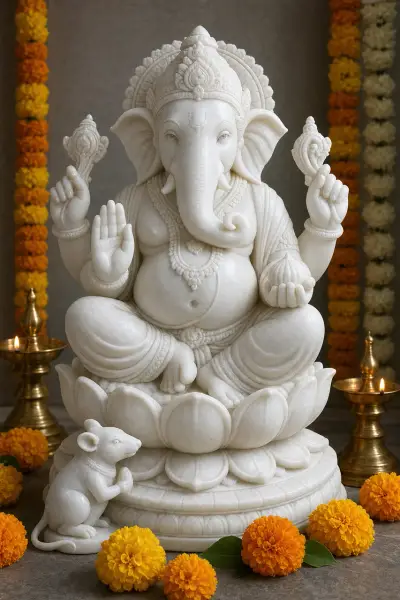
Marble Ganpati Murtis for Ganesh Chaturthi
Hand-carved marble Ganpati murtis for Ganesh Chaturthi: the murti you install once and keep, not the clay idol that goes for visarjan. Choose your form, stone and size on WhatsApp.
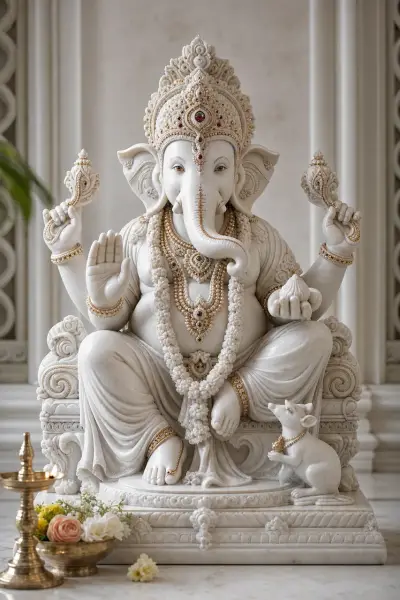
Custom Made Dagdusheth Ganpati Statues in Marble Stone
Hand-carved Dagdusheth Ganpati murtis in the revered Pune Shreemant Dagdusheth Halwai form - natural marble, 22k gold-leaf, or traditional polychrome, in your choice of stone and size. Start with a free WhatsApp consultation.
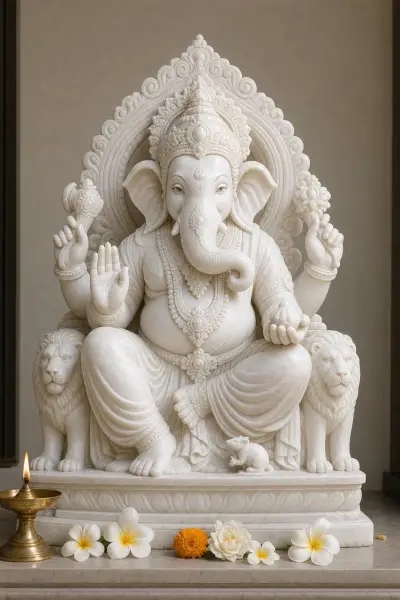
Custom Made Lalbaugcha Raja Ganpati Statues in Marble Stone
Hand-carved Lalbaugcha Raja murtis in the revered Mumbai Lalbaug form - the Navasacha Ganpati on his lion-flanked throne, in natural marble, 22k gold-leaf or traditional polychrome, in your choice of stone and size. Start with a free WhatsApp consultation.
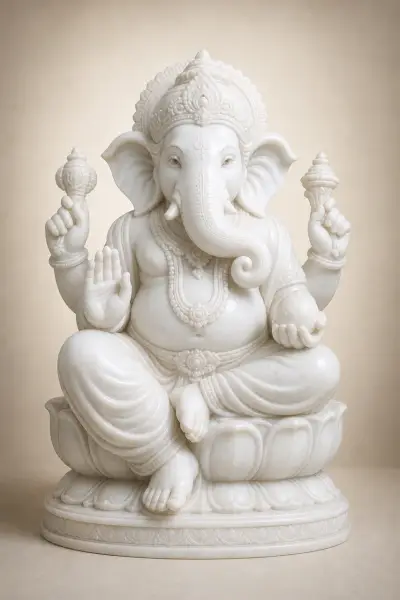
Custom Made Ganesh Statues in Marble Stone
Hand-carved Ganesh statues in marble: sitting, blessing, or dancing, in your choice of stone and size. Traditional Jaipur craftsmanship. Start with a free WhatsApp consultation.
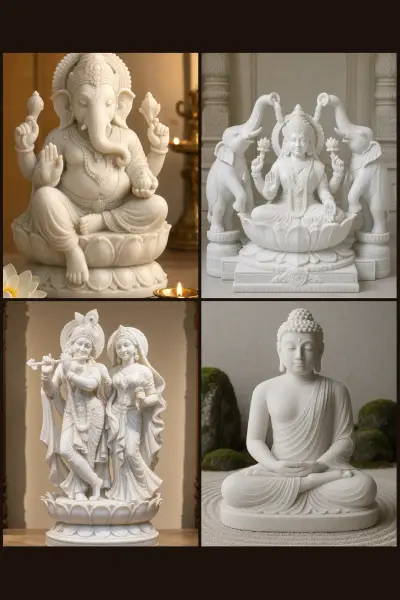
Custom Marble Statues
We build custom marble statues in many sizes and forms, from deities and saints to bespoke designs. Each is carved by the artisans we work with in India and tailored to your space.
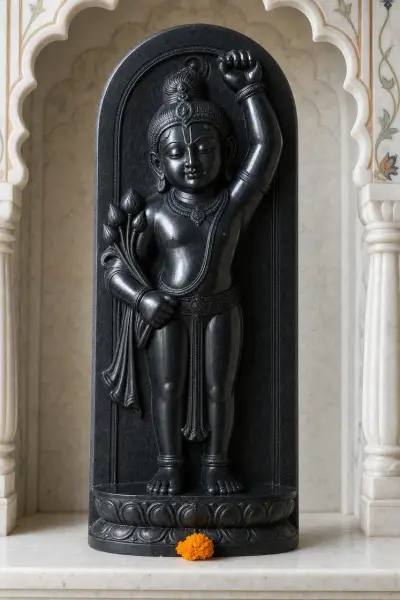
Custom Made Shrinathji Marble Murti — Nathdwara Swaroop
The Nathdwara swaroop, his left arm raised to the arch and his right hand at his waist, carved to order in black stone or white marble, from a 9-inch apartment mandir piece to a 36-inch wall panel.