Makrana White Marble Lalbaugcha Raja in Traditional Polychrome, 30 in
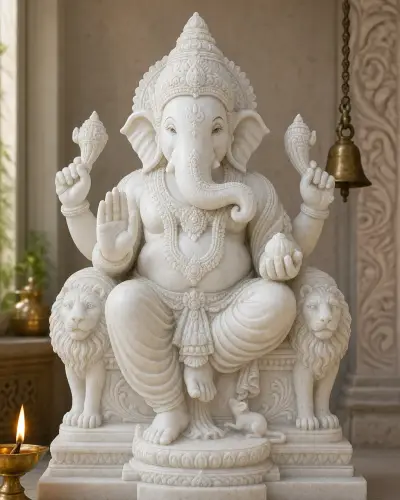
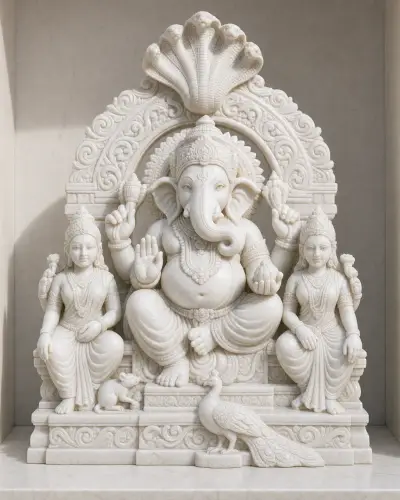
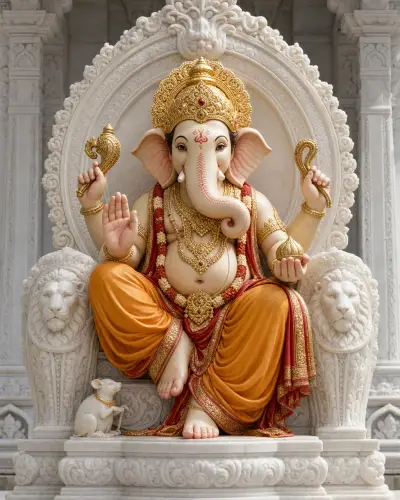
Hand-carved Makrana marble Lalbaugcha Raja on a lion-flanked simhasan, a 30-inch mandap centrepiece hand-painted in pandal polychrome.
Made to order. The pictures here are concept images. This is not a ready item. We get it made for you as per this design, as close as possible, in the size and stone you choose.
Want this design made for you?
Tell us the size, the stone and where it is going. We will send you a quote and a timeline.
Chat on WhatsAppWe'll respond within 5 minutes
About This Piece
Makrana marble under traditional temple polychrome
The Lalbaug pandal look comes home in this 30-inch Ganpati, carved in Makrana white marble from Nagaur district in Rajasthan, from the same quarries worked for centuries and used for the Taj Mahal. Rather than leaving the stone bare, the murti is finished in traditional polychrome temple paint: a saffron-orange dhoti with red and gold borders, gold-and-ruby ornament work, and a warm devotional skin tone. This is the palette Mumbai's Lalbaugcha Raja is recognised by. The lion-flanked simhasan throne, its scrolled backrest and the carved plinth beneath stay bare polished marble, so the white stone frames the colour instead of competing with it.
How it is made, and the markers it keeps
Work begins with a single Makrana block, rough-cut to the seated proportions before the sculptor opens up the four arms, the potbelly and the lion heads at the throne arms. Face, palms, trunk and drapery folds are finished entirely by hand with chisel, rasp and hand-held polishing rotators, never machine finishing. Painting is a separate stage: the marble is sealed, colour laid in thin layers by a temple painter, and gold detailing applied last over the mukut, the jewelled belt and the necklace tiers. TMW works with independent master sculptors and painters in and around Jaipur, and the two crafts are sequenced so paint never fills a carved line.
Every marker of the Lalbaug form is held to: exactly four arms, the trunk curled toward the left, a single broken right tusk, a modak in the lower left hand and the right hand raised in abhaya, the gesture of blessing. The mushak sits alert at the foot of the throne. The lions on the simhasan are what separate this form from the Pune Dagdusheth murti. In Lalbaug's own pandal they read as guardians of the seat, and the epithet devotees use, Navasacha Ganpati, belongs to this seated, receiving posture.
Scaling a 30-inch murti for sthapana
At 30 inches the murti works as a sthapana centrepiece rather than a shelf piece. It wants a mandap platform around three feet wide, with roughly a foot of clear height above the mukut so the crown is not visually cropped. Painted surfaces prefer indirect light: warm lamps or diyas set to the side rather than a spot directly overhead, which flattens the gold. Marble weight is an advantage through Ganesh Chaturthi: the piece stays put through aarti and visitor traffic, and unlike a seasonal shadu murti it returns to the shrine each year.
Other sizes and paint schemes for this Lalbaugcha Raja
Sizes from 12 to 48 inches carve to the same proportions, and the paint scheme can go either way: fuller polychrome with the throne detailed too, or a restrained version with only the dhoti and ornaments coloured. Message us on WhatsApp with your mandap dimensions and we will match the scale and the palette.
Specifications
Pose
Seated four-armed Lalbaugcha Raja Ganpati on a lion-flanked simhasan throne, hand-painted in traditional polychrome temple paint — saffron-orange dhoti, red and gold painted ornaments, warm devotional skin tone, tall painted mukut, trunk curled left, single broken right tusk, modak and abhaya blessing, mushak at the base
Color
Traditional Polychrome
Finish
Hand-painted (polychrome)
Material
Makrana White Marble
Ideal For
Ganesh Chaturthi sthapana, Maharashtrian home mandap, Family shrine centrepiece
Weight In Kg
70
Depth In Inches
14
Width In Inches
15
Height In Inches
30
Region Or Tradition
Indian / Maharashtrian (Mumbai Lalbaug pandal tradition)